
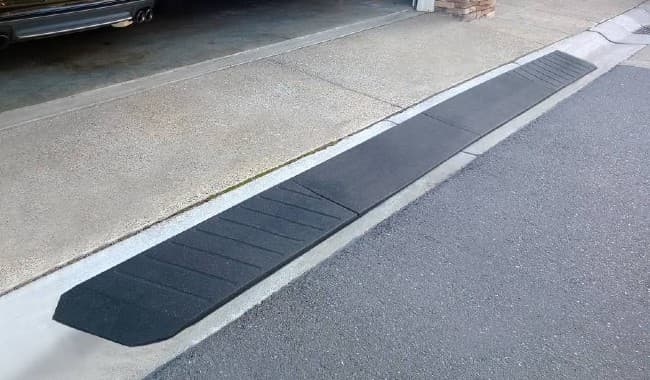
Finding the best curb ramp for your driveway or a raised garage threshold isn’t always easy. Curbs come in different heights and shapes that don’t always conform well to one single type of ramp. In addition, the ideal curb ramp for an RV or trailer may differ from what you need for a sports car or a lowered vehicle.
With those factors to consider, we have compiled a short list of the top ramps for curbs, driveways, and raised garage floors.
Another factor to consider is that our list also accounts for important factors such as weight ratings, ramp height, and length. We also consider material, portability, and anchoring options to prevent movement.
We have found that heavy-duty plastic curb ramps work well for some situations, while industrial-grade rubber ramps may be the better choice for others. Let’s take a look at our top curb ramp recommendations for your vehicle and requirements.
Updated for 2026 with the most current information
This post may contain affiliate links. If you use these links to make a purchase, we may earn a small commission. As an Amazon Associate, All Garage Floors earns from qualifying purchases. You can read our full disclaimer here.
Best Driveway Curb Ramps for Rolled Curbs
Without a doubt, the best ramp for driveways with rolled curbs is the Bridjit 3-piece expandable curb ramp.

- Reduces Curb Impact By 80%, Preventing Excess Vehicle Wear and Tear
- No Jolt – Smooth Entry and Exit Over Rolled Curbs
- Use In Any Weather – Built-In Water Channels Allow Drainage
- 3-Piece Curb Ramp Set Covers Almost 12ft of Rolled Curb Driveway
- Made In The USA
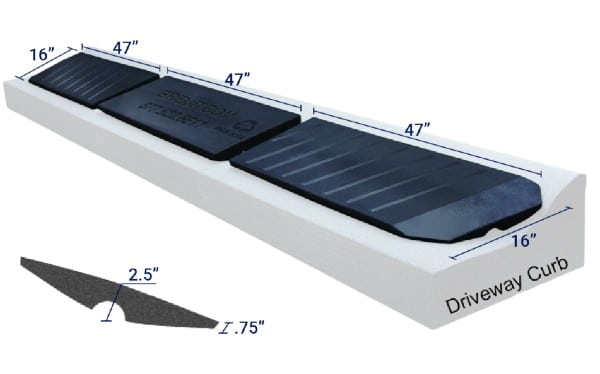
Made in the USA with high-quality recycled tire rubber that is weather resistant, the standard Bridjit ramp consists of three 4’ sections that span a total width of 12’.
The Bridjit curb ramp’s unique shape fits properly within the curb gutter. Each section measures 4’ wide x 16” deep, front to back.
The front and back edges of the ramp are 3/4” tall, while the slightly rounded underside at the center is 2.5” tall.
Each section weighs a hefty 50 lbs. and is bolted together with the provided galvanized hardware. The bolts also allow proper adjustment to fit both straight and curved driveway entrances.
This shape allows a much smoother transition from street to curb ramp to driveway, preventing jarring or bouncing of your car, truck, or trailer.
In addition, the Bridjit curb ramp will prevent bottoming out on the driveway or scraping the underside of lower vehicles. More importantly for some, it will help prevent front spoiler damage from hitting the curb.
Although the curb ramp cannot be permanently anchored, its weight keeps it from moving much. It is not affected by street sweepers and the underside has a large channel that allows water from the gutter to flow through unobstructed.
Furthermore, the ramped end pieces allow parallel parking, and the unique edges help prevent debris buildup from stormwater in the gutter.
If you need a longer curb ramp or want to span the full width of your driveway, you can purchase additional 4-foot sections separately.
One issue the occasional user has complained about is that the ramp can travel up or down within the gutter over time. This requires repositioning, as it does not lie flush with the pavement or driveway when this happens.
Based on our investigation, this issue appears to stem from an irregularly shaped rolled curb rather than the ramp itself.
The only big drawback to the Bridjit curb ramp is the price. However, it has great reviews and has proven to be a good long-term investment.
Top Budget Curb Ramp
A close competitor to Bridjit is this curb ramp by Pyle. The price can be more attractive since it’s only sold in single 4′ sections or pairs as we display below. Because it has an option to permanently anchor it in place, you may be happy with just two sections – one for each side of the car.
- MULTIPURPOSE: Pyle Dual Vehicle Car Curb Ramps can be used for a variety of purposes. Gives access to car auto vehicle, trailer, trucks, fork lift, wheelchair, walker, cart, motorcycle, bike, scooter or hand truck over curbs and elevated sidewalk
- HEAVY DUTY: These mobility curb ramps for driveway are constructed from durable and high quality materials. Made of industrial grade rubber material. Protects your car from vibration and reduces the noise when you drive in or out through the curb
- TEXTURED SURFACE: The heavy duty 4 ft. automotive car ramp pair is surprisingly flexible making it suitable for curb, gutter, home garage, loading dock and home driveway use. Features a textured style surface for increased friction or traction
- 11,000LB LOAD CAPACITY: These driveway ramps for low cars have a ramp size of 4 ft. long x 16 inches wide. On a flat surface, it can support a large capacity up to 11,000 lbs. allowing vehicles to be driven safely up or down uneven ground or curbside
- PREFORMED HOLES: These lightweight outdoor threshold car ramps for low cars can be permanently installed in high traffic areas using the integrated mounting holes at the edges of the ramp. Integrated water / cable channel Sold as pair
Something to consider is that though it can be anchored permanently, it will not conform to curved driveway entrances as well as the Bridjit. However, you can purchase separate hardware to bolt the ramps together.
Lastly, there are no end pieces available that are purposely shaped like the Bridjit curb ramp. This can lead to debris buildup in the gutter at the ends of the ramp, as well as a less attractive overall look.
Best Heavy-Duty Curb Ramps for RV’s and Short to Tall Curbs
As we mentioned, curbs rarely come in a standard height, and it’s not always easy to find a matching ramp. Fortunately, Vevor Curb Ramps offers a selection of heavy-duty ramps for cars, trucks, RVs, and trailers, ranging in height from 3.7″ to 6″.
- Durable Rubber Material: Our 4.3″ height curb ramp is constructed from durable and high-quality rubber materials. It features wear-proof and weather-proof material for long-lasting use against harsh weather conditions. Large Load Capacity:33069 lbs/15 T. Therefore, It is an excellent tool to help your vehicles get over curbs smoothly.
- Textured Surface & High Visibility: Rough non slip textured surface design increases friction. With eye-catching reflective strips, so that you don’t have to look for the location of the ramp in the dark. It can be clearly identified at night, and the vehicle can be transported quickly and safely
- Stable Grid Structure: This rubber car curb ramp has a hollow grid at the bottom, enhancing the supporting force and getting rid of sliding efficiently. In addition, two sides of the ramp are specially designed with grooves to avoid water accumulation.
- Easy to Install: The rubber ramps come with bolts and nuts, ensuring easy assembly. Each piece has reserved holes on both sides for mounting multi-pieces together. It is designed to stay put, so there is no need to drill holes on the ground.
- Wide Application: The portable curb ramps have a variety of uses. It is suitable for the curb, driveway, home garage, loading dock, etc. In addition, it enables your cars, trucks, motorcycles, RV, bikes, trailers, or other vehicles to easily transition to an elevated surface.
Made of industrial-grade rubber, these curb ramps can withstand up to 15 tons per ramp. This is ideal for heavy vehicles, RVs, and trailers.
In addition, the curb ramp has a non-slip texture and includes mounting holes and concrete anchors to permanently secure it in place if needed. Each ramp has a channel underneath for curb drainage or power cords. Plus, there is the added bonus of safety yellow markings for visibility.
Be aware when ordering that the price is for one ramp each, not a pair.
Best Budget Curb Ramp for Lowered Cars and Low Approach Angles
If you need a curb ramp for a lowered vehicle or a ramp with a lower approach angle, the Reliancer Heavy-Duty Curb Ramps offer the best value.
Made of industrial-grade rubber, these heavy-duty curb ramps have a non-slip texture and are rated at 44,000 lbs. for the pair. They are 19” wide x 4.3” tall.
- High-strength Rubber Curb Ramps:Our injection molded curb ramps are made with industrial-grade rubber materials that resists to UV rays,moisture,oil,chemicals and extreme temperature,delivering reliable performance in all weather conditions!Unlike cheap plastic vehicle ramps that easily crack,chip,rip or shatter,our anti-aging rubber vehicle ramps feature exceptional strength and resilience,won’t crack or deform even the car run over them,providing outstanding impact resistant performance
- All-weather Performance:Reliancer driveway curb ramps are engineered for long-term outdoor use!They can withstand extreme cold and heat (-22°F to 131°F) without cracking or deforming,resist the fading from sun exposure,endure wear and tear from heavy-duty loads and harsh climates,provide consistent and professional-grade performance in any harsh weathers,like windy day,rainy days,snowy days!It is the cost-effective solution to help vehicles get over curbs or steps smoothly
- 5 Ton Strong Load-bearing Capability:Our threshold ramps are built to perform reliably in any terrible conditions and can support up to 11023 lbs per each ramp,which makes them withstand heavy use and heavy loads,enable your cars,trucks,RVs,trailers,SUV,motorcycles,bikes,lawnmowers,wheel chairs,strollers,trolleys,or other heavy-duty commercial vehicles to transit to an elevated surface with ease,while protecting your car’s tires and undercarriage from damage caused by curb
- 4.2″ Rise Height:Each set comes with 2 pcs sidewalk curb ramps,each ramp measures 18.8″L x 16.4″W x 4.2″H,which provides a large contact area and gentle slope,helping vehicles ascend curbs smoothly!Ideal for most garage ramps,road curbs,driveway,warehouse,loading docks,parking lots,street steps and other uneven ground!Combine multiple curb ramps together to gain longer ramp or create your own custom ramp to meet your different needs.Please check the ramp angle and height before making a purchase
- Non-Slip Textured Surface & Stable Grid Structure:For maximum safety,each curbside ramp features an anti-slip textured surface to increase friction against tires,avoiding slipping when driving over them,preventing vehicles from rolling back on rainy or snowy days!The bottom is designed with a hollow grid,which effectively distributes the pressure,brings better grip and more stability,ensures the rubber ramp stays firmly in place,even on slippery or uneven surfaces
What makes these curb ramps the best for a low approach angle and lowered cars is the 16.3” depth of the ramp. As a result, the ramp’s angle is not as steep. This creates a smoother transition up the ramp and also helps to clear spoilers on lowered cars. Most other ramps are between 10” – 12” deep.
In addition, these curb ramps have channels for water drainage and come equipped with four concrete anchor bolts to permanently secure the ramps if you like.
The price is excellent as well. Most ramps of this size and caliber cost about the same for just one ramp. The Reliancer ramp price is for the pair!
The number one drawback to this ramp is that it only comes at a height of 4.3”. No other height options are available.
Best Budget Curb Ramps that are Portable
If you need a curb ramp that is light enough to transport easily or carry back and forth from your garage or RV, then these heavy-duty plastic ramps from Pyle work nicely.
- MULTIPURPOSE USAGE: The Pyle 2PC Portable Curb Ramps can be used for a variety of purposes. Gives access to car automotive vehicle, trailer, wheelchair, walker, lift, cart, motorcycle, bike, scooter and handtruck over curbs or elevated sidewalk
- STURDY HARDWARE: This pair of mobility curb ramps for driveway are constructed from durable and high quality materials. Made of industrial grade compound plastic material or Polypropylene (PP) which is a strong type of material and is built to last
- LIGHTWEIGHT: Kit consists of 2 piece heavy duty poly driveway ramps for low cars which are surprisingly lightweight thus very easy to carry or transport from one place to another. Suitable for curb, home garage, loading dock or house driveway use
- 6600LB CAPACITY: With dimensions of 19.25″wide x 10.6″deep x 4.1 inch high each and on a flat surface, this auto car ramps for low cars support up to 3.3 tons or 6600 lbs weight allowing vehicles to be driven safely up or down uneven ground or curbside
- PREFORMED HOLES: The outdoor threshold ramp set can be permanently installed in high traffic areas using the integrated mounting holes at the bottom of each ramps. Features textured surface for increased friction/traction and angled section tracks
Made of extremely tough polypropylene plastic, these curb ramps have built-in handles for transport and are rated for 6,600 lbs.
They are 4.1” tall x 20” wide and 10.6” deep. The curb ramps have a textured surface to help provide an anti-slip surface and mounting holes are provided if you want to permanently secure the ramp to the concrete. In addition, each ramp has a channel for water drainage or power cords.
Another benefit is that Pyle ramps are among the least expensive curb ramps available.
However, these curb ramps have some disadvantages. First, they ship as one black and one yellow ramp for some reason. You cannot purchase two of the same color. In addition, the weight rating is for both ramps combined – not per ramp- so you are limited to 6,600 lbs. gross vehicle weight.
Second, some people have complained that the shorter depth of 10.6” creates a steeper angle of approach that may not be desirable for some applications.
Lastly, the only option is the 4.1” height. While this height works well for many applications, it can be insufficient for taller curbs.
Best Ramp for Raised Garage Floors and Thresholds
Raised garage floors can really be a nuisance. They generally are not high enough to require a full-sized curb ramp, but they are not short enough to make for an easy transition from your driveway to the garage floor either. Fortunately, there is a ramp option for raised garage floors that works very well.
We like the Ruedamann ramps. These solid rubber transition ramps are 43.5″ long and come in three heights to match your garage floor rise: 1″, 1.5″, and 2″.
- Stable Home Access: Ruedamann wheelchair ramp is designed for precise 1″ thresholds, offering a 43.5″ wide rubber threshold ramp that provides stable access for doorways. Please check your threshold height before ordering to ensure proper fit
- Heavy-Duty Load Capacity for Reliable Support: With a 2200 lbs capacity, our threshold ramp supports wheelchairs, scooters, and walkers safely. It works as portable ramps for wheelchairs, offering strong and stable access for everyday home use
- Anti-Slip Surface for Safer Use: A grooved textured surface improves grip and reduces the risk of slipping in wet or dry conditions, making it a safe wheel chair ramps for homes solution. It provides stable and secure access for daily use as a portable ramp
- Customizable Fit for Different Entryways: Made from high-quality rubber, this ramp is waterproof and wear-resistant for long-term use. It can be trimmed to fit as wheelchair ramps for doorways or a practical door ramp for various home entry
- Ready to Use & Versatile Application: Ruedamann portable wheelchair ramp is ready to use after out of the box. Ideal for home, garage, garden, warehouse or store, it works as handicap ramp, providing reliable access over thresholds, curbs and doorways
Another feature of this garage ramp is that the transition or depth of the ramp gets longer with each increase in height. This allows for a smooth transition for the taller sizes.
Each Ruedamann threshold ramp for a garage has a 2200 lb. weight rating. Because you would need two ramps, one for each side of the car, the weight rating is more than enough.
However, if you have doubts, Ruedamann demonstrates the toughness of these ramps by driving a 9,400-lb. forklift up and over one of them.
The underside of the ramps features an anti-skid design to prevent slipping. Reviews back this up and say the ramps stay in place well.
If your garage threshold height falls between sizes, you can order the taller size to create a custom fit. For example, if 2” is too tall for your application, measure down the sides and find where it is the right height. Then cut the ramp at that point to get the correct height. Additionally, because the ramp is 43.5” wide, you can cut it in half to create two ramps if you want to save money.
We learned about this ramp from a family friend who had just done it. He has a garage floor elevated above his driveway, which slopes to one side. As a result, one side of the driveway was 1.25” below the garage floor, while the other side was 1.75” below it. This curb ramp let him custom-cut each side to the correct height.
The ramp doesn’t have provisions to permanently anchor it to the ground, but you can easily countersink some holes to do so if you want. This is what our friend did.
How to Permanently Anchor a Curb Ramp
Although some curb ramps are used temporarily, sometimes it makes sense to anchor them permanently. Most ramps have holes for this.
Since concrete is the predominant surface these ramps will be resting on, you will need to use the appropriate length concrete anchor bolts that are 3/8” in diameter. You can purchase them here from Amazon or at your local home improvement center. In addition, you will need a standard 3/8” masonry drill bit to drill through the concrete.
Place the ramps where you want them permanently affixed. Mark where the holes align with the concrete, and then drill a hole with the 3/8” masonry bit. Once the hole is drilled, drive the anchor bolt to the specified depth with a hammer. We found it’s easiest to mark the side of the bolt with a permanent ink marker so that you know where to stop.
Make sure that you drill deep enough. If you don’t, you will not be able to remove the anchor bolt easily to drill deeper.
TIP: If you drill as deep as the anchor bolt is long, you can drive the bolt flush with the concrete when you don’t need it anymore. This eliminates having to cut it flush to prevent a tripping hazard.
Anchoring a curb ramp to asphalt can be more difficult. Asphalt anchor bolts are available, but they are expensive and require a special grout to fill the hole.
We have found that the easiest solution is to use this anchor kit here. It was developed for rubber parking stops.
You may need to purchase appropriately sized stainless washers if the bolt heads are not large enough to cover the hole in the curb ramp. In addition, you’ll need a good-sized drift punch to drive the bolts past the opening of the recessed hole in the curb ramp.
Final Tips
We know this may be obvious, but take a moment to double-check your curb height measurements. Also factor in the angle of the curb face. Some ramps can create a large gap at the top if they don’t have an extended lip and your curb face is not straight up and down.
If you want to secure your curb ramp permanently, we highly recommend checking your local ordinance or city codes first to ensure it is legal. The last thing you want is a citation. This can be an expensive mistake in some cities and counties.
In addition, if the ramp will be secured, choose one with channels for water drainage. You will be amazed at what can pile up against the ramps and the debris field they can create if water is forced to flow around them.
Lastly, the only curb ramp we know of that is made in the USA is the Bridjit rolled curb ramp. All others are made overseas.
In your review of the Pyle curb ramp you state that the sections can’t be connected to each other. That is incorrect. The Pyle curb ramps can be connected to each other but the bolts are not included.
Hi Michael. You are correct, but they cannot be connected if the hardware is not included. We will revise that section to let people know that separate hardware will be required if you want to put that option to use.
What kind of hardware can be used to connect Pyle curb ramps?
Thanks,
Philip Skoropat
Hi Philip. 3/8″x4″ bolts work well. We recommend using stainless hardware and a flat washer on each end so that the nut and bolt don’t pull through the rubber.