
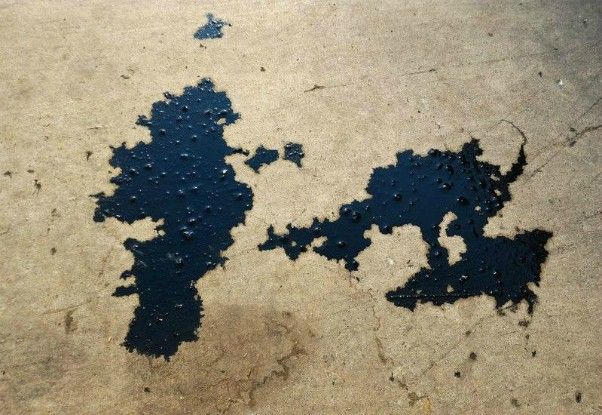
Removing oil stains and grease from your concrete garage floor, driveway, or workshop can depend on the size and age of the stain, as well as the concrete’s surface texture. Often, the best way to remove these stains varies from floor to floor. Regardless, they are an eyesore to anyone who likes to maintain a clean garage floor or driveway free from oil stains.
The problem is that concrete is a porous medium that can absorb oil and other liquids like a sponge. If allowed to sit for a while, oil will soak into the garage floor and do a great job of thwarting even the most determined efforts to remove it.
As a result, we cover the best methods for removing oil stains from your garage floor and driveway that have proven to work. How well each works depends on how stubborn the stains may be. They are listed below in order from the simplest to the most involved.
- Use a powdered detergent to scrub the stain or make a poultice.
- Apply concrete degreasers to emulsify and lift oil stains.
- Engaging oil-eating enzyme cleaners known as bioremediation.
- Soaking with solvents and applying a poultice.
Note: One method of removing oil stains that you will find on the internet is the use of muriatic acid. Do not do this! Muriatic acid is used to profile concrete by breaking down the surface for the application of coatings and sealers. If used at high strength to remove oil stains, you will end up with a weakened concrete surface that will look different from the rest of the garage floor.
Powdered Detergent to Remove Oil Stains
If you have a fresh or fairly recent oil stain, one of the simplest cleaning agents to use is powdered laundry detergent.
In fact, Tide used to be NASCAR’s standard oil-cleaning agent years ago, until more sophisticated oil-dry products were developed.
Additionally, we recommend using laundry detergent for your general-purpose garage floor cleaning.
Any powdered laundry detergent will work. Start by blotting up any heavy surface residue, then pre-wet the stain and the surrounding area. Oil that is freed from the cleaning process can migrate and cause a secondary stain on the dry concrete if you don’t do this.
Next, mix a strong solution of 1 cup of powdered detergent with 1/2 gallon of hot water in a bucket. Pour it onto the oil stain, then sprinkle more detergent directly onto the stain. Use a stiff-bristle nylon brush or deck brush and start scrubbing away.
Be sure to let the soapy solution sit for a few minutes but do not let it dry. Letting the mix sit allows it to penetrate into the pores of the concrete and emulsify the oil, effectively lifting it out of the concrete.
Use a high-pressure nozzle to rinse the solution away. The water pressure helps to lift the remaining emulsified oil out of the pores and remove the stain. Using a wet/dry shop vac on the sudsy solution while rinsing works well, also.
Make a Poultice
If some of the stain remains, the next step is to make a poultice with the laundry detergent. Pour a cup or two of detergent into a container and add just enough water to make a paste. Spread a thick layer of the paste onto the still-damp oil stain, then cover it with plastic to slow evaporation.
This homemade poultice will help to draw the remaining oil out of the concrete. Let it sit at least overnight and then uncover it to dry. Once it has dried, scrape it up with a putty knife and rinse off any residue.
Concrete degreasers
For more stubborn oil stains or those that have sat for a while, we recommend using a strong concrete degreaser. Degreasers work well at penetrating the stain, breaking down the oil, and drawing it up and out of the concrete.
Of the many that are available, Oil Eater is one of our favorites. It is an Eco-friendly industrial oil stain remover that works very well. You can find it here from Amazon.

Start by pre-wetting the stained concrete with very hot water. The hot water lowers the viscosity of oil and grease, making it easier to break down.
Next, mix a very strong solution of the degreaser and pour it directly onto the stain. Oil-Eater works well with hot water up to 200 degrees. Let it sit for a few minutes and then scrub the area well.
Let it sit for another 5-10 minutes. This allows the solution to penetrate the concrete’s pores and break down the oil. Do not let it dry. If it starts to dry before the time is up, add a little more solution and scrub again. Rinse the stain clean once the time is up.
Oil-Dri is another handy product that works well when used in conjunction with a degreaser. It is a natural poultice that is effective for cleaning freshly spilled oil. You can find it here from Amazon.
Once you have scrubbed the oil stain with degreaser and rinsed, add a little more degreaser to the area, then cover it liberally with Oil-Dri. It helps to grind it in with your shoes.
After that, work some more Oil-Dri over the stain with a broom. Make sure that you have enough on the garage floor to absorb it all without turning completely wet. Let it sit overnight and then sweep it up.
Oil Eating Concrete Stain Removers
For oil stains on a garage floor that have been embedded for a long time, you may need to take a different approach. As long as you are not under a time constraint, bioremediation is one of the best oil-stain removers. It is an all-natural Eco-friendly solution that is easy to use and works extremely well.
Bioremediation involves using microorganisms that break down and consume the hydrocarbons in oil. It is also the best way to help restore your garage floor or driveway to its original appearance for a more natural look.
The first of these that we can recommend is Terminator-HSD. It’s a dry powder that requires a mist of water to activate the live bacteria.
Lightly apply the powder to the stain, using a soft-bristle broom to spread it out. Next, lightly mist it with water using a spray bottle. Do not saturate it.
One application requires approximately two weeks to do its job. It may require a few applications to work on the toughest of stains, but it does work. And the best part is that no scrubbing is required.
You can find Terminator-HSD along with before and after images of oil stained concrete here from Amazon.
Eximo is another example of such a product. It’s a waterless solution that uses a dry powder that you apply and sweep over the stain.
We’ve used this one ourselves for a few different projects. I’m still amazed at how well it removed the oil from the garage floor. You can find it here from Amazon.
Like Terminator HSD, Eximo takes time for the microorganisms to eat the hydrocarbons. Expect a minimum of two weeks per application to work. We found that two applications worked the best for us on tough stains.
Removing oil stains with solvents
This last method involves using a solvent and a very strong poultice. This is only recommended if you have tried one of the first two methods without success and don’t have time for a bioremediation treatment.
You will need to use a solvent such as acetone or MEK. These solvents are known for breaking down and extracting oils. They also do a good job of penetrating smooth concrete.
Start by pouring a liberal amount of the solvent onto the oil stain. Let it sit for a minute and apply again if necessary. Once it has soaked into the concrete, cover the stain with a coating of pure Portland cement.
Do not use premixed concrete or mortar mix. Portland cement is a fine hygroscopic powder that will absorb the oil. It works better than most poultice products for this procedure.
It’s best to let it sit for a few days and up to a week to work properly. You can cover it with a garage floor mat or cardboard while it sits. When ready, just sweep it up, and the stain should be gone.
Warning – Fumes from solvents can be very flammable so make sure you turn off any pilot lights or open flames before you apply the solvent. You can relight after the solvent is covered.
Final oil stain cleaning tips
Just remember, any oil stains that have been on your garage floor for a period of time may still leave the concrete darker in color or leave a faint shadow or outline of where the stain once was. This is due to residual hydrocarbons from the oil that have attachedto the concrete.
Though the concrete may be darker in color, a properly cleaned oil stain will have removed the oil residue and will not impede the proper concrete prep for a sealer or coating.
Bioremediation products are among the few methods that help restore your concrete to its original state. These are ideal to use if that is your intention.
Lastly, if you are quick at cleaning fresh oil spills, you shouldn’t have to worry about evidence of an oil stain being on your garage floor at all.
Once all the stains are removed, it’s a good time to take preventive measures to seal your floor and protect it from further spills or drips. If you have a vehicle that leaks oil, you can also put down a garage oil mat to make your concrete even easier to keep clean.
My two cents? As someone who works with cars in his free time I honestly decided it’s easier to just purchase professional oil cleaning materials. Why put twice as much work into scrubbing my floor as I put into my actual hobby? Investing in real absorbent products has been worth every penny. Stuff like SpillFix works really darn well – cleans up the spill AND practically eliminates the oily leftovers that leave slippery stains. Highly recommended for anyone who deals with oily or liquid spills on a regular basis!
Hello Benny. We have to agree that when it comes to cleaning up an oil mess, absorbents work wonderfully. Being proactive with a probable oil stain is so much easier. The problem however is that not all absorbents like these work well at cleaning up oily messes that may have been in the concrete for a long period of time. We are however currently testing a new product that is a great absorbent and degreaser at the same time. So far we are highly impressed and hope to be releasing an article on this product soon.
I recently found a product that removes oil stains at Auto Zone. Oil Vanish Oil Stain Remover. It is simple to use and works fast.
I am in process of coating my concrete garage floor that
oil is embedded in areas of the floor. I have applied the
kerosene along with the portland cement to get rid of
the oil,I plan to leave on the floor 7 days. My question
can I add additional kerosene to the portland cement.
after one day it does not appear to doing any good.
leswiseman@gmail.com thanks for any help
Hi Lester. That is why it is recommended to leave the portland cement on for days. It takes time for it to work. The idea is to soak the spot with the kerosene first so that it has a chance to seep into the concrete. Once it’s been on for a while and while it’s still wet, apply the portland cement and then cover it up. Make sure you apply enough that it doesn’t all turn wet. If you feel you didn’t apply enough kerosene initially, sweep up the cement first and then repeat the process.
I’ve tried many types of cleaners but had the easiest fix with kitty litter BUT, with a little different application. I soak up what will come up over night, the next morning clean it up and then take a little more, drop it on the spot and with my work boots I stand on it and grind it into the spot. The littler powders and presses into the oil. I wait for a bit and clean up with a little water. It’s cheap and easy- don’t knock it till you’ve given it a go!.
Great tip Laurin, thanks!
I work as a Surface Prep Specialist for a major equipment distributor. I’m looking at a job for a customer and have encountered a lot of oil on hard trowel concrete. What are your thoughts on enzyme treatment to remove oil that has penetrated deep?
Enzyme treatment can work well Greg if you have the time for it as it takes a while to do its work. Generally oil on a hard troweled surface does not penetrate very deep unless it has sat for years. If you are grinding the surface, many times cleaning the oil with a strong degreaser first and then grinding will eliminate most of the oil.
I spilled a large amount of Minwax stain on my concrete garage floor. I after grinding the surface the stain is still very visible. Will an epoxy coating stick to this. Is Minwax petroleum based?
Hello Greg. Minwax makes both oil based and water based stains. Drip some water over the stained area to see if it absorbs fairly quickly without beading up. If it does, then you will be fine with the epoxy.
Baby powder or baking powder works well at absorbing newer oil spills. It also works good on clothing too.
I have tried many methods for cleaning oil stains, tire marks, paints, etc. So, far the best I’ve found is the put some good old gasoline over the stain and wipe it up with a rag.
Yes, that can sometimes work well Brent if the stain is not to old and deep. Gasoline and kitty litter is how I learned as a young boy in my father’s garage. You just need to be careful about the fumes near open flames.
I have a concrete driveway more than 30 years old and had a oil stains from my car leaking it. Saw a review somewhere to use brake cleaner in a spray can along with some cat litter after it. I tried this and it works great.
Hi Michael. Yes, it’s the same principle we list of soaking the stain with some solvent and then coating it with a poultice to draw out the oil.
Hi, I’ve tried Terminator (5 weeks, followed the manufacturers directions exactly), Oil Vanish, Purple Power Concrete Cleaner, acetone + portland cement, ZEP concrete cleaner, Oil Eater, poultice methods with a TSP mixture and probably some other methods I’ve forgotten on oil stains in my garage that are probably up to 15 years old (my condo is 18 years old). While they look somewhat better, there’s still an obvious stain there. When I spray them down, the water still sheets away from the stained areas. I’m considering trying an industrial cold pressure washer (no hot washer access here) as my last resort.
I’ll be grinding the concrete down before applying polyurea, but I’m concerned about bonding to the areas that have stains. Any advice/tips would be appreciated!
Hello Kristian. Grinding will change things significantly. It also makes it easier to clean the stain. If you still are experiencing issues after that, there are special oil stop epoxy primers that can be used over areas that have issues with oil.
I appreciate the quick reply Shea! I’ll be using clear polyurea (I’ve already done a small raised section in my garage), which I guess rules out a primer due to it being pigmented.
I was going to try pressure washing today, but will give grinding a go first and save the pressure washer for later. Thanks for your advice!
Great. Good luck!
Hi,
I have flux residues from copper pipe soldering. on my new concrete slab (poured 1 1/2 month ago). I plan an epoxy finish on it soon.
These stains are tough (flux looks like a thick grease) and TSP hasen’t been enough yet to disolve them. What should I try then to clean this? A special degreaser? Dissolve it with gasoline or another strong solvent (plus portalnd cement)?
Thank you,
Hi Lou. A solvent such as acetone will generally work with flux. Use a small nylon or wire brush to gently scrub it free and then wipe it up. There are also flux cleaners that are available. Some are for circuit boards while others are general purpose. Once you get it up and prep your floor for epoxy (etching or grinding), follow up by placing some water drops over those areas. As long as the water is absorbed and does sit there or bead, you will be OK for a coating.
Great! Thank you for your quick response.
Just to make sure, once the stain has dissolved, wiping with a clean rag is enough to clean it and I don’t have to add portland cement powder?
Thank you so much!
That’s correct, Lou. The Portland cement is only needed to draw out oils that have soaked into the concrete. Flux should not do that.
I applied epoxy paint to my garage floor five years ago. Months later I set down a diamond deck textured pvc floor mat from Home Depot to protect the floor where my car parks. I recently removed the floor mat to find staining under the mat. Do you have any suggestions for removing stains from the epoxy floor? I’ve tried several cleaning solutions including Comet, bleach, carpet cleaner, TSP, and Oxiclean to no avail.
Hi PZ. Diamond Deck mats are made overseas and are known to have this issue from time to time with their materials. If it was a store bought epoxy paint, then i’m afraid it’s not going to clean up from that very well. Even less so if it was a 1-part epoxy paint.
My garage is thirty thirty years old and the main car port is dirty gray in areas and rusty looking in others or a mixture of both. I do need see any spots that appear to be oil. Any good suggestions on how to clean this up? I have thought of using muriatic but your advice is no! I could send a picture from my I-phone if that would help, knowing your phone number or e-mail.
Hi Bill. The first thing that needs to be done is to clean the concrete with a good degreaser and scrub brush. If you have access to a floor maintainer or rent one from your local home improvement center along with a couple of green or black scrub pads, you will be amazed at what you can clean up. Acid etching will remove rust, but not oil and dirt. Also, you do not want to acid etch if you have no intention of applying a good sealer or coating. The etching will make the surface rougher and open the pores of the concrete. This only aids in collecting and soaking in more dirt. You purchase concrete rust removing products that do not etch the concrete like acid does. Just look online or at your local home improvement center.
Can I use oil eater cleaner degreaser on epoxy floors on garage??
Hello AJ. A good garage floor coating should not require a degreaser in most cases. Oil should clean right off with little effort. Strong degreasers such as Oil Eater or Purple Power can sometimes cause the coating to degloss if used in a heavy concentration. We recommend a weak concentration first. If you have a very old coating that is scratched up or a poor quality coating, then oil and other contamination can get embedded. If that is the case, then you can use a mixed at the recommended strength.