
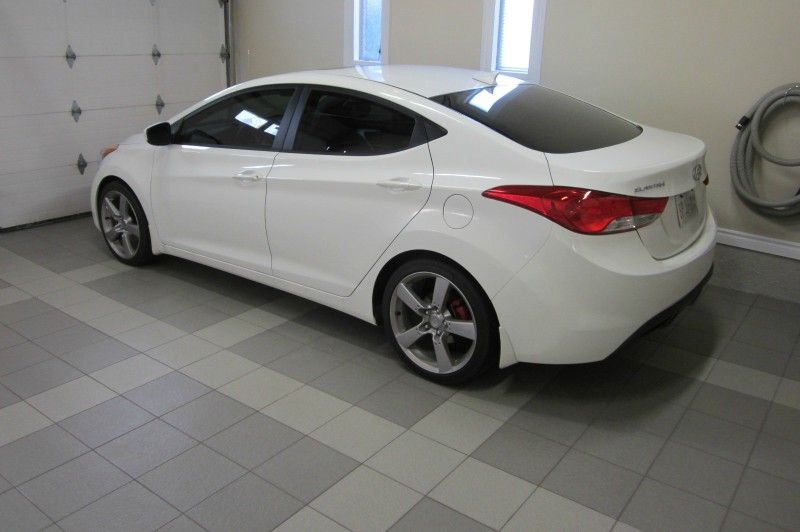
With so many people curious about the long-term performance of porcelain tiled garage floors, we thought this would be a great time to do a review. We wanted to find a floor that has consistently been put to the test and not one located in mild weather that has only been used for parking cars. We realize there are those who question using porcelain in a garage, so we wanted to find a good example to review.
As luck would have it, one of our readers posted a recent picture in a popular forum of his first time, fully mopped (yes, we said first time) porcelain garage floor after 6 years of use. Knowing the history of this floor and after seeing the picture he posted, we reached out and found a great example for our long-term review of a porcelain tile garage floor.
This particular porcelain tiled garage is a DIY install by Anthony, who happens to live in Ontario, Canada. So needless to say, his garage floor sees some extreme weather.
In addition, to state that his floor is a DIY install is a bit of an understatement. At the time that he did his own installation, he was also working as a full-time professional tile setter. He has since moved on from the trade, though he does do the odd job from time to time.
The images below are what Anthony’s new porcelain garage floor looked like the day he finished it. Even then, he didn’t give it a full cleaning before he put it to use.
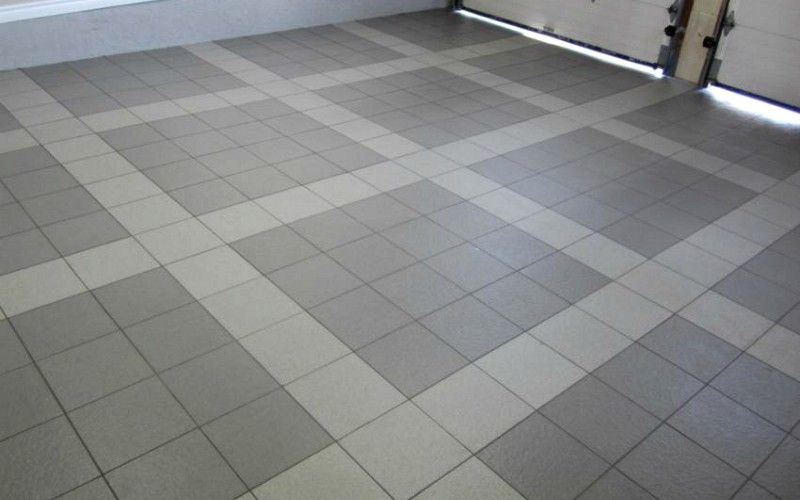
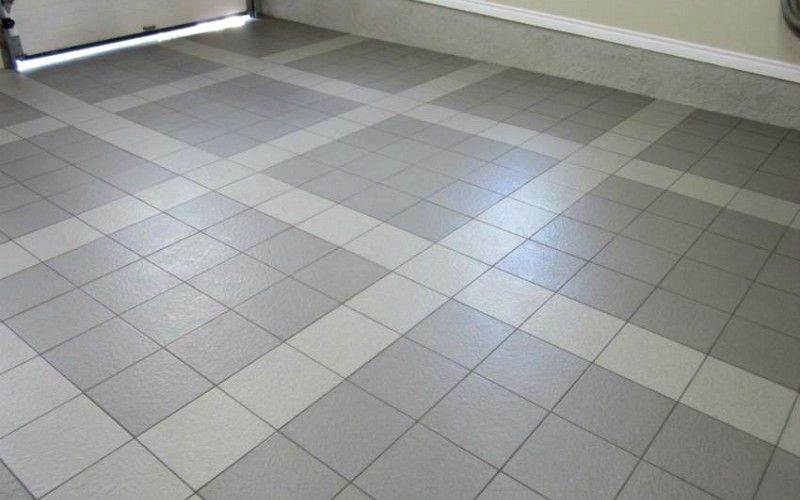
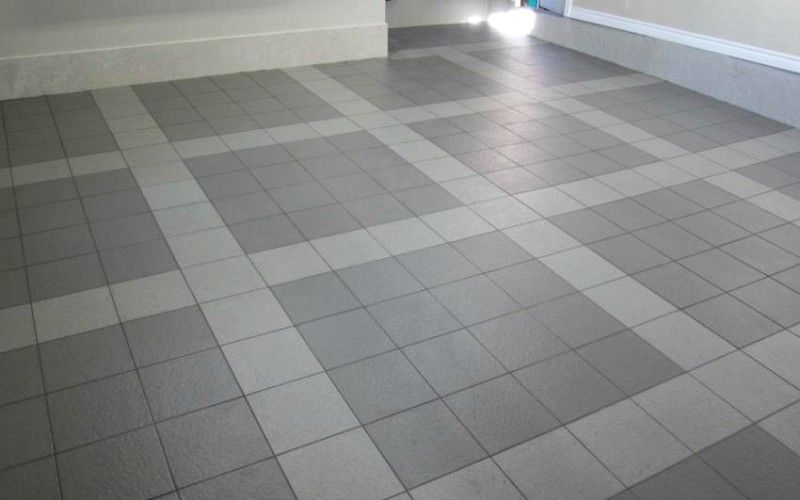
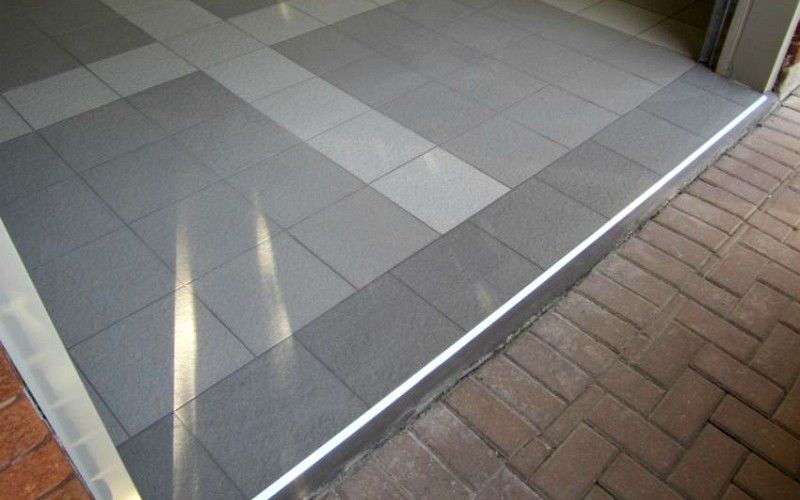

Anthony’s finished floor – click on an image to enlarge
Our intention here is not to detail his installation. We actually provide a link later below for you to review his project install for yourself. Instead, we elected to display a variety of images and some description that shows the type of use and abuse that his porcelain tiled garage floor has encountered, as well as the results after 6 years.
The main goal for my floor was to use and abuse it as if it were a plain slab of concrete and not have to worry about damaging or marring the finish.
Furthermore, Anthony has provided some of his own views in terms of why he chose porcelain tile, including some factors to consider if this is a garage flooring option that you are seriously considering.
The 6 year Use and abuse of a porcelain garage floor
At 420 ft², Anthony’s garage floor has seen its fair share of work. Switching from summer tires to winter tires and vice versa is an annual ritual. This floor has been through five or six seasons so far with two cars.
You can see that he uses a standard floor jack with steel wheels on the porcelain. This doesn’t include the regular maintenance that has been performed on both vehicles as well. Contrary to what some skeptics believe, porcelain tile is extremely durable.
Of course, the winter weather in Ontario brings in the extreme cold, salt, sand, and deicing fluids. Below you can see some typical examples of what this porcelain floor has encountered during these winters.
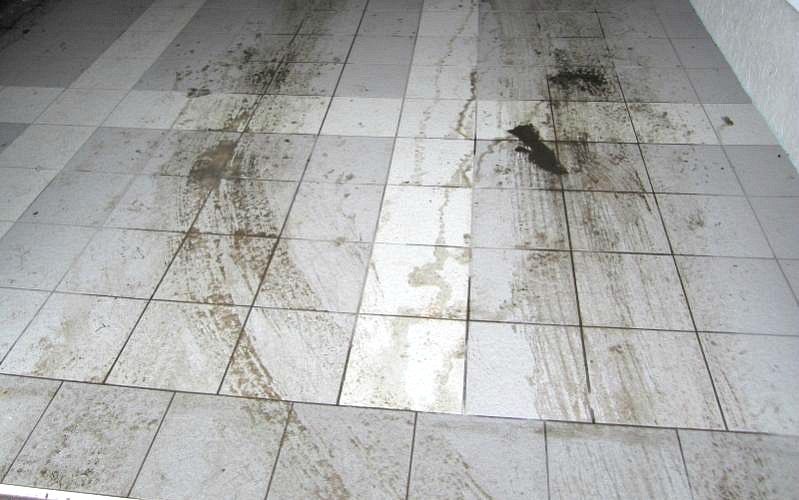
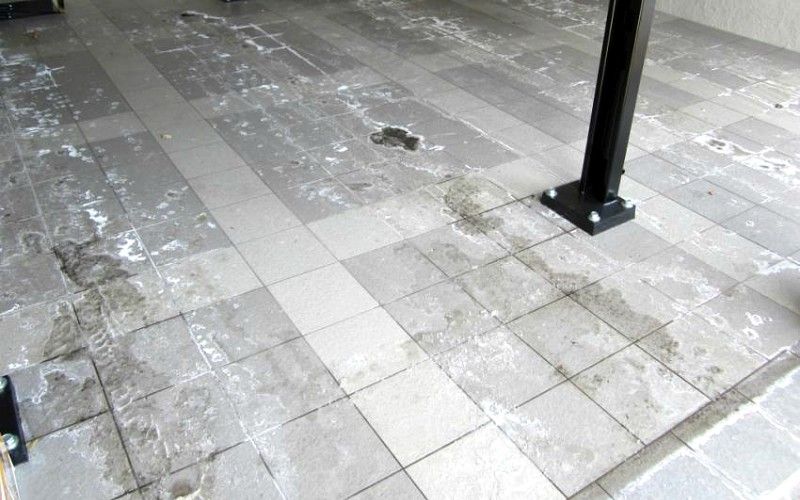
Because he chose a tile with a higher wet coefficient of friction (COF) slip resistance rating, Anthony has said that slipping with the wet tile has not been an issue.
In addition to the winter weather, car maintenance, and floor jacks, Anthony decided to install a Direct Lift 4-post lift. This allowed him to park his cars one above the other in order to create more room in the man cave.
He used a 2-ton engine hoist and 3-ton floor jack to assist with assembly. Note that he did not protect the floor while this assembly took place.
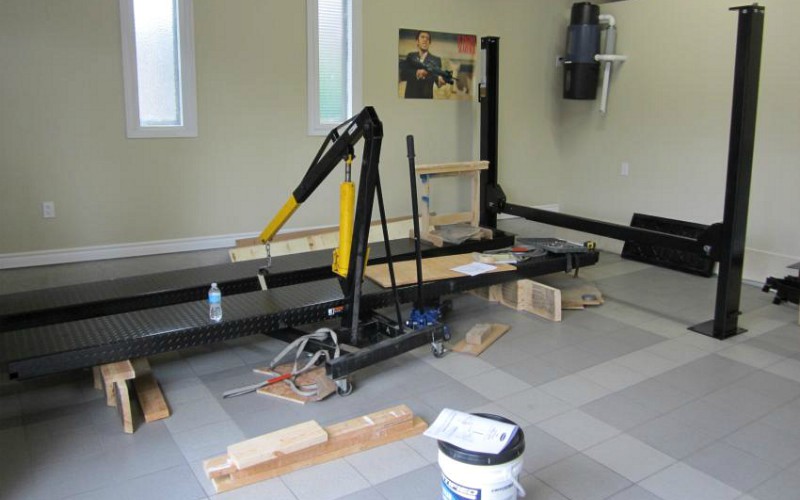
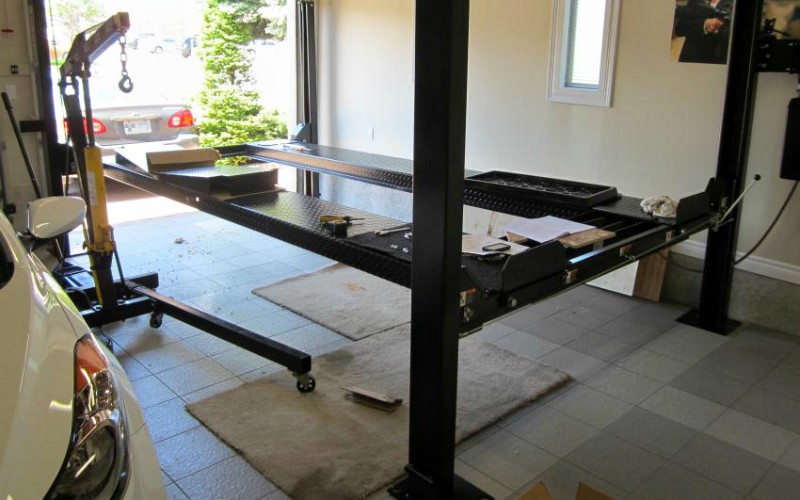

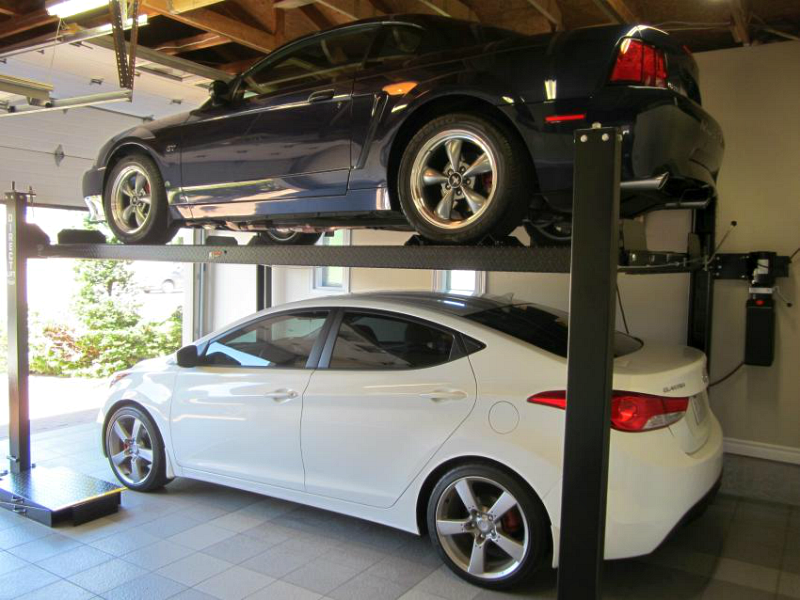
As you can see, the lift came together nicely and Anthony uses it on a regular basis.
Automotive work, parking the cars, and winter weather is only some of the use this porcelain garage floor has seen.
When Anthony decided to renovate his basement, he completely gutted it and deposited all of the material onto the garage floor. He had enough to fill a 20-yard bin.
The image below is what the floor looked like the next day after he gave it a quick wash. As he pointed out, you can still see some of the drywall dust next to the front of the car.
One thing we picked up on is that when Anthony says that he gave the floor a quick wash, what he really means is that he hosed it out with just water (no soap) and might have used a broom to scrub the heavy stuff.
We usually call something like that a rinse out, but since it’s so easy to clean, we are guessing that Anthony considers it washing instead 🙂
So, after almost six full years, Anthony finally decided to give his porcelain floor the full mop treatment that it deserved from the start. The results? It looks just as new as the day he installed it.
Anthony was quick to point out that the floor looks freshly laid with “no chips, no cracks, no nothing!” You can’t ask for much more than that.
Final Review and thoughts
We asked Anthony to provide any additional insight with his installation, as well as to why he chose porcelain to begin with.
He stated that longevity and durability were the driving factors. Easy cleanup was another. Cost was important too since he could get discounts for the tile and materials from his suppliers. Plus, it didn’t hurt that his labor was free!
To quote him; “The main goal for my floor was to use and abuse it as if it were a plain slab of concrete and not have to worry about damaging or marring the finish. No other flooring option (in my opinion) will last or take a beating better than tile.”
One thing he did point out is that porcelain tile for a garage floor is not going to be for everyone. If you don’t have the DIY skills to install it yourself, labor can be expensive.
We have to agree, as this is especially true right now with the current economy in the States. Tile setters have been busy. Unless you know of someone, labor could get pricey.
One thing that Anthony wanted to do was document his installation in order to provide the inspiration and knowledge for the “weekend warrior DIY’ers”. He was true to his word and you can find his documentation here at the Garage Journal.
Not only does he provide his own installation details in his documentation, he has also answered dozens of questions and has provided much information for others. He really enjoys seeing others post pictures of their own tile installations or create their own documentation thanks to his help. It’s worth reading if you are interested in porcelain and it will answer many of your future questions.
What we have displayed with Anthony’s garage is nothing beyond the ordinary for porcelain tile. We have witnessed even more abuse with no ill effects by others who have porcelain in their garage.
We were particularly happy to display how well a porcelain garage floor does in a very cold climate. We have found this to be one of the factors that has made people wary about choosing porcelain. As long as you use a flexible thinset all the way to the outer edges and with no air gaps under the tile, freezing weather is not an issue.
As Anthony states; “It’s so gratifying seeing an individuals reaction when they see the floor for the first time as I open the garage door.”
If you were on the fence about porcelain or you needed more information to help make up your mind, we hope that this long-term review has filled in the final pieces for your decision. It’s our opinion from this review that a porcelain tiled garage floor is arguably the most durable garage flooring option available.
Looks great. Would you recommend porcelain over epoxy or Swiss Trax?
Help,
Herb
Hello Herb. It all depends on what your ultimate goal is for the floor and how you want it to look. Porcelain is the toughest flooring you can put down in a garage if that is your goal. Depending on your area and the labor market, it can get pricey to pay someone to install it for you and/or if you choose a more expensive tile. SwissTrax garage floors look great and they are easy to install yourself, but nice as they are, they are not as tough as porcelain. They still do extremely well though depending on how you want to use your garage. A commercial quality floor coating system could be the least expensive option if you elect to do it yourself and it will last 10-15 years before it needs a recoat.
Are the tiles Anthony specified by name,brand, pei, etc. and if so please direct me to where and to buy
Thanks
Hello David. We know that he used a PEI 5 tile, but we don’t know what brand or the other specs. However, if you follow the link we provided in the article where he documents his install, you can join the forum and ask him yourself.
I am going to install porcelain tile on my new garage floor but wonder if it will be OK to place my mid rise scissor lift directly on the tiles?
Thanks for you help.
Hello Jonathan. Yes, you can place the lift directly on the tiles without issue providing they are laid correctly. The most important detail when laying porcelain for a garage floor is to make sure that the tiles are back buttered with thinset to ensure that there are no air pockets under the tile or voids under the edges of the tile where thinset should be.
I have a new home with a concrete floor that is already showing some cracks. If I put tile down will it crack too? Or will it float and not crack?
Hi Ron. There are uncoupling membranes that should be laid first when dealing with concrete floors that have cracks or are susceptible to cracking. Ditra is one such example. When these type of membranes are used, they allow for movement in the concrete in order to prevent cracking of the tiles. If tile is laid without such a membrane directly over a crack that moves at some point during the life of the tile, it will typically crack the tile along the same line. Just Google it and you will see videos of how it works.
Can I install tiles over an old epoxy coating. Do I have to grind it off.
Hello Robert. It can be done, however, the process to do so is more involved than just grinding it off to expose the bare concrete. In addition, you have to be positively sure that the epoxy is sound and adhered well. If not, when the epoxy delaminates, so does the tile. The process involves roughing up the epoxy and then applying a modified cementitious epoxy adhesive to that before you can apply the thinset. Plus, the epoxy adhesive is on the expensive side.
Can porcelain tile be laid immediately after a concrete garage floor has set or should there be a period of time for the concrete to cure?
Hello Colleen. You need to wait a minimum of 30 days for the concrete to properly cure before laying tile. The same goes for coatings as well.
Was there any consideration for a heated floor using Ditra?
Hello Terry. Ditra is fine to use with heated floors.
Can PEI 4 be used as well in a garage?
Hi Larry. Yes, a PEI 4 will work just fine.
What about moisture in the concrete under the tile. After a rain areas of the garage floor show moisture. Will this affect the integrity of the tile? How thick of tile do you recommend?
Hi Mark. Moisture from under the slab is not good. Are you positive that is where it is coming from? We recommend doing a moisture test when you get rain to check. Also, check to make sure down spouts are draining away from the slab and water is not pooling up against it. If you don’t have too much moisture, you can put down a product like RedGard first. PEI 4 or 5 rated porcelain tile are all going be close to 3/8″ thick.
Thanks. All water drains away from the house. The slab just seems to sweat in certain areas during rain. I appreciate your feedback.
A sweating slab and moisture from beneath are entirely different. I suggest you read this article about sweating concrete to learn the difference so that you know how to tackle your issue.
This is Dan from Mpls, Mn. Anthony, did you use a barrier like DITRA under the tile, if so did you use modified or unmodified thin set, or did you use Schluter’s all purpose thin set, and what grout did you use. Thanks so much, nice job by the way.
Hi Dan. He used AuqaDefense by Mapei. If you follow the link we provided at the bottom of the article, he outlines all materials used in the project including thinset and grout. In addition, he monitors the thread and will answer any questions directly.
VERY interested in putting porcelain tile down in my garage.
Two concerns:
1. Car work in the garage. (a.) Usual oils, fluids, etc…….I am assuming no issues. (b) Have a four post lift (not permanently mounted, so will be able to move out of the way and back). Will this damage the floor? If 9,000# lift capacity, figuring I can wind up with perhaps worst case of 4,000 pounds/sw ft. (c.) (Biggest working concern) With the four post lift, I host many friends doing projects as well as my own. Have pulled/swapped engines, transmissions, differentials, etc. etc. Engine lifts, dropping tools, etc. Any concerns from these activities?
2. Live in Minnesota. Lots of snow, ice, sub-zero cold, salt, etc. If I put it down with “no” air gaps, should there be a problem? And my biggest concern…..will I slip on it, either walking on the winter muck, or driving into it? Biggest fear is sliding once in the garage
I have seen tiles in a local dealership that have raised ridges on them, like a steel floor, for traction, but I haven’t found anyplace to purchase.
Any/All input greatly appreciated!!
Hello John. Most 4 post lifts that move around have large wheels so it should not be an issue at all. The key for smooth rolling is very little lippage of the tiles (height differences between tiles). Porcelain tile rated at PEI 4 or 5 typically has a compressive strength of 20,000 lbs per square inch. As long as there are no air gaps under the tiles, including the edges, then weight is a non-issue. Back buttering of the tile is a must to avoid air gaps. No tile is impervious to being chipped from items dropped. However, it’s very hard to do so. We’ve heard plenty of stories about a transmission falling off a rolling tranny jack for some reason and not chipping the tile. We used to have a short video clip posted of Jack Olsen’s 12 gauge garage where he demonstrates pounding the tile a few times with a 3lb. sledgehammer without breaking it. And his tile is ceramic. However, after many years he has taken down the video.
Cold weather climates are not an issue either. Just make sure you use a flexible thinset. Slipping from being wet is going to be dependent upon the tile you choose. Some have high slip-resistant ratings, some do not. You will want to check with the manufacturer to see where they rate. Slipping while driving on the tile will not happen unless the tiles have iced over from water freezing on it.
Also, epoxy grout or epoxy grout hybrids are recommended and are extremely hard to stain. Plus, they don’t need to be sealed like typical grout. Darker colors of course are better than lighter colors. You may want to check out this thread from the Garage Journal. There is a lot of information about porcelain tile. Plus, there are many examples on that forum of others who have done it.
Hi Shea
Many thanks for this. Anyone in Dallas,TX you recommend for installation?
How much does the installation cost?
Hi Adam. Unfortunately, we do not have a list of recommended installers. The best advice is start asking around. The various tile stores are a good place to start. They usually have a list of installers they recommend. Cost can vary widely from $1-4 a square foot depending on your area.
This is awesome! Exactly what we are looking for, thank you for all this information. We found several porcelain tiles that are wood plank and PEI 5 but are not square. Do you think rectangular 8″ x 48″ or 10″x60″ or 6″ x 24″ would work under the pressure of a car? Or does it have to be square?
Hi Jen. Any PEI 4 or 5 rated tile that is laid correctly will work fine. However, you need to be careful with the long, plank-like tiles. Professional tile setters hate laying them because they tend to have a very slight bow due to how long they are. This creates lippage. This occurs when one side of a tile is slightly higher than an adjacent tile. It is very difficult to lay them without noticing this. The rectified plank tiles tend not to have a slight bow, but they are much more expensive. We would recommend keeping it down to 24″ or less in length/width.
I agree that properly installed porcelain tile should not be a problem my only concern would be at the edge of the garage where the door is, it seem that this would be the weakest spot and would be prone to cracks. Did you use any type of saddle or other material as a solution to this potential problem?
Hello Mitch. If you look back at the article, there is a gallery with four images grouped together. One of them shows the edge of the tile by the garage door opening. At the edge of the tile is a transition piece called a Schluter Reno Ramp. You can see what one looks like here. It provides a great transition and protects the edge of the tile.
That’s looks like it would work well. Thank you.