

If you live in a snowy climate and are considering interlocking tiles for the garage floor, then these winter tips and tile design information are for you. Questions and concerns regarding which garage tile is best when dealing with the effects of road salts, deicing fluids, and snow are common. With these questions and more in mind, let’s review a few tips and concerns for interlocking garage tiles for snow and winter weather.
Will interlocking garage tiles work for snow and ice?
The short answer is – YES! Interlocking garage tiles work extremely well if you live in an area of the country that experiences snow, ice, road salts, and all the other nasties that winter weather brings into your garage.
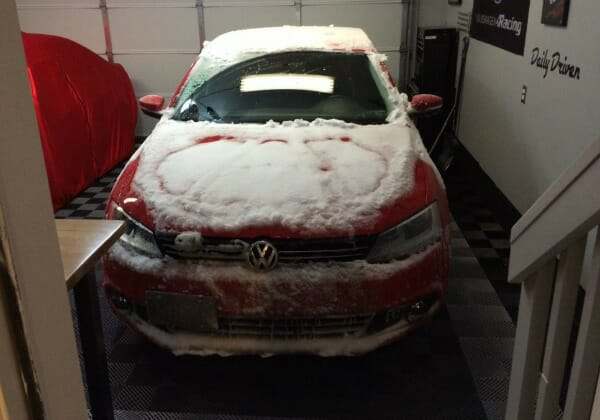
The salty brine from deicing fluids and road salt will not harm the tile, nor will the extremely cold temperatures. The snow, debris, and water will mostly sit atop the solid top tiles until the liquid evaporates or you push it out with a broom – just like a regular floor.
With the self-draining free-flow designs, the snow and debris will just fall through to the concrete below. This leaves a much drier surface to walk on with nothing to clear out.
What about the concrete underneath the tiles?
Very little generally needs to be done other than sweeping the garage floor before installing interlocking tiles. However, if you live in a winter wonderland where your car brings in snow and road salts, then we recommend sealing your concrete first before you install the tiles.
Why? The reason is to protect your concrete from the pitting, spalling, and freeze-thaw damage that can happen due to the destructive nature of the salty brine that can get deposited onto the concrete. Even if you are covering a pitted floor with tiles, you still want to seal the concrete to prevent further damage.
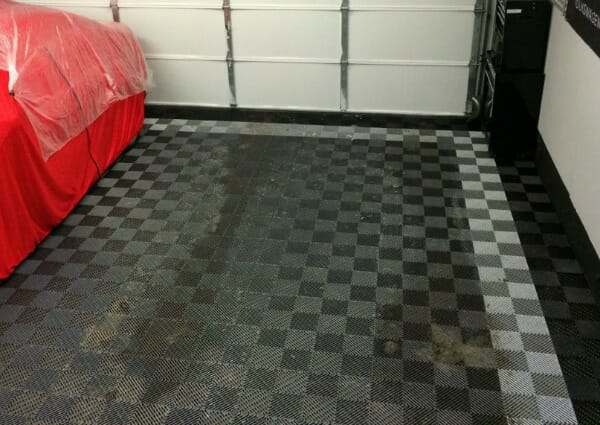
This especially holds true if you install a self-draining tile design that allows for snow melt to run right through the tile to the floor. Though the water may run to a floor drain, evaporate, or run out the back of the garage, it will still allow the salty residue to soak into the concrete and damage it over time.
We recommend using an easy-to-apply penetrating concrete floor sealer. They are inexpensive and can be purchased for less than $50 to cover a typical 2-car garage floor. Once applied, you can be installing your tiles within a couple of hours.
Free flow self-draining VS solid tiles for snow
One popular question we get is which style of interlocking garage tile is best for snow in the garage. The answer really, is that it depends. Depends on what? Well, there are many factors to consider before deciding on which garage tile is best for you.
The first factor to consider is winter cleaning maintenance of the concrete under the tile come spring.
If you choose the popular solid top diamond or coined design, then very little liquid and debris get past the tiles to the concrete below. Snow melt will puddle and bead on top of the tile due to the hydrophobic reaction of the water to the plastic. It resists leaking past the seams unless the tiled floor is really flooded with water.
With the self-draining tile, debris such as sand, pebbles, and salt residue will be deposited onto the concrete underneath. This generally will require cleaning under the tile come springtime depending upon how much debris is on the concrete floor underneath.
Though this method is a bit extreme, you can see how spring cleaning under interlocking tiles is fairly easy.
Cleaning methods can vary. It can include using a strong shop vac to suck the debris up through the tiles or washing it out the back of the garage using a high-pressure hose sprayed through the tile. You can even remove sections of the tile where cars sat in order to vacuum up or sweep the concrete.
Another factor to consider is how dry you want the floor to be.
The big advantage to the self-draining free-flow style design is that snow melts right through to the concrete below. That means you won’t have to walk in briny puddles or worry about slipping on your garage floor.
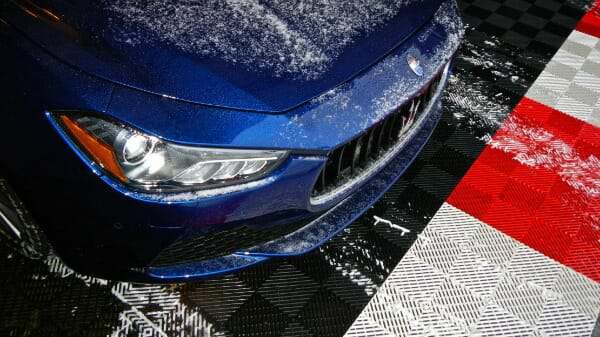
This will actually keep more of the floor looking clean as compared to the solid top tiles and doesn’t require as much maintenance to keep looking nice. It also allows for the snow melt and water to run out the back of a sloped garage floor or towards the floor drain if your garage is equipped with one.
With the solid top tile design, you can easily push the water out the back of the garage with a broom. However, it can leave a much larger area of residue on the tile after it dries that will later need to be cleaned. Of course, you can always avoid this with the use of a winter containment mat.

If your garage goes through freeze-thaw cycles; that is snow and ice melting during the day and refreezing at night, then you may want to consider a self-draining or free-flow design.
The reason for this is that snow or ice that melts on a solid tile design will puddle and then refreeze. This creates dangerous areas to walk on if it isn’t cleaned up first before the temperatures drop. The self-draining tiles do not allow for these puddles and will create a much safer environment to walk on.
Will the concrete dry underneath the tiles?
Yes, the concrete will dry underneath the tiles. Whether you have the solid top or self-draining style, most interlocking tiles are designed to allow air to circulate under the tile. This aids in evaporation and also prevents mold and mildew growth under the tile as well as averting odors.
If the concrete floor of your garage does not slope towards the back or tends to puddle heavily from low spots, then you may want to think twice about using a self-draining tile. The water may not evaporate fast enough and you won’t be able to get it out unless you pull a tile up and use a wet vac to suck up most of the water. The solid top design will allow you to push the water right out the back of the garage
Final decision
The decision of which interlocking garage tile to choose for snow and winter weather can really depend on the maintenance you are willing to deal with. Another consideration is the construction of your garage floor, safety, and most importantly, how you like the way it looks.
Once you take these winter garage tile tips into consideration, we are sure you can choose a tile design that is best for you.

Very nice write up. I’m glad my YouTube video helps explain the pros of owning the FreeFlow floor by RaceDeck.
Hello Rick and thanks for the kudos. You have a very nice garage and the video you put out does a great job of highlighting the advantages of the FreeFlow design. We need to do an article on your garage!
Good Morning Shea
Looking to build that Man Cave Garage
So I have a place to bond with my 3 year old son As I am 58 now
I need to do it right the first time
Have H/D and cool golf cart looking
for classic car to park on this floor
Question
Cost not being an issue
Porcelain the best way to go?
Love Race Deck colors and style concerned about warping
We live in North NJ garage door remains open and we do get sun
Any contractors this way you recommend
Thanks for the help
John
PS 2 car garage 600+ sq. ft.
Hello John. Building a man cave can be a very fun and rewarding experience! Porcelain is an excellent option for garage flooring. It’s very hard to stain and extremely tough when installed correctly. One possible issue to consider would be your NJ winters. If you will be tracking in snow and deicing fluids from the roads, you will want to find a tile with a COF rating (coefficient of friction) of .6 or higher. Even then, it might still be a little slippery if your garage sees temps below freezing.
Regarding RaceDeck, if you use their Free-Flow styled tile you shouldn’t have any expansion issues from the sun shining on it. There is much less surface area to absorb the heat and they do not tend to expand much. They also work very well in terms of traction in the winter time. Snow and other debris will flow through the tiles to the floor below. In terms of contractors in your area, Garage and Beyond has and excellent reputation and excels in high end garage flooring, garage organization, and is a RaceDeck dealer as well.
From what I have been able to learn, RaceDeck manufactures most polypropylene interlocking garage floors. MotorDeck, GarageTrac, etc are made by RaceDeck using slightly less specifications. I am building a new home with a 941 sq ft garage and do not like the issues of epoxy peeling over time and considering the interlocking product. I will utilize the garage to house two standard automobiles and a golf cart . Are there any issues to using the MotorDeck interlocking product offered through HomeDepot at a low price of .75 cents per sq ft? The five customer reviews in HomeDepot were excellent for this product but the product is three to four times less expensive than similar advertised product? Is this a good bargain or am I missing something?
Hello Terry. Yes, SnapLock Industries is the manufacturer of RaceDeck and a variety of other private label interlocking tiles. There are a few other companies that manufacture interlocking garage tiles as well. In terms of quality, the differences between the RaceDeck name brand tile and MotorDeck tiles have to do with the bracing sub-structure under the tile as well as how thick the plastic on the top surface is. The RaceDeck tiles have a thicker and more robust bracing system under the tile that enables it to achieve the 80,000 pound rolling weight rating. The peg and loop locking mechanisms are tied-in better to this thicker structure as well. Additionally, if you look at images or compare them in person, you can see the lines of the sub-structure bracing in the MotorDeck tiles ghosting through the surface. You can’t see this with the RaceDeck tiles due to the use of more plastic. If you were to hold the two tiles in each hand, there is a noticeable weight difference.
That said, if you don’t plan on parking a small tank or 18 wheeler in your garage, then the MotorDeck tile is more than sufficient for your intended use. We recommend purchasing them from HomeDepot before someone comes to their senses regarding that price. It’s a heck of a deal. You can always purchase a few more than what you need to use as replacements if you were ever to damage one. If you were someone who actively works on vehicles and other projects in your garage, then the RaceDeck tile is one to strongly consider.
good morning,
Which tile do you recommend for jacking up a car,
Hello Aynur. They all do well as long as you place the jack on a piece of 5/16″ thick or greater piece of plywood.