
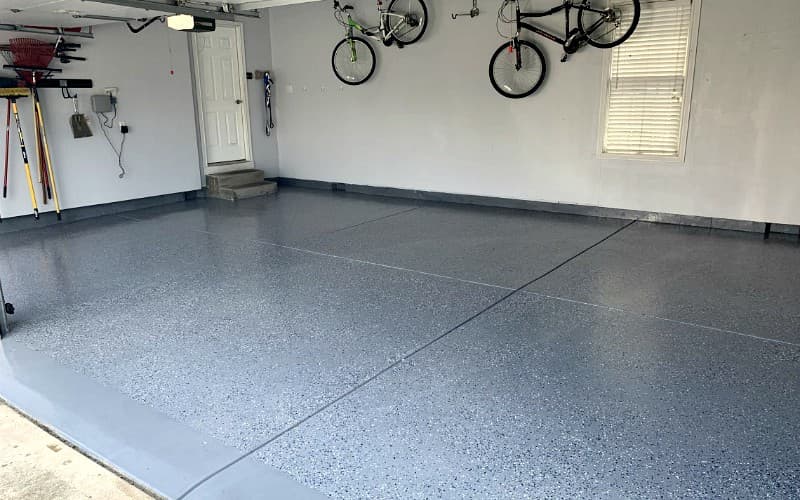
There is no shortage of quality garage floor coatings to choose from these days. However, when you factor in ease of installation, it is no secret that we firmly believe single-part polyurea is superior for most DIY applications. Thus, it is for this reason and more why All Weather Floors polyurea by Garage Flooring LLC of Colorado has quickly earned the reputation as an outstanding DIY garage floor coating option.
We first wrote about single-part polyurea when it was initially introduced to the DIY market in 2015. We were quick to recognize the many advantages that it held over traditional high-performance epoxy coating systems and our views have not changed.
As more garage flooring vendors slowly began to offer this coating, we realized that single-part polyurea makes for the best DIY garage floor coating kits available for the average garage. We posted an article that lists all the benefits and supported it with many facts that most people don’t think to consider when shopping for a garage coating.
In brief, single-part polyurea requires no mixing of part-A and part- B components (hence single-part). It is activated by oxygen in the air. Once applied to the concrete, the coating is exposed to much more oxygen than in the open can and begins to cure. This gives it an almost unlimited pot life (like paint). As a result, you don’t feel rushed to get it applied as you can with epoxy.
In addition, it is U.V. stable, which means that it will not amber (yellow tint) from sunlight like epoxy does, and it provides the outstanding chemical, stain, and wear resistance of a high-performance polyurethane.
Lastly, it will provide a quicker return to service. This allows you to move items back onto the floor and drive on it sooner than a multi-coat epoxy garage flooring system.
This post may contain affiliate links. If you use these links to make a purchase, we may earn a small commission. As an Amazon Associate, All Garage Floors earns from qualifying purchases. You can read our full disclaimer here.
Why we like All Weather Floor polyurea kits
Garage Flooring LLC of Colorado was not the first to introduce single-part polyurea to their lineup. However, they were quick to recognize the benefits of this type of coating, particularly for DIY applications. After taking time to evaluate various polyurea products, they found what they were looking for in All Weather Floors Polyurea (AWF).
That wasn’t all though. Justin Krauss, the owner of Garage Flooring LLC of Colorado, then put together what he considers the best performance and value for a single-part polyurea. This was done through the various garage floor coating kits he offers. We have to agree that we really like his philosophy regarding how these kits are assembled. Let’s explain.
To start, AWF Polyurea kits include considerably more polyurea per coat. As an example, their 500 ft² kit includes 20% more polyurea than Nohr-S.
The reason for more polyurea is that their kits are calculated with a coverage rate of 200 ft² per gallon. This is instead of the usual 250 -300 ft² per gallon that many competitors use. This coverage rate provides for a thicker dry film thickness of 5.5 mils per coat. It results in longer wear and subsequent deeper color uniformity when applying a single base color coat.
Additionally, all kits include one pound of color flakes per 100 ft² of coating. This is more color flake than most of the competition provides. And, without additional charge. It will produce a heavy broadcast of color flakes – or less if you prefer.
Furthermore, each kit includes premium roller covers and an anti-slip additive for the final coat (if you elect to use it). There is also a set of printed application instructions that are very thorough and easy to understand.
Justin points out that it is very important to stay within the 200 ft² per gallon coverage limit. Do not let the initial appearance of the application be the guide.
The reason behind this is that all single-part polyurea coatings are solvent-based. The wet film thickness will shrink as the solvents evaporate during the curing process. If you go further than 200 ft² per gallon, you will end up with a thinner dry film thickness than is intended.
Speaking of solvents, All Weather Floors polyurea will produce a somewhat stinky odor (as do all single-part polyurea). Justin recommends the use of a NIOSH-approved respirator during application. This is an example of one from Amazon.
The odor will quickly begin to diminish a few hours or so after application. It is mostly gone by the time it is safe to drive on the coating. Something to be aware of is that odors may take longer to dissipate if the coating is applied during much cooler weather.
For those who are apprehensive about performing the required acid etch of the concrete, Garage Flooring LLC of Colorado also sells an environmentally friendly etching product called Eco-Etch 1001 by GhostShield. They have found it to work very well with AWF polyurea.
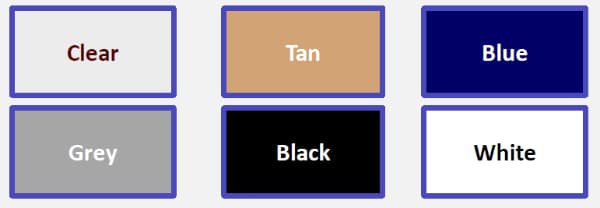
AWF polyurea is available in six different colors. Besides the traditional gray and tan, it is also available in black, blue, white, and of course, clear.
As we had stated earlier, Justin created a few different kit options. The first is the standard Two Coat System. This consists of a single base coat of gray or tan, color flakes, and a single coat of clear.
The Two Coat System is the most popular option. It provides excellent protection for garage floors that see the typical vehicle traffic, maintenance repairs, and small home projects.

If you prefer the glossy, natural look of concrete, you also have the option of two coats of clear and no color flakes. This eliminates the color coat.
Justin states that one coat of clear for a high-use residential application would be adequate. However, he recommends two coats for a true workshop or for commercial use.
The next option is the Three Coat System. This consists of two color coats, color flakes, and a single coat of clear. It was designed specifically for those that want a white, black, or blue base color coat.
These colors do much better with two coats in order to provide a deep, rich color that does not allow the concrete underneath to ghost through and influence the color.
Of course, you can always choose gray or tan for this system as well. This is popular for those that want to build coating thickness for better impact resistance and even better wear.
Lastly, you have the option of the Three Coat Full Broadcast System. This system consists of one color coat and enough color flakes to completely cover the color coat to full refusal.
What this allows you to do is create a custom look to your garage floor based on your color flake mix. You then apply two coats of clear to the flakes in order to fill all the nooks and crannies and create a smoother finish.
Full color flake floors, also known as flakes to full refusal, create a much thicker build. The flakes add an additional thick layer that is sandwiched between the color and clear coats. They also do a good job of hiding surface irregularities. Full flakes floors are the most durable of options and arguably the best-looking garage floor coatings.
Is an epoxy primer recommended with AWF polyurea? No, Justin states it is not necessary. AWF solvent-based coatings do an excellent job of penetrating concrete surfaces as is – even better than water-based epoxy primers.
Because the AWF kits provide for a thicker initial base coat than the competition, a primer is not required to provide thickness and deep color to the coating. Plus, he believes you should be getting more polyurea for your money, not less.
Where Can I Purchase AWF Polyurea?
You will only find All Weather Floors Polyurea from Garage Flooring LLC. They provide an easy-to-use ordering system based on your square footage and the type of kit you would like.
Price AWF Polyurea Kits Here
If you have any questions about the kit you are interested in purchasing, just ask them. They have live chat available during business hours. You can also give them a call or ask questions via email.
The Rave reviews of AWF polyurea Garage Fooring Kits
This evaluation of AWF polyurea garage flooring kits is something that we should have done a while ago and here’s why.
We know that for consumers, finding good comments in terms of reviews for garage floor coatings is not always easy and they are not always accurate. Plus, many vendors of commercial coatings do not have a place on their website to promote reviews. Or, they just don’t take the time and effort it requires to ask for customer feedback.
Well, Garage Flooring LLC of Colorado has taken the effort to do both. We’ve watched with interest how they have slowly put together a long list of Project Profiles. These include testimonials, reviews, and actual pictures of completed garage floors from happy customers who have purchased and applied their AWF polyurea kits. You can view them here.
They are not getting these great reviews from happy customers just because they are asking for feedback. It also has a lot to do with their customer service and the wealth of information they provide on their website in regards to their garage floor coating kits.
We noticed when viewing their webpage that Justin does a great job of anticipating many of the questions that people naturally have when shopping for a coating. He provides excellent information about their kits that actually educates and informs the potential customer about their polyurea coating systems and what to expect from them.
In addition, they have an application video that was sent to them by a customer. Though not a perfect video, there are many application comments made throughout that explain the process and offer tips.
Lastly, they even provide options if you find that your project may need a bit more extra material if it does not fall neatly within the square foot parameters of the kits. Most garage floor coating vendors almost always leave this type of info out. It’s actually a question that comes up frequently.
When you combine all this with the good application instructions that are provided with the kits, Justin does a great job of making people feel at ease with their garage floor coating project.
Many of their competitors, regardless of the excellent product they sell, do not provide this type of information upfront. We have found that this can leave some potential customers feeling uneasy about making a purchase.
These reasons are why we believe Garage Flooring LLC of Colorado has earned the reputation they have acquired for providing top-quality polyurea garage floor coating kits.
Final Thoughts
Is this the best garage floor coating I can purchase for my garage? No, there are even tougher systems you can purchase. A multi-coat system that consists of an epoxy primer, 100% solids epoxy base coat, optional color flakes, and one or more coats of a high-performance clear coat is going to perform better.
Nevertheless, these kits take more work to install and are also more expensive. We have found that for the majority of residential garage floors, single-part polyurea delivers the performance that most people require of a coating that is going to last for years.
Is AWF polyurea the cheapest single-part polyurea garage flooring kit? No, not necessarily, but it does provide the thickest overall coating of polyurea. However, we have noticed that pricing for these types of kits tends to be somewhat close to each other. Sales and/or discounts will sometimes dictate who has the lowest overall price at the time.
A quick note about price shopping; Don’t let a small difference in pricing dictate your decision when purchasing a coating kit from any vendor. You should purchase from whom you feel most confident and comfortable.
A $50 -$100 difference in overall pricing from one vendor to the next is insignificant in the grand scheme of your project. The most important part is being comfortable with the application and happy with the results.
Are we saying that All Weather Floors polyurea is better than other single-part polyurea coatings available from reputable competitors? No, we are not. Other vendors’ single-part polyurea that we have discussed on All Garage Floors provide very similar performance. And not surprisingly, Justin will tell you the same thing.
What we are saying, however, is that Garage Flooring LLC of Colorado offers a very high-performing coating system in kit form. It provides good value, great customer service, proven performance, and happy customers.
Hello & thank you for such an informative site!
How would you rank AWF Polyurea vs Nohr-S vs RustBullet Duragrade?
Read here that RB Duragrade does not breathe & therefore susceptible to moisture lift. Do AWF Poly & Nohr-S breathe or are they susceptible to moisture retainment as well?
Thank you for your help!
Hi Joseph. AWF Polyurea and Nohr-S are very similar. There is no real discernible difference between the two that would make one a better choice over the other. We just recommend comparing price and overall thickness when comparing kits. Rust Bullet Duragrade is a step down in performance, though it is still considered a top tier coating. The advantage it has is that it can be applied to some concrete surfaces without required prep (acid etch and etc.). As a rule, all true coatings do not breathe in general and are susceptible to peeling if the concrete it is applied to has moisture issues from below the slab.
Is there any polyurea coating systems that come in a metallic colors?
Haha… love the name 🙂 No, to our knowledge there is not a manufacturer that provides a polyurea in metallic. The reason is that for metallics to flow properly and create all the different looks, they require a very thick wet film thickness. The best medium for true metallics is 100% solids epoxy. Epoxy is best because is allows the introduction of solvent to spray or drip into the coating. The metallic additive reacts to this solvent to provide all the different patterns and looks. RockSolid offers metallic colors in their lineup. However, the metallic additives do not flow at all and require circular agitation with the roller to create a faux metallic look.
I love all the reviews, it has created a lot of reading and head spinning debate. Perhaps you can help with a direction on a decision. I have a newly poured shop floor, power troweled, no curing compounds or anything sprayed. Floor is currently 5 days old. The 40×60 will be a space for personal vehicle tinkering, mild fabrication with welding/cutting, man cave or what the wife makes me store… I prefer the clear concrete look with whatever is applied. What should I apply to not have stains like from break fluid, not worry about clumsy fingers or floor jacks, and weld slag or hot tires? I’ve looked at TS210, this AWF Polyurea, to armor garage epoxy Armor II or HV100. Trying to factor life expectancy into the scenario too. I’m sure what i’ve asked here is a common burning question with all the available products out there.
Hi Tyson. Yes, it’s easy to get the head spinning and start overthinking. The limiting factor in all the options mentioned is the welding. Hot slag will damage coatings and even bare concrete. If you take proper precautions such as using a welding blanket to prevent hot slag from contacting the surface and don’t drag sharp metal objects across the floor, then you have a wide range of options.
A single coat or two of clear AWF polyurea will provide an abundance of protection. It stands up very well to caustic chemicals such as brake fluid and it has outstanding abrasion resistance which reduces wear. Rolling floor jacks and jack stands tend to work well with these types of coatings. It will require etching of the concrete prior to application. Single-part polyurea coatings can last upwards of 10 years or more. TS210 is a more economical choice and provides a matte finish versus a glossy one. It’s a much thinner mil coating that still has good chemical resistance and abrasion resistance, but not as robust as single-part polyurea. However, you may be able to apply it without etching if the concrete passes the water absorption test. None of the products you mention are going to have issues with hot tires providing concrete prep is done correctly. One advantage to going with a quality clear coating like these is that when you get to the point that the coating is looking it’s age, you can just sand the surface and apply a new coat to make it all look new again.
If you would not rather have to worry about welding and dragging sharp metal, then we would recommend a penetrating sealer system such as GhostShield 8510. These can’t be damaged since they penetrate into the subsurface of the concrete. However, petroleum products can still stain to some degree if not cleaned up in a reasonable amount of time since these do not leave a film forming coating on the surface.
My concrete garage(19X21)is 24 yrs old and has some small lines in two small areas of the surface. Is there a step by step guide I could use to DIY. Some oil stains are present which would not come out with detergent and water scrub.
There is only one of me to work on the floor. At 79 yrs old and active, would I need some help with this job even if I could take two weeks to do it?
Love the full name Ron 🙂 I’m not sure what you mean by small lines. Are you referring to surface cracks? If so, we have an article here about how to repair cracks and the recommended repair materials. We also have an article on how to clean oil stains here. Keep in mind, once a stain has been cleaned of the oil there still may be discoloring of the concrete from the oil. That is OK as long as the concrete does not bead or repel water where the stain was. You can definitely do this on your own at 79 if you are an active person. There is no need to rush much of anything. Garage Flooring LLC has good customer service to help you out and answer any questions you may have about application. In addition, they have good application instructions. Unlike epoxy and some other coatings that have a short or limited pot life, AWF Polyurea will allow you enough time to apply the coating once the concrete is prepped properly.
The one step where additional help is nice to have (but not a necessity) is when the color flakes are applied. It makes it easier to have someone come behind you and apply the flakes as you are applying the coating. This will allow you continue with applying the coating and not require you to stop and apply flakes. The one thing you don’t want to happen is loose a wet edge. If you are doing the entire application yourself, just plan out your steps in advance with the color flakes ready to go. As long as you keep a wet edge you will be fine.
Hi, I’ve been reading and researching DIY floor systems for months now. The amount of options and, sometimes, conflicting information can make it difficult to choose.
This article says that this polyurea will not yellow in sunlight, which is great news, but I just wanted to get some clarification as to why this site ( https://www.garageinteriors.us/polyaspartics-vs-polyureas-whats-the-difference/ ), which is selling Slide-Lok’s Polyaspartic Coating says the polyurea will tint/yellow in UV light?
I’m trying to make a decision and get this project done while I still have a lot of time on my hands.
Thanks in advance for any help.
Hello Pete. Unfortunately, it’s companies like the one you listed that help to create misinformation for the general consumer when it comes to floor coatings. It’s very frustrating. They are either displaying their ignorance of floor coating knowledge or they are purposely misleading potential customers in order to get a sale. What is not common knowledge is that polyurea is not used exclusively as a floor coating. It had other uses prior to that. In the technical sense, polyurea can either be aliphatic, meaning it is U.V. stable, or aromatic, meaning it is not U.V. stable. Aromatic polyureas are more commonly used in construction for things like roof repair, joint sealants, spray-in liners for inside holding tanks, and etc. In other words, places where U.V. light is not a concern. Polyurea floor coatings are aliphatic. In fact, the following statement by them is incorrect; “there is one major difference between polyaspartic flooring and polyurea coatings: polyureas are not aliphatic, meaning that they are not UV-stable.” The reason it is incorrect is because polyaspartic is derived from aliphatic polyurea. I suggest you read our article here that discusses what polyaspartic and polyurea coatings are. It needs some updating because it was written just before single-part polyurea floor coatings like AWF was becoming available to the DIY market. If you take a look at the AWF polyurea data sheets you can see that it clearly states it is an aliphatic coating. I hope this clears things up for you.
Thank you very much for the information. This site has saved me so much frustration AND money, as I would never be attempting this without all the information I have found here.
Thank you.
We are glad we could help, Pete.
Hello,
I have read a LOT of your material, and it is exactally the type of technical info someone is looking for when embarking on this process, information not redily available from most manufacturers. So much information, soo many questions. I am looking to do an old (50yrs+) 600sqft two bay slab. It is in relatively good shape, no deterioration, not perfectly even, with a few hairline cracks running here and there. Also have serious moisture issues, in NE Pennsylvania, extreme climate, 100 and humid, below zero in winter. The floor practically sweats in summer, just as every slab in this state seems to, and is covered in calcium hydroxide (white powder) constanly. I belive you have me convinced on single stage polyurea, but i want to make sure the surface is prepaired properly, especially with the moisture issue.
1, AWF claims you dont need to prime, i was pretty convinced i needed to do so to deal with moisture, will this hurt?, and is rustolium still the best primer option.
2, is a primer enough, or do i need to do an additional step after grinding?, like adding one of the additional agents to deal with moisture, then washing it off.
3. Cracks, they are small, not really open on the surface, you have stated this method of coating does not deal with cracks well, but i cant imagine grinding them all open just to fill them in. I am not terribly concerned about seeing the cracks, but i would like the floor to be sealed so i can wash it. Should i fix them, or will polyurea seal them?
And 4, I have block walls, which are obviously quite porous. If i wanted a barrier of several inches around the walls, again for washing, how would i achieve this? I would assume polyurea would absorb into concrete block rather quickly, and also the seam where the block meets the slab. I dont know of any concrete patcher that will stick in such a thin application without eventually falling off. Although the one thin sealer you listed in your article on cracks might do for sealing the seam.
This is the best i can consolidate my thoughts. Thank you for putting in the work to compile this much actual, useful, and technical information that seems to be absent from most other scources, and getting information from the manufactures themselves so we dont have to. It is extremely helpful and ovewhelming an the same time. Anway, if you can help me with these key points i would appreciate it.
Thanks
Hey 04 Offroader. I will try to consolidate the answers. Moisture issues for coatings are those that are created from moisture that is under the slab and gets drawn up through the concrete or forced up if the slab is below grade. Sweating is not that type of moisture. It is essentially condensation that forms on the slab when relatively warm moist air (humid) comes in contact with a much cooler slab surface. Therefore, no additional steps need to be taken for applying the AWF unless you know for a fact that you also have moisture issues from below. There are special moisture vapor blocking epoxy primers that can be applied, but a few moisture tests must be conducted first. Rust-Oleum does not make a primer these type of coatings. Just an FYI, the coating will not stop the concrete from sweating since it will take on the same temperature as the concrete. However, the texture may not allow it to sweat as much.
If you are not overly concerned about the very small cracks, then the coating will seal those up. For the block wall (stem wall), we recommend dabbing a bit of the coating on a small piece of cardboard or paint stick and then color match it with some oil-based concrete paint from your local home improvement center. It will adhere well to the wall and since you won’t be walking or driving on it (hopefully) it will last for years. The seam you refer to at the bottom is an expansion joint. Once the floor is coated and the wall is painted, you can fill that joint with a flexible self-leveling polyurethane sealant such as SikaFlex or an equivalent.
Thank you Shea, i may end up grinding out the cracks anyway, seems a like it would be worth it after going the trouble. Also i may seal the outer seam first, there is no expansion material in there, just to get a cleaner look. But more importantly as i said the slab is covered in calcium hydroxide if there is a vehicle parked in there for any amount of time. The slab is partially below grade. It would just seem a terrible shame to do all that work and have it get pushed off by moisture. If there are primers that work well with AWF please let me know if you can. I dont see any real drawbacks to priming other than the added cost, which given the scale of the project, is definitely worth it in the long run to me.
Thanks again
I believe Garage Flooring LLC has moisture blocking epoxy primers available. If not, they will point you in the right direction. Just keep in mind that the proper moisture blocking epoxy primers are expensive. They typically run just shy of $200 per 1.5 gallons with a coverage rate of 100-125 square feet per gallon. They also require a fairly aggressive grind. We recommend giving Garage Flooring LLC a call and talk with Justin Krauss about your project. They will make sure that you get set up correctly. Their customer service is very good.
Are these types of products suitable for covering old EpoxyShield installations? The old coating has worn through in a few spots and there is also some lifting under where the cards are parked (winter moisture probably). From what I’ve read on this site, grinding the whole floor (to get rid of the old coating) and making sure the concrete surface is sound would be called for. However, the new Rustoleum primer might mean just repairing all of the loose stuff, priming, then another coat of EpoxyShield or RockSolid. Thoughts? Thanks.
Hi John. It all depends on what your goal is for your garage floor coating. If you want a much thicker commercial quality coating that will not suffer hot tire pickup, look much more glossy, and last 10-15 years before needing attention, then grinding the floor for an AWF system would be the way to go. However, if you are just want to save some money with a residential quality coating that will potentially suffer the same issues over a similar period of time, then you can go the Rust-Oleum route. It’s just a matter of deciding what you are willing to spend for your intended goals.
We’re probably moving in 5-6 years, so I’m leaning towards the cheaper route. The local Home Depot has floor maintainers for rent, but not the Diamabrush tool or the Edco machine. The garage is about 640 sq ft and using a hand grinder (with a small Diamabrush) Is probably more than I want to take on (most of the coating and concrete is intact except for under the cars). There are a few other rental places in town, and I’m going to check with them before I make the final decision.
The impression I got from the primer review (and other articles) is that for the areas I repair that end up being bare concrete can (Or should) be left unprimed and just plan on 2 coats to make sure coverage is more uniform. The bare concrete is better with just 2 coats of EpoxyShield or RockSolid, at least from what the Rust-Oleum rep said.
That’s correct, John.
Hello Shea,
First of all, thank you very much for your hard work in putting together tons of useful information on your wonderful site.
I’m planning on coating my garage with Epoxy or Polyurea. Having read your articles, it sounds to me that Polyurea is superior as long as $$$ is not an issue?
I mainly use my garage to park 1 vehicle (sometimes), do laundry, and work out.
I do have a few questions:
1. Would you recommend Epoxy or Polyurea? I live in Southern California (LA).
2. For Polyurea, could you rank the products you’ve written about? (Nohr, SPGX, Garage Flooring)
Thank you in advance!
Hi Brian. Yes, polyurea is extremely durable and the best option for most people, particularly DIY. However, the toughest systems are still a hybrid of an epoxy primer, 100% solids epoxy, and high performing polyurea or polyaspartic clear coat. The single-part polyurea available from the vendors you mentions are very, very similar in terms of performance and data sheets. All three will perform for years in the environment you describe. What it comes down to is how much you are getting for your dollar. Sometimes sales will be a contributing factor. Sales aside, the AWF Floors polyurea from Garage Flooring LLC seems to provide the most product for your money right now. Just check to make sure you are not in the South Coast AQMD before you make a decision. You can give the vendor your zip code to find out. Many coating products that have solvents cannot be shipped there.
Shea,
Thank you so much for your reply.
Given my uses for the garage then, would you recommend epoxy over polyurea? Or am I good with polyurea?
Thanks again!
If you or your site benefits by me clicking through your site to get to the product, I’d be more than happy to do so when I make the purchase.
No, the polyurea system is more than adequate. If you had a busy working garage where you were doing car repairs all the time and had multiple other projects going on where the floor would benefit from a thicker build, then the other system would be a bit better. Otherwise, we recommend the polyurea systems to most of our readers for the benefits that we mention above. Thanks for asking about clicking through our site. If you click through the price link it will let Garage Flooring LLC know that you were coming from us.
Shea,
Sounds great. Thanks again for all of your help!
You are welcome. I forgot to tell you that if you have any questions ask for Justin. His customer service is excellent and he really wants his customer’s to have an anxiety free experience with application.
I am contemplating DIY vs commercial application of floor coating. The businesses are touting a “lifetime” warranty of their product. What is the difference between this product and what seems from a surface view to be a similar product? Thanks!
Hello Ty. It all depends on what systems you are being quoted by other companies. It’s important to learn exactly what individual coatings they plan on applying and to request the technical data sheets on each. This article here explains what to ask and also includes a link that shows how to compare coating products. Keep in mind that lifetime warranties are not for wear, stains, or damage that may incur from normal use.
The AWF Polyurea will be similar in protection as the one day installed, two coat polyurea or polyaspartic systems that some companies offer. A DIY application of the AWF is going to cost less than half that of a professional installation.
I have 800′ garage used as woodshop and gym. The polyurea looks like a good choice. I plan to grind the surface to remove variations in the top coat. I have expansion joints with rounded edges. The joint gap is about 1″ wide x 1″ deep. What material is recommended to fill these prior to grinding and polyurea?
Hi Chris. We have an article here that covers that exact topic. It includes the materials we recommend. “V” troweled joints have a tendency to curl up at the edges as the slab cures. Make sure to grind it all flush with the surrounding concrete or they will stand out.
Hi! I love the idea of using the AWF Polyurea. Since it is for my home garage, I will probably only use one coat of gray before the clear coat. Is it possible to do one side of my garage at once, or do I need to rent a POD or something to put all of my stuff into, and do the entire garage?
Also, I think I am going to use their 2-Coat Heavy Flake kit. Is there anything recommended that I should buy to assist in the application (besides the paint rollers and respirators)? Are those shoe spike attachments worth it?
Hi Jesse. Coatings do not blend well together as paint does. You will have obvious overlap marks and/or roller marks where the two halves will meet up. It never looks good when done that way. However, if you have contraction joints in the slab you can use those as a natural border to do one half at a time since the coating would terminate at the joint. If you need to move things out of the garage, moving vans can be a great storage alternative. They charge cheap daily rates and make their money on the miles driven. Since it will sit in your driveway, it can much less expensive than pods if you don’t mind walking up and down a ramp. Just put a lock on the door once loaded up.
Make sure you have additional rollers handy and not just the minimum to get the job done. Purchase some cheap 3″ paint chip brushes for cutting in the edges and a drop cloth for outside of the garage to assemble all your supplies and use as a workstation. The spike shoes are not necessary since you can toss the color flakes into the coating as you go. Remember to toss the color flakes high into the air so that they float down to create a very random yet even-looking dispersal pattern. Lastly, makes sure your shoes are squeaky clean when walking across the floor to apply the clear coat.
Could/should I put one of the polyeurea coatings like SPGX on top of Rustoleum Epoxy gray coating in my new trailer with a plywood floor??
Thanks,
Mark Kikta
Hi Mark. If you have already applied the Rust-Oleum epoxy coating, a single-part polyurea applied over it would provide much better wear, scratch, and stain resistance. It will require that you rough up the initial coating with 120-150 grit sandpaper first to obtain a proper mechanical bond. If you haven’t applied the Rust-Oleum, then we recommend not using it at all and just use the single-part polyurea of your choice.
OK I have a new 8.5×20 ft enclosed trailer with a plywood floor. What would you recommend for a good combination to use for the floor. I’m concerned about absorption into the plywood and amount of material I would need.
Hi Mark. Two gallons of AWF polyurea color coat would be more than sufficient. The first coat would act as the primer coat and the second will will provide coating thickness and rich color. You can add optional color flakes to the second coat if you like and then a clear coat. We highly recommend that use an anti-slip media in the final coat whether it be a color coat or clear coat. Prep the surface with 60-80 grit sandpaper. This ensures good adhesion and will remove any wood waxes, conditioners or sealers that are typically present in wood floors.
Thanks Shea !
Hi Shea,
You mentioned a multilayer coating with epoxy primer, base, flakes, and topcoat would be tougher. I’m looking for the longest lasting coating for a residential garage where I do occasional auto work and projects as a hobby. This is a northeast garage which sees sand/salt from snow. For some reason my concrete is also insanely hard where I can do almost no harm trying to scratch with a screw driver. In your opinion/experience, would a mulitlayer epoxy coating be expected to last longer than a polyurea coating such as AWF in my situation?
Hi Rick. A multi-layer, high solids, full color flake epoxy system is a bit more durable due to the fact that it is thicker. 10-12 mils of epoxy, 5 mils of color flakes, and few more mils of clear coat create a surface that is more resistant to impacts. It also hides repairs and small imperfections in the concrete surface better. The life of a coating, in many cases, is determined more by the clear coat. It’s the sacrificial layer and is why it should perform just as well if not better than the color coat. We know of people who have had high-performance coatings in their garage for more than 20 years that still look good. That’s because when the clear coat began to wear thin 8 – 12 years later, they properly prepped the surface and applied a new clear coat.
The wear resistance, scratch resistance, chemical, and stain resistance of a single-part polyurea system is very similar to that of the type of system mentioned above. Where they differ is in thickness. The thicker epoxy system will handle impacts better. However, it doesn’t mean the polyurea system performs poorly in this regard. Both will perform similarly in terms of the weather conditions they encounter in your area as long as you perform regular floor cleaning maintenance and don’t wait to do so for long periods of time. A single-part polyurea system is easier and quicker to install as well.
I hope I didn’t confuse the issue. I just wanted to present you with the facts as we see it.