
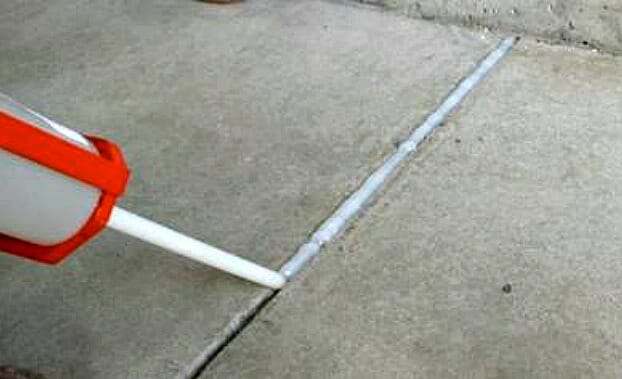
One of the more common questions about garage floors is how to fill contraction and expansion joints. In particular, many would like to know if you can fill the joints on the garage floor before applying an epoxy coating. Still, others want to know if you can fill the joints before or after a sealer is applied. What about sealing the expansion joint between the garage floor and the driveway?
We will answer all these questions and more. In addition, we’ll discuss how to fill expansion and contraction joints in your garage floor. But first, you need to understand the difference between these two joints. It determines exactly which types of joint-filling materials you can use and why.
Difference between expansion and contraction joints
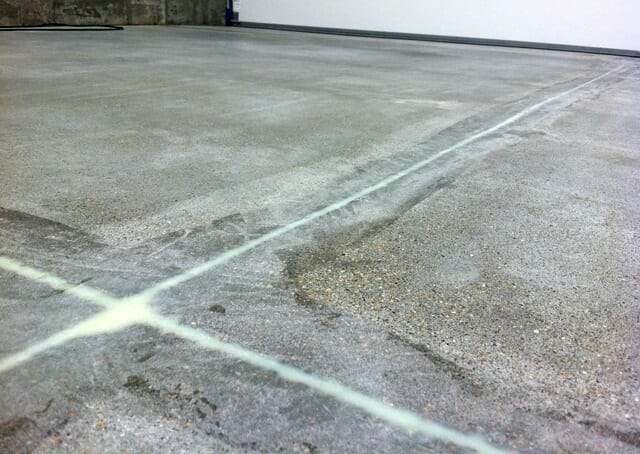
In a typical 2-car garage, contraction joints usually look like a big plus sign that divides your garage floor into what appears to be four separate slabs. These joints (sometimes called control joints) are the deep V-shaped grooves that run from one end of your garage floor to the other.
Some concrete floors may have saw cuts used as contraction joints instead. Saw cuts are usually a minimum of 3/16” wide and 1” deep.
Because concrete slabs will crack with expansion and contraction, these joints create a weakened line in the concrete that encourages cracks to follow the line within the joint. This helps by discouraging cracks from following a more resistant path across your garage floor.
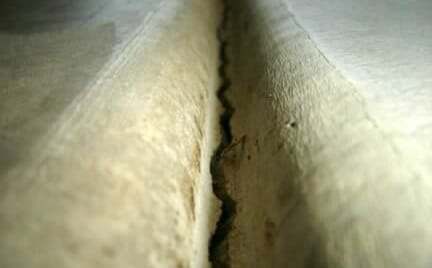
Expansion joints (also called isolation joints) separate one slab of concrete from another. They are typically a minimum of 1/2” in width.
In simple terms, expansion joints help prevent adjoining slabs from damaging each other when they expand and contract.
They are commonly filled with compressible fiberboard or similar material. The joint between your garage floor and driveway is a good example of an expansion joint.

Garage floors are typically poured independently of the home foundation. When this is done, an expansion joint will run along the perimeterwhere the garage floor meets the house foundation.
Filling contraction joints before epoxy coatings
When the time comes to paint or epoxy coat the garage floor, many people want to fill their contraction joints to achieve a seamless-looking floor. So, is this advisable? Well, the answer depends on what material you use.
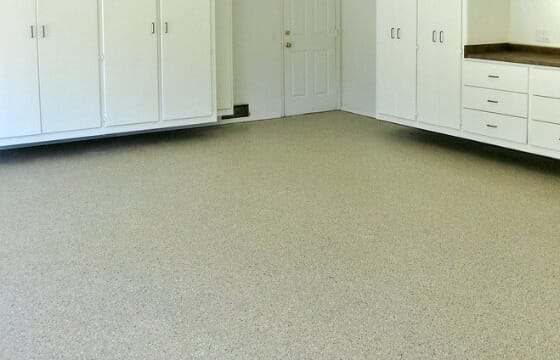
When your garage floor expands and contracts with temperature changes, it can create very slight movement within the contraction joint. This is why there are cracks within the joint in the first place.
If the joint is filled with a solid material that does not flex and then covered with a coating, you have created the potential for the crack to telegraph through the material and the coating.
If you want to fill your contraction joints, the key is to use the proper joint filler.
This happens because you have a solid, seamless coating that does not flex (epoxy) and is bonded to both sides of a surface joint that can move. As a result, you can create a break in the surface of the epoxy right above these joints if they are filled.
Though the chance of this happening is not great, many professional contractors will not warranty an epoxy coating for cracks where the owner has asked to have the joints filled. Most contractors will fill the joints if asked, but they will warn you about the possible problems.
The best material to use is a 100% solids epoxy or polyurea filler with an elongation rate (flex %) that is higher than that of the coating you are using. It will cure to a hard solid that is sandable, yet will flex slightly (relative to the concrete) underneath your epoxy coating to prevent cracking.
This flexibility also prevents the filler from pulling away from the concrete as the floor expands and contracts. These qualities help tremendously to keep the paint or epoxy coatings in one piece and not crack.
This post may contain affiliate links. If you use these links to make a purchase, we may earn a small commission. As an Amazon Associate, All Garage Floors earns from qualifying purchases. You can read our full disclaimer here.
product recommendations
Many of these special joint-filling compounds can be found online from concrete floor coating vendors. Home improvement centers do not carry them. They work well, but they are not inexpensive like a typical crack filler. There are a few different products we can recommend.
The first is a fast-setting, 2-part 100% solids polyurea gel called Xtreme-Set 100 by Legacy Industrial. You can read our review here.
It works very well for filling contraction joints as well as filling cracks.
The big benefit of Xtreme Set 100 is how fast it works. You can fill the joint and grind it flush 20 minutes later. You can purchase Xtreme-Set 100 here.
Another good source is Garage Flooring LLC. They have two different 100% solids products that will work well. The first is TL-821 epoxy gel. The second is their new pourable joint filler, TL-831. You can find them here.
An epoxy gel like this is less expensive than some other contraction joint fillers and works well. It’s a better value if you don’t need a fast-setting product. Just be aware that you will need to wait at least 8 hours before grinding it flush.
ElastiPoxy is yet another product that works well for filling joints. Because the epoxy is less viscous, it helps to mix in a little clean sand to stiffen it and increase coverage.
You can price the 2-quart version here at Amazon. Make sure to estimate the correct amount. Many have found that they needed the larger 2-Gallon kit instead.
Application of these joint fillers is not hard and requires little preparation of the joint other than making sure it is clean.
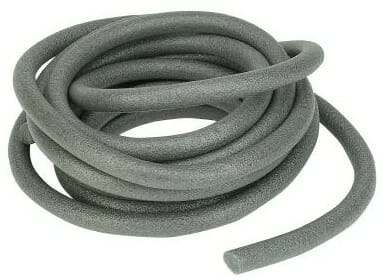
If you have saw cut contraction joints, we recommend that you fill them first with a foam backer rod or silica sand so you don’t use as much filler. You want to leave approximately 3/8″-1/2″ from the surface.
If you have “V” shaped contraction joints, the foam backer rod will not work well. Silica sand is a better choice.
Both the silica sand and foam backer rods can usually be purchased from your local home improvement center.
When using a foam backer rod, make sure it’s approximately 1/8” wider than the joint. If you choose to use sand, it will prevent the filler from slowly sinking into the cracks at the bottom of the joint and creating low spots as it cures.
Once the joint is prepped, follow the instructions of your product of choice and fill the joints. Make sure you don’t have any low spots or you will have to go over them again. It helps to use a putty knife to force out air pockets and to remove excess material.
Once the joint filler has cured, you will need to grind the joint flush to create a seamless surface to paint or epoxy coat over.
Grinding the joint is important. If you apply the filler but don’t grind it flush with the surrounding surface, your joints will telegraph through the coating and become visible because of their irregular shape.
It’s not unusual for troweled “V” grooves on garage floor surfaces to be slightly lifted at the edges of the joint. This happens as the slab’s surface cures and contracts more quickly than the rest of the concrete, slightly pulling the rounded edges up.
Use a level or straight edge to check for this. It may require a bit more grinding to get the floor flush so that you don’t have a visible hump.
Contrary to what you may have read somewhere, do not use latex caulk or self-leveling joint sealers if you plan to coat over the joint.
Caulk and self-leveling joint sealers cannot be ground flush. In addition, they are too soft and will flex under weight, causing the coating to crack.
Furthermore, caulk will slowly shrink. As a result, you will end up with slight depressions that outline where your contraction joints are.
Filling contraction and expansion joints after epoxy coatings or sealers
Sometimes the contraction joints in a garage floor and the expansion joints around the perimeter can be very wide, collecting a lot of dirt and debris.
This can create an eyesore for some people plus make it more difficult to clean them out. The same can be said for the expansion joint between the driveway and garage floor.
You can always fill these joints in your garage floor after an epoxy coating is applied. It can also be done after clear sealers, stains, or other floor treatments are applied. Not before.
DO NOT fill expansion joints with the same products used for contraction joints. Epoxy and polyurea are stronger than concrete once cured and will not flex nearly enough. This can cause crumbling and cracking of the slab edges.
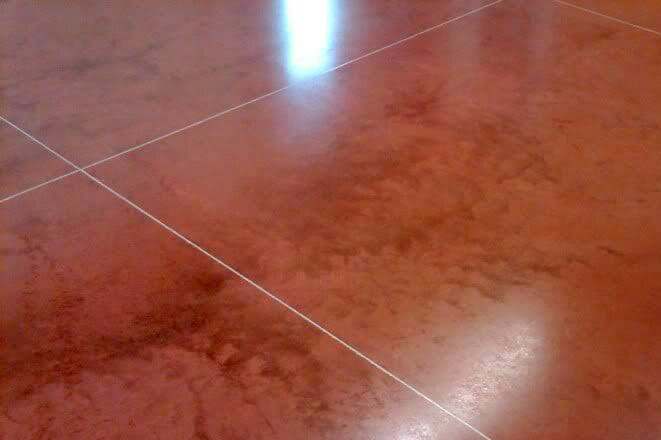
The easiest solution is to fill these joints with a self-leveling polyurethane joint sealer/filler. Most are 100% solids polyurethane. This means that it will not shrink as it cures. Most are gray and applied with a caulk gun.
These types of joint fillers are inexpensive and can last for years. They also do an excellent job of sealing the joint from moisture. The material is flexible and feels somewhat spongy under pressure, yet is strong enough to drive vehicles over. Most are not paintable.
We personally like SikaFlex SL for these types of projects. You can find it at your local home improvement centers for less than $20 for a 10-oz. tube.
The best deal is the 29 oz. tube, but you will need to purchase the larger 29oz. caulking gun to use it. If a home improvement center isn’t nearby, you can also find SikaFlex here from Amazon.
This is a good example of how to fill an expansion joint when using a foam backer rod
Prep of the joint is the same as before; however, do not use sand to fill up an expansion joint. Expansion joints need the material within the joint to be compressible and sand is not.
One exception is if you are applying a thin layer of sand over old fiberboard to prevent sealant from leaking through.
It is also extremely important that the concrete is bone dry before application. If not, it will not adhere well. For expansion joints, it’s important to remove any old filler using a utility knife or grinding wheel.
If the joint is filled with fiberboard or felt, be sure to remove any protruding material from the joint.
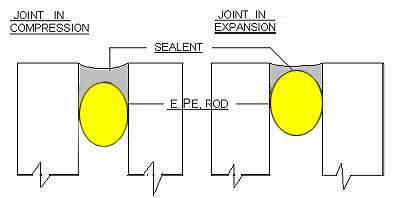
If the fiberboard in an expansion joint is missing or deteriorated, you will want to clean out the joint and insert a backer rod before applying the joint sealer. Do not place it more than 1/2″ deep from the surface.
Because these joint fillers are self-leveling, their viscosity is similar to that of honey. As a result, they will seek out any low spots along the joint. So be prepared ahead of time for any areas where the filler may want to run out of the joint.
Once applied, it skins over in an hour or two and completely cures within 3 to 5 days. You need to wait at least 24 hours before driving over a freshly filled joint.
Final points
Sealing and filling your garage floor’s contraction and expansion joints is not difficult. The key is to use the proper sealer or filler, depending on the intended purpose and the type of joint.
Just remember that expansion joints should always be sealed and filled with a flexible joint sealer and never epoxied or coated over. Contraction joints can be filled in the same manner after a coating or sealer is applied, if desired.
If you want a seamless-looking epoxy or garage floor coating, contraction joints must be filled with a specialized epoxy or polyurea joint filler that cures hard and has a higher elongation rate than the coating. This provides the required flexibility to help prevent the garage floor coating from cracking at the joints.
I goofed while prepping my garage floor for an epoxy coating by reversing your recommendation for filling the expansion joint.
I first filled the joints and some cracks with Quikrete’s FastSet Concrete Crack Repair (rapid cure 2-part polyurethane).
Is this an acceptable material to cover with a solid epoxy flooring product? Or do I need to grind it out and redo it?
Hello Matt. That material is fine for the cracks. You can grind it flush and then coat right over it. Contraction joints on the other hand need something with an elongation rate (flex) of 10% or more. This will help to prevent the coating from cracking if the joint moves at all. The Quikrete data sheets don’t state what it is. You may want to call their toll free number to verify. The coating will still stick after you grind it flush, you just run a much higher risk of a crack forming over the joint if the elongation rate is not high enough.
Thx!! Another option I noticed in this thread was to simply tape over the expansion joints when applying the epoxy layers. Yes, this will show a defined gray line that creates a giant plus sign but aesthetically I think I can use that to my advantage. Any considerations to this second idea? I guess the take needs to come up fairly quickly before epoxy hardens.
Great site!!! Thanks for all the valuable info!!
You could do that if that is what you like, Matt. And yes, you can’t leave the tape down too long once you epoxy over it. With the filler already in the joint, you can just grind everything flush and just coat over it as well. The risk may be higher for the coating to crack, but it’s still not a high risk. Just the potential for it happening is increased.
Got it, thank you.
FYI – Quikrete stated they do not test for or have any data on the “Elongation/Flex Rate %” for either “Epoxy Concrete Repair #8620-49” or “FastSet Concrete Crack Repair #8650-69”.
Thanks for the info on that, Matt.
Hi… I see many posts and articles that are way above what I want to do. I have a driveway in the semi-country. I have a doublewide with a two car detached garage and a carport sitting on a concrete driveway. The expansion joints are rotted and catching casters on fans/creeper/toobox/etc. I just want a reasonable solution to make it not do that. It super annoying to be under a car and the creeper catch and dig in. I dont want it to be hideous, but beyond that I dont really care what it looks like so long as it makes my slab smooth to work on…
Hello John. Unless you have very wide joints (greater than 3/4″), you can fill the expansion joints with SikaFlex or a similar self-leveling polyurethane sealant. We suggest slightly overfilling the joint. If you fill the joints with a polymer-modified cement to make the transition smooth, you will get cracking at the joints when the slabs get some movement from expansion and contraction as they heat and cool off.
I have a tube of Vulkem 116 polyurethane caulk. It’s worked well for other concrete application, do you recommend using it to fill cracks and then applying my epoxy coatings over it?
Hello Grant. No, you do not want to use a polyurethane caulk. It is a sealant and not an actual repair product for cracks. The problem is that it is too flexible and cannot be sanded or ground down smooth. What you need to use is an actual crack repair product. These products are stronger than concrete and cure extremely hard. This allows you to grind the repairs flush so that they don’t telegraph through the coating. We have a page on garage floor repairs here that explains more.
my 20×36 shop was poured in 2 stages with an expansion joint. I want epoxy coating so do I epoxy first then fill the gap with silkaflex?
That’s correct, Shayne. The SikaFlex will adhere well to the epoxy coating. Though it’s not necessary, some like to tape the edges first before applying the SikaFlex so that it forms a nice even line along the concrete.
Hi Shea,
Menards sells Akonaflex Pro “self-leveling expansion joint filler” and it is relatively inexpensive.
https://hw.menardc.com/main/items/media/TWINC003/Prod_Tech_Spec/1894180AKjointfillerTDS.pdf
Any idea if epoxy could be applied over this?
Thanks!
Hello Nick. No epoxy cannot be used over this for a couple of reasons. The first reason is that the product states it is paintable only with water-based paint. Coatings will not adhere. The more important reason is that this is a flexible, non-sandable joint filler. It’s similar to SikaFlex. Epoxy is extremely hard and does not flex. If used over a filler like this, the epoxy can crack if subjected to pressure. Also, though it is self-leveling, it will not provide a flush finish for a seamless look if that is what you were thinking.
Ah! I completely missed that it is only paintable with water-based paint! Do you know of any Sika-like product that is clear and in a similar price range?
They don’t make the self-leveling sealants like that in clear. What are you trying to accomplish?
I applied a solid, light gray epoxy coat on my basement floor. I would like to fill the control joints with something to prevent them from accumulating dirt. I could use a gray Sika flex or something similar but I’m a little concerned that the color will be slightly off and it will look weird. I was thinking a clear product may look better.
I see. Fillers such as these cannot be produced in clear, so manufacturers tint them to look better. Actually, a gray filler will provide a nice contrast and doesn’t distract with an odd look. There is an image in this post here about RockSolid where a reader used SikaFlex to fill joints on his gray colored floor.
Interesting. I thought it was weird that I could not find a clear filler. That RockSolid floor does not look bad at all! I’ll give it a go. Thanks!
We have a stucco floor in a veterinary clinic that needs the expansion joints filled and needs to be hard enough for pet claws not to penetrate it and can sustain daily mop cleaning. Any suggestions on what filler to use?
Hello Tracy. We suggest using a self-leveling polyurethane sealant. SikaFlex is an example. It is a flexible sealant for joints that is water proof when it cures. Though it is flexible, it is extremely tough and pet claws will not affect it. SikaFlex is only available in gray and sandstone (tan) and you can generally find it at your local home improvement center. There are companies that offer multiple colors, but it is much more expensive.
What is the best bond breaker to put on the floor before application of the polyurea, so that way it will come off of the concrete!
Hello Dustin. I’m a bit confused here. Why would you want to apply a bond breaker to encourage peeling?
Should you fill the joint before or after you acid wash?
Hello Joel. If you are filling the joint to create a seamless look for a coating, then it doesn’t matter really. The proper material used to fill the joints is not affected by an acid etch. Typically you etch, fix any cracks or fill any joints and then grind all your work flush. But you can do it in the opposite order if necessary.
I am polishing a concrete floor in a house. It is factory dyed. With cut expansion lines that the customer wants filled like grout lines. I plan to polish the floors and seal them. However my question is with the expansion joints. Could I use a clear epoxy that has flexibility, poured straight into the lines? The. Polish and seal? They want no color or caulk or grout, etc in the joints.
Hello Chad. Polyurea joint fillers are the most common for polished concrete and we are not aware of any that are water clear. They all are going to be cloudy in appearance or have actual color.
I’m wondering if you would also recommend this product for concrete expansion joints prior to an epoxy application. Living in Canada there aren’t as many products available for shipping.
https://www.polygem.com/products/flex-fill-liquid-2-gallon-kit-crack-joint-filler.
I have 300-500lb woodworking machines with mobile bases that will be rolling over the expansion joints. Found your website to be very informative, thank you!
Hello Adam. With a 100% elongation rate, this product should work well to fill expansion joints as well as contraction joints. However, if it is expansion joints that you want to fill, we recommend doing it after the coating is applied. Coatings should not be applied over expansion joints. This is because expansion joints can experience much more movement than contraction joints (separate slabs vs same slab) and will cause the coating to crack at the joint regardless of what filler is used.
Hi Shea,
Thank you for such a quick response. After paying closer attention it turns out the cracks I wish to fill are contraction joints (one slab with 3/8″ saw cuts) rather than expansion joints. Given this would filling the joints prior to an epoxy application be advisable? If not how do you recommend avoiding epoxy filling into the joints when applying the epoxy. Would simply ‘cutting in’ around the joints instead of using a roller be fine?
Thanks again!
You can fill the saw cuts with the product you had linked to, Adam. We recommend filling the joints first with clean silica sand about 1/2″ from the top. That way you don’t use as much of the joint filler and it reduces the chance of settling. Just make sure to grind the joints flush after it has cured. You will not be able to see where the joints where once you epoxy over them and the floor will have a seamless look.
Hello. What a fantastic site. I have been reading through your articles for sometime now and you have helped me to make my decision. I have decided to move forward with a vinyl tile. I reading your articles on vinyl tiles, I am not real sure what method I need to use for filling the joints in my garage. Should I use the methods you outline here or should I use polymer cement repair mix or crack filler as outlined in your other article on this topic?
Thank you in advance for your help.
Hello David. You can use a polymer-modified cement repair product or a self-leveling underlayment mix that is readily available at your local home improvement store. It doesn’t matter if you get small cracks over the joint as they won’t telegraph through the tile like it would with a coating. The key is to just get the joint filled and level with the rest of the floor.
Great! Thank you!
Hello. I just layed an epoxy primer coating on my garage floor. I intended to fill the contraction joins with epoxy before I read this article. With the primer coating complete, can I still apply a contraction joint filler prior to the epoxy coating or is it too late?
You can still apply it, Steve. Make sure to grind it flush after it has cured. As you may know, you will be far outside of your 24 recoat window for the epoxy primer once you are done with the joints and will need to rough up the surface before applying your color coat.
Good Morning, I am confused on the issue of Contraction Joints. In my Garage I have two contraction joints that were put in. They are not cut! However, I want a seamless look in the garage and would like to fill in these contraction joints before epoxy. I was planning on using Sika self leveling sealant but from reading ………. your article I should not use it before Coating the Floor. Can I fill in the Contraction Joints before Coating the Floor? If so which products. Sorry for the dumb questions.
You are correct, Roger. SikaFlex is a very flexible sealant that is not sandable or paintable and should only be used after a coating or sealer is applied. Applying it afterwards will fill the joint, but it will not provide a seamless look. If you want a coating without seams, it will require applying the proper type of material such as what we listed as examples. It also requires that you grind it all flush as well. I’m assuming you have the troweled in “V” shaped joints?
I purchased PC Concrete repair, two part epoxy. Can this be used to fill in the contraction joint in my garage prior to epoxy?
Hi Todd. No, you don’t want to use the PC Concrete for filling contraction joints. It has very little elongation and will provide a high risk of the coating above it cracking if there is any movement in the joint.
Hi,
Thanks for sharing your experience and recommendations.
My garage floor is around 10 months old that has expansion joints running between in both direction making a big plus mark. It is rectangular grove around 1 in width and 7/8 inc deep.
I am planning a epoxy paint my garage floor. Is it okay if I epoxy without filling the gap? What do I really lose if I epoxy without filling the joints?
Appreciate your comments
Hi Gags. Yes, it’s fine to epoxy without filling the joints. In fact, not filling the joints is the most common way to do it.
Thanks Shea
Hi Matt, great article. I have a different question for you. Can you etch concrete that has polyurethane filler in the cracks already? In other words, will the etch eat the polyurethane? The cracks are already filled but now I want to put a nice finish on the concrete but I think I need to etch it first with a good etching product. Does a product like Rust-Oleum concrete etch eat polyurethane? Thanks.
Hi Brian. The etch may cause the polyurethane filler to discolor, but it will not harm the integrity. It’s solvents that can damage surface.
Alright thanks to all this GREAT information I have successfully completed my garage floor coating project. I do have one final question, being in the northern part of the U.S. I elected to not fill my contraction joints prior to coating because of freeze/thaw movement concerns. But now that the coatings are complete, could you recommend a contraction joint filler other than Sikaflex SL that would allow a quicker return to service? I have a 3 day window before foot traffic is present. I looked at Versaflex which looks to be similar to the polyurea crack filler I got with my coatings kit but the articles seem to recommend something more flexible for contraction joints. If you think Sikaflex will be ok in my 3 day window, can I sprinkler some colored sand on the joint for a better contrast?
Thanks again for your help.
That’s great to hear Tim. VersaFlex SL/75 joint filler will work fine if you can get it in a small enough quantity. It has a high enough elongation rate. If you want a custom color, MasterSeal SL2 by BASF can be ordered in custom colors. Cure rates vary with temperature and humidity, but you can purchase an accelerant to speed it up. Here is an example of it. SikaFlex can also be purchased in SandStone. You can add colored sand, but it tends to collect all manner of dirt and make it hard to clean.
I have a nice new white epoxy coating on my garage floors. However, I am having a hard time finding a way of filling in the expansion joints (or just making them a little shallower so they are easier to keep free of debris). Does anyone make a self-leveling sealant in white or will I need to use the gray and then paint over it?
Hi Jeffrey. You don’t see white epoxy coatings everyday. MasterSeal SL2 is a self-leveling polyurethane sealant available in custom colors including white. You can purchase it here from Best Materials. Just keep in mind that white sealant is very hard to keep clean looking if you drive on it.
Thank you, Shea. I know the struggle I signed up for to keep it clean. My OCD will keep that covered. 🙂 Thank you for the link.
Hi Shea,
I really appreciate your well written advice. I actually bought the Legacy industrial contraction joint filler – the one where you get play sand and fill in the joint with the A/B solution that you mix. I followed the directions and but the solution sets quickly and got very hot before I could mix in with the play sand. Now I have small gaps in the joint. What can I fill them with? I prefer not to use the same material.
Hi Jay. It sounds like you mixed too much together at once. It’s best to do it in small stages. Your local Home Depot should have some polyurethane crack repair filler that will work for the gaps. Just make sure to grind everything flush once you are done.
My question is regarding expansion joint filler for a basement that also has the gas heat exchange.
What is a safe expansion joint filler to use with regards to possible flash points, indoors off gassing etc for safety concerns, yet provide a sealed basement floor expansion joint?
Hi Tom. Just make sure to use a 100% solids product. They do not contain any solvents and are safe to use in a room with an open flame.
Do you have some examples of a 100% solids product? Would any be available at the big box stores?
Thank you..,
Hi Tom. I just realized that you were asking about expansion joints and not contraction joints. You can’t use a 100% solids product for expansion joints since you will not get enough flexibility. A single component polyurethane sealant like SikaFlex should be used instead. You can find that at your local home improvement center or hardware store. SikaFlex is safe to use near an open flame as well and will not produce any fumes to ignite. However, it will ignite if you take a flame to it. It is a very common product used in basements and throughout the home.
Shea,
Should I still use a foam backer rod using the SikaFlex on the expansion joints in the basement?
Tom…
Hi Tom. Backer rod is used for deeper joints that would require much more sealer to fill. If the joint is not very deep, you don’t need to use it.
Excellent. Thank you again…
Hi Tom, first I want to say I’m amazed at how many people you have helped on here. I would like some advice if you can spare. I am doing a metallic epoxy job on my garage. I have a cross shaped contraction joint that I will be filling with backer rod and the suggested legacy ind. gel epoxy. I am looking for a seamless floor. My question, however, is what to do with the gap in between my concrete slab and my brick pavers. I will measure the gap, guessing 3/4 inch or so. Mainly wondering if I should do my epoxy then fill it with compressible fiber board material? Or could I use a flexible product like legacy ind. XTREME SET 100 CRACK/JOINT FILLER then epoxy over this (after grinding, ofcourse. I’m guessing this option isn’t as wise) . Please let me know, thank you!
I meant to say Hi Shea.
No worries about the name, Andrew 🙂 The gap between your garage slab and the brick pavers is an expansion joint. It’s there to protect the bricks from cracking due to expansion from the garage slab. Contraction joint fillers do not have enough flex to be used in expansion joints. In addition, they are tougher than your pavers and would cause them to crack first before there was enough pressure to cause the material to flex. Your best option is to do the coating first while making sure it runs over the edge of the slab. You could then use a compressible fiber board or a polyurethane expansion joint sealant such as SikaFlex to fill the joint.
Thank you for the quick reply! I totally follow you. Two more questions if you don’t mind. I am using a water based epoxy primer on my garage floor, I’m assuming I should get some primer in and around the expansion joint so that the next coat, or “build coat” (I think this is the correct phrase) will be shielded from moisture issues (especially since it’s facing the garage door where there is more likely to be moisture? Just curious, you wouldn’t do a densifier before your diamond grind during the prep phase to improve moisture barrier would you? (I’m in SW Florida) Shea you are a Saint!
Yes, run the the epoxy primer over the edge and as far down the side that you can. You could do a densifier application beforehand, but you would need to wait a minimum of 7 days for the densifier to react with the concrete before grinding. It’s not really worth the effort though if the slab doesn’t have any moisture issues to begin with. Properly installed epoxy floor coating systems are done in Florida all the time without issue, despite the high water table.
Shea, I have a somewhat unique situation (or perhaps I’m not seeing a more straightforward solution). I have contraction joints cut into my slab on 10ft squares which I want to keep (I.e., not fill) BUT one of these joints runs under the garage door seal of all three of my bay doors, allowing water to seep into my shop when it rains or through snow melt. The joints run perpendicular to the doors and bisect each door in the center. My plan was to fill the joints from the outside edge of the slab to the inside edge of the door to prevent water ingress. I’m planning to then coat the whole shebang with Rust Bullet. I’ve looked at the products you recommend but they all seem pretty “runny” and I was hoping there was something more of the consistency of a putty to restrict my “fill” to the desired point. I’m concerned that these Low viscosity products will “flow” down the crack into the shop where I want the cracks to remain. Any suggestions?
Hi Will. What you can do is fill the joints that you want to treat almost to the top with clean silica sand. The low viscosity joint filler will flow into the sand and not use up nearly as much filler. This creates an extremely strong sand slurry filler. It may take two applications of the joint filler as the first will sink a little into the sand as it sets up.
Would elastipoxy work well as a control joint filler to go under All Weather Floors polyurea? Due to the current pandemic I’m not able to order the filler from Garage Flooring LLC. I could do the SikaFlex after painting instead but I was concerned that the concrete edges along the joint will break down over time. I’m in a cold climate (but it’s a heated space) if that makes a difference for your recommendation. thanks!
Hi Jessica. Yes, Elastipoxy will work well for that. If the joints are very deep, we suggest filling them 3/4 of the way first with clean silica sand. This will reduce the amount of Elastipoxy you need to use.
thanks! is the sand preferable to the foam rod? I have 140′ of joint to fill, the foam road seems easier to do maybe
If the joints are saw cut or fairly vertical foam backer rod works well. If the joints are the wide “V” groove troweled joints, then the backer rod does not work well since it’s hard to wedge in correctly. That’s when sand comes in handy. If you need sand, you can usually get clean silica sand from your local home improvement center in 50lb bags.