
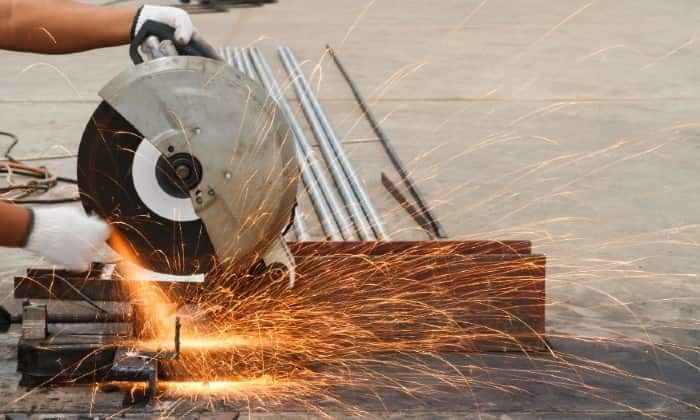
Choosing the best concrete sealer for a workshop or garage can depend on how the floor is used and the protection required. For some, the garage floor may see double duty as a shop for automotive repair, welding and metal fabrication, machine shop, and various other activities besides parking vehicles.
Such sealers are often subjected to welding slag, cutting torches, sparks from grinding, and metal dragged across the surface. Lastly, they may need to resist various types of oil and grease to reduce staining, be slip-resistant, and make cleanups easier.
We participate in a popular garage forum to help members with their flooring questions and this is a subject that frequently comes up.
Oftentimes these requests are for larger garage floors, pole barns, or workshops with a lot of square footage. Oh, and because of the size of some of these floors, they want a sealer that is budget-friendly. Sound familiar?
So, based on this information, let’s discuss our top recommended concrete sealers for large workshops, metal fabricators, and garage floors that experience abuse.
This article has been updated to reflect the latest information and concrete sealing products
Why Penetrating Concrete Sealers Perform Best For Workshops
Penetrating concrete sealers are the best solution to seal and protect bare concrete for most workshops, machine shops, and metal fabricators that weld. They are non-film-forming sealers that penetrate the concrete and create a protective barrier at the subsurface.
As a result, penetrating sealers are as tough as the concrete and will not burn, chip, peel, or scratch. They protect the concrete from water damage and can be resistant to a variety of chemicals including, oils, grease, salts, and deicing fluids.
In addition, they maintain the look of bare concrete, provide the same wet slip resistance as unsealed concrete, and make general cleanups easier.
Furthermore, penetrating sealers are relatively budget-friendly and very easy to apply. Typically, the only concrete prep required is to clean the concrete before application.
Why Concrete Coatings are not recommended
Concrete coatings are sealers as well and are a popular choice for some workshops and many garage floors. They can be decorative in appearance, the easiest to keep clean, and do the best job of protecting concrete from chemicals and stains.
However, the highest-performing coatings are not indestructible and they are much more expensive compared to penetrating sealers. They can burn from welding slag and get heavily scratched or chipped from dropping and dragging sharp or heavy metal. This includes heavy machinery that may get moved around or wood pallets dropped and slid across the surface by forklifts.
To be frank, there isn’t a concrete coating that will stand up to such heavy abuse and still look great years later. This includes commercial-quality garage floor coating systems.
If your workshop or garage will be subjected to any of the abusive conditions outlined above, then a concrete coating is not the best choice.
Note: The following concrete sealers that we recommend should not be applied to overly porous concrete, broom finished concrete, or concrete treated to aggressive grinding. If grinding was performed, the surface should be honed to a finer, less porous finish.
Top Rated Penetrating Concrete Sealers for Workshops
Now that we know why penetrating sealers are superior over coatings for metal fabrication, welding, and many workshops, let’s discuss which sealers are best for your particular needs.
Considerations for these sealers include overall benefits, performance characteristics, value, and appearance.
This post may contain affiliate links. If you use these links to make a purchase, we may earn a small commission. As an Amazon Associate, All Garage Floors earns from qualifying purchases. You can read our full disclaimer here.
Concrete Densifier Sealers – Surface Hardeners
Concrete densifiers are surface hardeners. It used to be that they were primarily used in the process of concrete polishing.
However, newer lithium silicate formulations with optional sealer additives have now made densifiers one of the most popular general-purpose sealers for bare concrete workshops, garage floors, and shop floors.
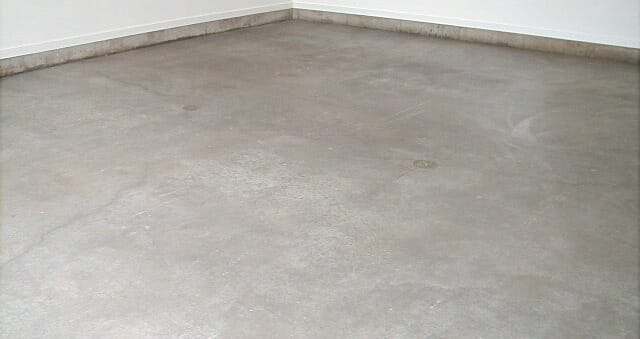
Once applied, densifiers react with the calcium hydroxide in the concrete to produce calcium silicate hydrate (CHS). CHS is what gives concrete its strength. The CHS produced fills in many of the capillaries and open pores in the concrete subsurface.
The result of this reaction is increased concrete density. In addition, it increases the strength of the concrete surface by 20-40% on average for concrete in relatively good condition. This makes the slab more durable with higher resistance to abrasion and impacts.
Though the increased density of the concrete helps to reduce moisture penetration, densifiers technically are not water-repelling sealers. When being used as a stand-alone concrete sealing solution, densifiers with siliconate sealer added are the best performing.
Siliconate agents added to densifiers create a gel-like molecular barrier at the subsurface that repels water. This repelling action protects against damage from moisture intrusion, road salts, and deicing fluids.
Read: Why Densifiers are the New Garage Floor Sealer
In addition, it can help to reduce the amount of staining that can occur from oils, grease, and other contaminants. Important to note is that densifiers typically require 5-7 days to become fully effective.
PS104 Densifier – Concrete Sealers USA
One of the best-performing densifiers we recommend is PS104 by Concrete Sealers USA. PS104 is a lithium silicate densifier with a siliconate sealer added. For the price, it is arguably the best overall value for sealing bare concrete.
It has become an extremely popular stand-alone concrete sealing solution for garage floors, workshops, metal fabricators, and machine shops.

Check Price of PS104 – 1 Gallon
Check Price of PS104 – 5 Gallon
If you require a densifier for hardening the concrete before treating it with an additional concrete sealer, then a densifier without siliconate agents should be used. For this, we recommend PS103 by Concrete Sealers USA.
Oil Repelling/Resistant Concrete Sealers
If the primary goal for your workshop, garage floor, or machine shop is to reduce staining from oils, grease, and other chemicals, then an oil repelling concrete sealer is the best solution.
As a general rule, water repelling concrete sealers do not repel oil or petroleum products very well. The reason for this is that they are hydrophobic. This is the reaction that causes water to bead and helps prevent damage to concrete from moisture intrusion.
However, oils and other petroleum products do not respond as well to hydrophobic concrete sealers. Instead of being repelled or beading like water, they tend to lay flat and/or run across the surface of concrete. As a result, there is not as much resistance to penetration and a higher risk of staining.
Newer oil repelling sealers are oleophobic. Oleophobic refers to the physical property of a molecule to seemingly repel oil. This helps much more in reducing the amount of oil staining that can occur.
The oil repelling action is due to the use of fluorocarbons. Fluorocarbons have non-stick and friction-reducing properties which when used in a concrete sealer, cause oil film to be repelled or more accurately, not attracted. It is a similar molecular technology that is used for non-stick cookware and friction-reducing parts in the automotive industry.
Oil repelling sealers also do a good job of repelling water and preventing damage to the concrete from road salts and deicing fluids.
There are two top oil repelling concrete sealers that we recommend for workshops, machine shops, and garage floors.
GhostShield 8510
The first is GhostShield 8510. It is a solvent-based siloxane blend that uses fluorocarbons to repel oil and help resist staining. GhostShield does offer a water-based version called 8505. However, it does not perform as well as 8510.
To be most effective, GhostShield recommends applying their Lithi-Tek 4500 densifier to the concrete first before application of the 8510. This is a straight densifier without additional sealing agents.
The reason for applying the densifier is that the molecular structure of siloxane is extremely small and achieves deep penetration. It would require multiple applications of 8510 to build up enough within the surface for it to be most effective.
Check Price for GhostShield 8510 & Lithi-Tek 4500
The densifier reduces the deep penetration action of GhostShield 8510. This allows it to saturate near the surface to provide the best performance as well as reduce the amount of sealer required to save on costs.
One thing to consider before purchasing this system of sealers is that using the densifier adds time to the overall application. GhostShield recommends waiting 5-7 days for the densifier to react with the concrete and be effective before applying the 8510.
You can learn more about GhostShield 8510 here in our full evaluation.
PS100 – Concrete Sealers USA
Another top oil repelling sealer we recommend is PS100 Fluorinated Water, Oil, and Salt Repellant Sealer by Concrete Sealers USA. PS100 uses 100% fluorinated materials in their sealer with no silanes or siloxanes.
Though silanes and siloxanes make excellent water repellents, they are hydrocarbon-based and can allow chemical chains to remain active in the concrete. And because oil is hydrocarbon-based, it can cause a permanent stain in the concrete if it comes in contact with these active chains.
Check Price of PS100 – 1 Gallon
Check Price of PS100 – 5 Gallon
The 100% fluorinated materials in PS100 are nonreactive and will allow oil to sit longer before a stain sets in. In addition, it makes the removal of an oil stain easier since there are no active chemical chains for the oil to attach to in the concrete.
Lastly, the use of 100% fluorinated materials makes PS100 highly water repellent and salt resistant as well.
Read: Why PS100 Challenges “Best in Class” Oil Resistant Sealers
As a note, Concrete Sealers USA says that a straight densifier of PS103 can be applied first if you want to harden the concrete surface before the application of PS100. However, unlike GhostShield 8510, the application of a densifier is not required to get the full effectiveness of PS100.
Concrete Sealers that Provide a Polished Appearance
Yes, we did mention that penetrating sealers do not change the look of bare concrete. However, if you have a smooth power-troweled concrete slab, there is an option to create a finish that resembles the matte-gloss look similar to the polished concrete floors seen in home improvement centers. This can be accomplished with a guard sealer.
Guard sealers are typically used to protect honed or polished concrete from water, salt, and stain damage. They work by filling the tight pores created by the densifying, honing, and polishing process.
Once dry, they leave a micro-thin film on the surface that is brought to a shine with a high-speed buffer and polishing pad. This surface film serves as a sacrificial layer for polished concrete.
HD40 StainGuard
HD40 StainGuard by Legacy Industrial is made exclusively for smooth, machine-troweled floors. It is a silane siloxane blend with an added stain guard sealer. When applied to the concrete it provides water and salt repellency. In addition, the micro-thin film acts as a barrier to help reduce staining from oils.
Once HD40 is applied to machine-troweled concrete, it can be burnished with a high-speed buffer and pad. The burnishing process will bring about a matte-gloss finish that many desire for larger workshops and garage floors.
You can learn more and see multiple images of HD40 in this Reader’s Projects article.
Check Price of HD40 StainGuard
To get the best results, Legacy Industrial recommends applying 2 -3 coats and then burnishing the surface directly after the last application. This will help produce the best shine and stain protection. Expect a coverage rate of approximately 400 ft² per gallon.
Something to keep in mind is that, unlike other penetrating concrete sealers, stain guards require maintenance to keep their shine. In addition, the thin film can be damaged from welding, strong solvents, salts, and oil that is not cleaned up in a reasonable time. Occasional reapplication may be required.
Are Penetrating Concrete Floor Sealers Stain Proof?
An important fact to remember about concrete densifiers and penetrating sealers is that they have various levels of stain resistance, but they are not stain-proof. Only non-permeable coatings such as epoxy will prevent liquids from penetrating into the concrete.
Penetrating concrete sealers are non-film-forming and reside at the sub-surface instead of on top of it. This is what prevents them from being damaged. Water and other liquids can eventually penetrate. In addition, oils and other caustic fluids can leave a stain if not cleaned up in a reasonable amount of time. How much time you have can depend on the sealer.
Technically, HD40 StainGuard does leave a micro-thin topical film at the surface. Nevertheless, it’s still permeable and will allow liquids to eventually penetrate.
What all penetrating concrete sealers do, however, is make general cleanup of concrete floors much easier than untreated concrete. They will also reduce the intensity of any staining that does occur since the offending chemical cannot penetrate deep into the concrete.
There are plenty of testaments from satisfied people who have treated their machine shops and workshops with densifiers and oil repelling sealers. Cleaning and general maintenance are simple and oil staining is much less.
If you are looking for the best concrete sealer for your workshop, metal fabricating shop, or larger garage floor, then don’t overlook the practicality and protection that these densifiers and oil repelling sealers can provide. Though they don’t look pretty, they will provide years of protection at a price you can afford.
Really useful information. But I don’t think that epoxy coatings catch burn marks easily. Here in my garage I am using epoxy floor coatings from the past 4 years. It still looks great and there is no cracks or burn marks appeared in my garage floor. I always used to spend some time in a week for maintenance and cleaning works for my garage. I had used welding blanket for three months but later I avoided it. The flooring work was done by Proseal concrete floor care systems Inc in Ontario. The labourers were good and they completed the entire work in one day.
Hi Christopher. We’re glad to hear how happy you are with your floor coating and it’s a good testament to how great they perform. If it was all done in one day you most likely have a polyaspartic or polyurea fast cure coating. Yes, it’s harder than most people think to burn a good coating with grinding and welding, but it can happen. It really depends on how heavy and how close the grinding and welding is to the floor.
Just bought a new house and the garage floor is natural and unsealed
and has a pet odor. We degreased and pressure washed but still has the pet smell. A remodler friend said he once worked on a house with the same problem & said that the smell comes from pet urine soaked into the concrete and that sealing is the only option. The surface is also smoother in spots and granular in some areas. Should we use a sealer or will an epoxy paint do the trick. Thanks.
Hello Ed. You need to be careful about sealing concrete that smells of pet odor or urine. Some sealers breathe to allow water vapor to escape. You could possibly seal your floor and still have the problem as the odor will breathe as well. High solids epoxy will not breathe and could very well trap the odor and eliminate your problem, but there is no gaurantee. However, we recommend that you use a different cleaning method first to try and rid yourself of the odor.
First, clean the floor with a 3-1 solution of water to vinegar. After that, treat the concrete with an enzymatic pet odor cleaner. Click here for some examples from Amazon. Once you do that you can see where you are with the odor situation if it will effect your decision about doing an epoxy floor or not.
Another option is to acid etch or grind the garage floor surface first. This will both prep the floor for any type of sealer or epoxy and it will open up the pores of the concrete making it a little easier to help extract the odor.
I’m starting construction shop project with radiant floor heat. 2/3’s of the space will be heavily oriented to fabrication and maintenance. I’d like it to look nice, but appearance is not as critical as durability. 1/3 of the space still needs to be very durable, but appearance is more important to me in this area.
Honestly, I’d like one single treatment. It doesn’t have to be quick. The space is brand new. Can an epoxy finish be applied on the top of the densifier?
What would you recommend overall for this project?
Hello Marty. In all honesty, you are not going to get one product that is going to do all that. Concrete floors that are heavily geared towards fabrication and maintenance tend to be very hard on coatings. The biggest culprit to damage are heavy metal edges and objects that inadvertently get drug across the surface and gouge/scratch the coating. In addition, metal slag and sparks from welding, grinding, and etc can leave burn marks. There are extremely durable industrial use epoxy and polyurethane slurries that get troweled and squeegeed onto manufacturing floors that do a great job, but cost for such products are well over $10 per square foot just in materials, not counting the labor for installation. This is why working shops typically use some form of a densifier treatment on their floors instead of a coating. Most shops are power troweled or hard troweled finishes which densifiers typically work best on.
You may want to consider a combination treatment of a densifier followed by GhostShield oil repelling sealer that is slowly gaining a solid reputation. We have an article here about it. It will make cleanups easier and there is no need to worry about scratching or gouging a coating. One option you could do is tape off the boundary of the area you want to look nicer and apply a product like HD40 over the densifier in lieu of GhostShield. You could then do a high speed burnish to give it more of a glossy look. It’s either that or go with a commercial coating in that area.
There is a new coating out called HellFire that is quickly becoming popular with the garage/shop crowd. We did an article on it right here. It has tremendous chemical resistance and heat resistance, but it will not fair any better than other coatings to gouging and scratching from heavy fabricating work.
Coatings can be applied over a densifier, however, it does require grinding of the concrete afterwards to prep for the coating. The grinding provides the proper profile for the coating to adhere to since the densifier can prohibit the coating from penetrating the concrete as well.
Thanks for the article, good info. We are in the process of renovating a 40+yr old building and want to revitalize and protect a portion of the concrete floor that will see welding, grinding and heavy equipment. From the article it looks like a siliconate sealer or a guard sealer are our best options. What is the recommended process for preparing the floor prior to treatment? Grinding/polishing or chemical treatment of some sort? This area will be sitting adjacent to an epoxy floor for machining and assembly. Trying to have a professional finish.
Hi Jeff. We have one more recommendation that you can read about here. When using a penetrating sealer or system of penetrating sealers, you don’t want to open up the pores at the surface too much. Generally, a good cleaning of the concrete is all that is required. If the surface needs some work, grinding can be done. However, you will want to work up to a finer grit stone such as 120-150 grit.
Hello. We are building an animal barn and getting ready to pour the slab floor. The animal stall floors will be dirt but urine and manure will inevitably get on the concrete. We are looking for a sealer that is slip resistant, easy to sweep and clean, and durable as there will be a tractor barn with a machine shop in there as well. Thank you in advance for any advice you have.
Hello Jim. Penetrating sealers are non-film-forming and cannot be damaged. They will retain the same slip resistance as untreated concrete. However, they will not always prevent staining or penetration of liquids if they sit for a period of time. Coatings are true sealers. Quality coatings are much harder to stain and they do not allow any penetration of liquids into the concrete. However, coatings can be scratched, scarred, or wear out over time depending on the type of use they incur. An anti-slip media can be applied to some coating to prevent them from being too slippery. I suggest you read our article on sealers to learn more about the characteristics of different sealers.
Penetrating sealers are common for smooth concrete that will incur much abuse such as dragging sharp objects and metal across the floor. This includes welding or any other activities that may scar or burn a coating. A popular penetrating sealer for working garages and shops is 8510 by GhostShield. It requires the application of a densifier first. We discuss this sealer here. If the concrete will not incur such abuse, then you may want to review TS210 by Concrete Sealers USA. It’s a very thin coating that has good slip resistance ratings, it is extremely stain resistant, and it will not allow the penetration of liquids. Three coats would be required for your application. This is a long wearing coating that is budget-friendly and easy to apply.
Hi Shea, Thank you so much for your reply! I will review the articles you mentioned and will keep you posted. Take care
Hello,
If the concrete has cracks, should I seal them first with concrete filler and then apply densifier, or should I apply densifier first and then seal the cracks with concrete filler before applying sealer?
Hi Dan. Do any needed repairs first, then apply the densifier.
I bought a 50 year old house with a garage that is original to the house. The garage floor is not cracked, however, it is pitted, presumably from road salt. It is therefore always dusty. What is the best solution for refurbishing the garage floor? Do I need to put on a skim coat to repair the pitting or can I just seal it? If I can just seal it, what type sealant would be best? I’m not fussy about the appearance (sheen etc.) My garage is used primarily to park the car. Thanks in advance for your advice
Hi Ross. How bad is the pitting? Is it throughout the entire garage floor or only in certain areas? Is it deep with loose, dusty concrete or fairly shallow?
The pitting is in the area where the car is parked so I would guess about 50% of the floor area. There is allot of dust and in places the pitting is fairly deep. Thank you for your help
That helps, Ross. Concrete garage floors in this condition are not a simple fix. The current condition needs to repaired and addressed before any type of sealer can be applied to be effective. We would recommend repairing the spalled areas first. It will require removing any loose or suspect concrete in those areas, vacuum, and then scrubbing the surface clean. After that, a proper repair fill material can be used. We have an article on repairing spalled and pitted floors here. After that, a light grinding would be required to remove the weak surface layer of concrete that is causing the dusting. A thin film forming sealer would be your best option after that in terms of cost and ease of application. An MMA acrylic is a good example of such a sealer. It can withstand road salts, will prevent further dusting, and is easy to apply. We recommend mixing in an anti-slip media for the final coat so that it won’t be slippery when wet.
I just finished building a garage on a 30’x60′ concrete slab. I will be using this garage to work on cars, motorcycles, and do wood and metal projects. Metal projects will include the use of a welder and plasma cutter.
I was first thinking of doing a polyurea/polyaspartic flake coating. But then realized this may not be a good choice given slag from welding and cutting as well as floor jacks and jack stands. I began researching penetrating sealers.
This is a relatively new pour (poured last summer), that is hand troweled. I do have some cracks to repair as well as some oil spots (equipment leaks during building erection), tire marks from ATVs and vehicles, as well as some paint from interior finishing.
I am currently thinking about using the ConcreteSealersUSA PS100 product.
My current understanding of steps:
1. Clean – Use Blue Bear 605 for the pain, followed by Purple Power to take care of the oil and tire residue, as well as a general clean.
2. Crack Repair – Chase and clean all cracks and repair with Simpson Strong-Tie Crack-Pac and clean sand.
3. Densifier – I am uncertain about this step. Not sure if it is needed. If I use the PS100, then using the ConcreteSealersUSA PS103 densifier.
4. Seal – ConcreteSealersUSA PS100 (2 coats).
Am I on the correct path? Do I need to do the densifier? If densifier is a choice, what are the pros and cons?
I am figuring the second coat will not require as much product. So I am guessing I’ll need about 9 gallons in total. Six gallons to cover 1800 SqFt for first coat and 3 gallons to handle the second coat. How does this sound?
Hi David. Yes, you have the steps correct. As an FYI, penetrating sealers will be rejected where the crack repairs are made. This is because the 100% solids resinous epoxy or polyurea material will not absorb liquids. The densifier is not required but it does provide two benefits. First, it strengthens the surface of the concrete. Second, it reduces the amount of PS100 required. This is because the chemical reaction the densifier has with the concrete creates calcium silicate hydrate. This is the mineral that makes concrete hard. The CHS created works to fill pores and capillaries at the concrete sub surface. As a result, not as much PS100 is absorbed where it’s not needed. Typically, one application of PS100 is all that is required when a densifier is applied first. If using a densifier, you need to wait a minimum of 5 days for it to react with the concrete before applying the PS100. If that is not feasible, then two coats (max) of PS100 would be the way to go.
Concrete Sealers USA did all of their initial testing without using a densifier and state that it is not required. However, they began getting reports from automotive repair shops and other facilities that have used PS100 in the past with good results, state that protection was even better on slabs that were treated with a densifier first. That is why we updated our article with that information. I hope that helps!