
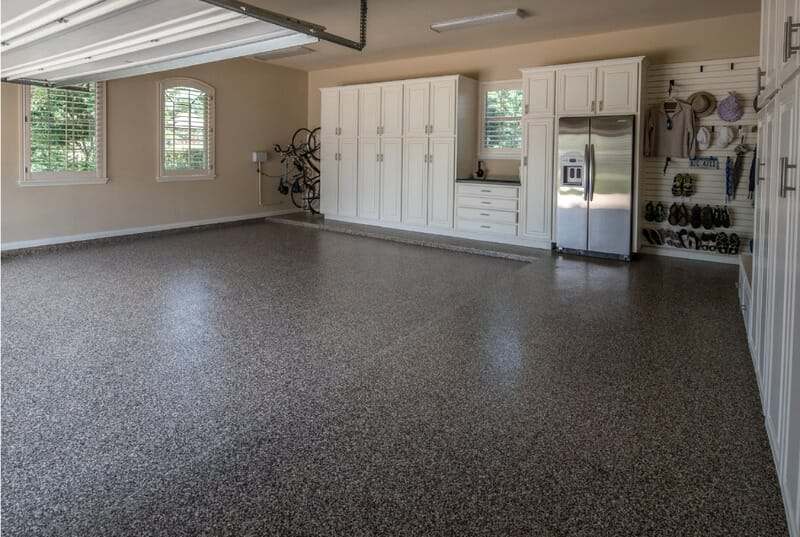
Garage floor coatings are one of the most durable, stain-resistant, and easy-to-clean decorative finishes available for garage floors and workshops today. They will protect the floor from the elements, instantly transforming your dull or ugly concrete surface into a professional-looking floor that combines beauty and functionality.
And since the garage has evolved beyond just a parking space, the benefits of concrete coatings have made them one of the most popular DIY garage flooring options today.
As a result, we will briefly explain what a garage floor coating really is. We will discuss the features, benefits, and how it is applied. More importantly, we will list the available coating options for DIY application, along with the pros and cons of each.
Additionally, we will provide excellent examples of where you can purchase quality coatings and DIY coating kits that we have reviewed and can recommend.
This article was updated in March of 2026 to reflect the most current trends and coating technology
What is A garage floor Coating?
A garage floor coating is a viscous thermosetting polymer resin that chemically crosslinks as it cures, creating a hard, durable, and chemically resistant wear surface. Epoxy, polyurethane, polyurea, and polyaspartic are the most common concrete coatings.
A catalyst activates the exothermic (releases heat) crosslinking reaction. For 2-part coatings, such as epoxy, the part-A resin/pigment is mixed with the part-B hardener, which serves as the catalyst. Moisture and/or oxygen in the air act as catalysts for single-part coatings.
Visit our Garage Flooring Gallery to view the various garage floor coating options.
Shop our collection of Pro-Quality Coatings from Top Vendors
Benefits of Garage Floor Coatings
Commonly used for both residential and commercial applications, a high-quality coating or coating system will protect the concrete from oil and related automotive fluids, stains, chemicals, spills, and other substances vehicles may track into the garage.
In addition, they seal the concrete to prevent liquids, deicing fluids, and road salts from penetrating the surface and causing damage.
Most notably, coatings are very easy to clean and to keep looking clean.
Commercial-grade coatings receive high reviews from home mechanics and hobbyists. They are popular in automotive and workshop environments where rolling floor jacks, jack stands, rolling toolboxes, and other mechanical equipment are used.
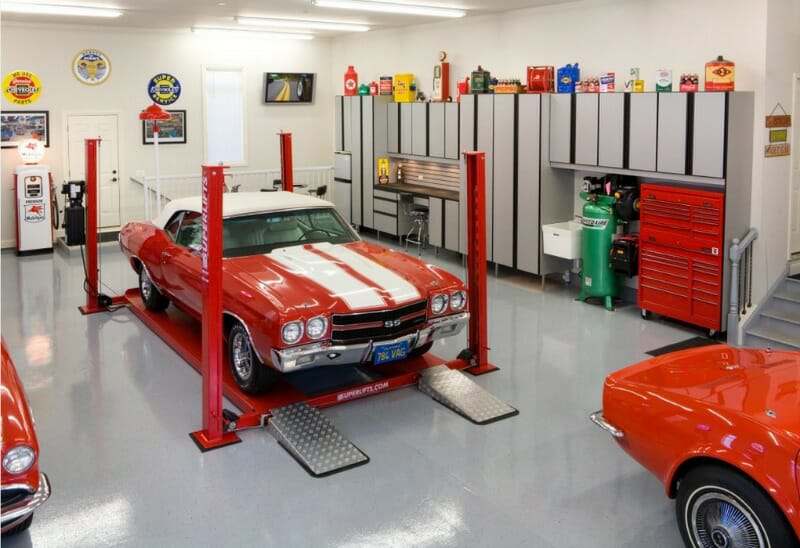
Furthermore, the high gloss and lighter colors of floor coatings reflect overhead and natural light. This results in a brighter work environment that makes more efficient use of available light.
Lastly, when applied to a properly prepared concrete surface, coatings can form a strong mechanical bond, making them highly resistant to peeling and hot tires. The overall result is a decorative, scratch-resistant surface that lasts for years.
Single Coat vs Multi-Coat Garage Floor Coatings
The most durable garage floor coatings are multiple-coat systems, and the industry standard for professional installers. They are also the most popular among DIY enthusiasts who want the best protection and value for their money.
These coating systems consist of a minimum base color coat, optional decorative color flakes, and a high-performance clear topcoat. The clear coat is essential for locking in the color flakes, protecting the color coat, and extending the coating’s life and durability.
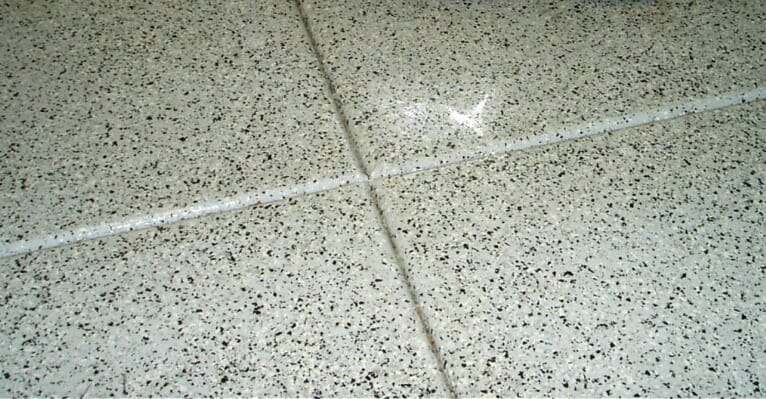
Many times, these are hybrid coating systems. In other words, the base color may be a thick, high-build epoxy coat with a polyurethane, polyurea, or polyaspartic clear top coat.
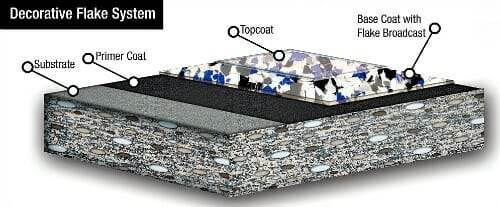
Options may include an epoxy primer coat for highly porous concrete, high-solids epoxy base coats, or other coatings. They are also used as a primer color coat for very light (white) or very dark base coat colors to achieve proper color tone.
Lastly, some are specially formulated to provide moisture-vapor-barrier protection for concrete with moisture issues.
Tan, beige, and various shades of gray are the most common base coat colors because they hide dirt best. However, high-quality coatings offer a wider range of colors for the DIY installer to choose from.

Other options include metallics and custom color-flake blends that match your style, home, or even your favorite sports team.
A more budget-friendly option for the DIY installer is a single coat application. Examples include a single color coat or a high-performance clear coat that protects and highlights the character of bare concrete.
Single coat applications are not as durable as multi-coat applications. However, they are less expensive to install and still effectively protect and seal the concrete, including stain protection. High-quality single-coat applications will also provide longer wear than budget, store-bought options.
How Thick are Garage Floor Coatings?
The overall thickness of a garage floor coating varies and depends on many factors. These include the type of coating material used, the number of coats applied, and the choice between random or full color flake coverage.
A typical commercial-grade garage floor coating system averages 8-12 mils of dry film thickness. These coating systems typically include a base color coat, partial color flake coverage, and a single clear coat. A mil is 1/1000th of an inch. Standard copy paper averages 3 mils thick for reference.
A concrete coating system that consists of an epoxy primer coat, a high-solids epoxy base color coat, full color flake coverage, and the appropriate clear coats can average 15-25 mils or more in overall thickness.
In contrast, a lower-performing single-coat kit, such as EpoxyShield by Rust-Oleum, averages only 3 mils dry film thickness. You can expect an overall thickness of 4–4.5 mils when the optional EpoxyShield Clear Coat is applied.
Are Garage Floor Coatings Slippery?
Most floor coatings are not slippery when they are dry. However, epoxy and other coatings can become slippery when wet. Typically, the glossier a coating is, the slipperier it becomes when wet.
A heavy application of color flakes can add texture to a coating and reduce slipperiness, but it is not a substitute for a slip-resistant surface. An anti-slip media is typically mixed into the final coat to achieve a non-slip surface.
Are Coatings and Garage Floor Paint the Same?
Concrete garage floor paint and 1-part epoxy paint are not the same as thermosetting garage floor coatings and provide far less protection. They are thin, water-based acrylic polymer formulations containing pigments, binders, and additives.
When applied to concrete, they dry like paint on a wall. All will peel from hot tires, generally sooner rather than later. Furthermore, they are much less wear-resistant and are only available in a satin finish.
The primary reasons for their use in a garage environment include their low price point, ease of application, and deceptive marketing tactics that prey on the average consumer’s lack of knowledge about coatings.
Of the two, 1-part epoxy paint performs better and is worth the few extra dollars per gallon. It incorporates 2-4% epoxy ester resin as an additive to enhance durability over standard paint.
DIY Garage Floor Coating Options
The choice of concrete coating materials available for DIY application has expanded in the last decade. Epoxy is no longer the only player on the field.
Some are easier to apply than others, and each has its own benefits and drawbacks that you should be aware of.
Epoxy
Epoxy has been the most common garage floor coating material for decades. It is a 2-part coating consisting of part A, an epoxy resin, and part B, a hardener/catalyst. High-solids (>85%), commercial-grade epoxy is typically 8-10 mils dry film thickness.
High-solids to 100% solids epoxy has self-leveling properties, provides an excellent build coat, and is the best medium for receiving a full-color flake application.
Epoxy is popular for use in industrial applications, warehouses, garage floors, and workshops. Return-to-service times are longer due to slower cure rates. You can walk on it in 24 hours and drive on it in 72 hours.
Epoxy Pros
- Longer curing time allows for the best adhesion to concrete
- High solids epoxy (>85%) will not peel from hot tires
- Provides the thickest build coat at 8-12 mils DFT and greater.
- Self-leveling properties
- Good impact resistance
- Best at hiding surface repairs and concrete imperfections
- Best for receiving full broadcast color flake applications
- Offers the most color options
- Excellent chemical resistance
- Good wear resistance and stain resistance
Epoxy Cons
- Shorter working time of 25 – 55 minutes
- Limited application temperatures between 60° and 85°
- Not UV stable – develops a yellow tint with exposure to sunlight
- Does not flex, making it less resistant to cracking
- Longer cure and recoat requirements add to the overall installation time
- Has increased in cost over the years
Polyurethane
Polyurethane is a thin coating with an average DFT of 2-2.5 mils. It is available in single-part and 2- part (2K) formulations. With some exceptions, it is primarily used as a final clear or colored topcoat for other coatings, such as epoxy.
Before the advent of polyurea, polyurethanes’ UV stability and superior wear, stain, and scratch resistance made it the go-to high-performance top coat for epoxy on garage floors, workshops, and in industrial applications for many years.
Newer water-based versions with low to no VOC content have become popular for indoor applications. However, they are not ideal for garage floors. They are susceptible to tire staining and to some chemicals and solvents.
Polyurethane Pros
- Great topcoat for epoxy
- UV stable
- Excellent chemical, stain, and abrasion resistance
- High gloss appearance
- Ideal for high traffic areas
- High flexibility increases abrasion resistance and impact resistance
Polyurethane Cons
- Can be finicky to apply and leave roller marks if not careful
- Sensitive to moisture and high humidity during application
- Requires multiple coats for application over full color flake floors
- Can be high in VOCs
- Moderate resistance to tire staining
Polyurea
The characteristics of polyurea are similar to those of polyurethane, but with some distinct advantages. It adheres very well to properly prepared concrete surfaces, it cures faster, and it’s thicker at 4-10 mils DFT. Polyurea is also more resistant to moisture and extreme temperatures during installation.
It used to be that only 2-part polyurea was available as a concrete floor coating and was used strictly by professional installers. Its extremely short working time of 15-20 minutes and fast curing time of 2-3 hours enabled same-day installation.
However, the arrival of single-part polyurea has been a game-changer for DIY garage floor coatings. The easy application, long working times, no mixing of components, UV stability, and extended wear have made it a favorite over epoxy.
It’s our #1 recommendation for most DIY installers looking for an incredibly durable, easy-to-apply garage floor coating system.
Single-Part Polyurea Pros
- Multiple color choices
- Excellent, clear topcoat for bare concrete or epoxy
- No mixing of A and B components
- Long working time reduces installation anxieties over other coatings
- Adheres well to properly prepared concrete
- Faster cure times = quicker return to service
- UV stable
- Excellent chemical and stain resistance
- High abrasion resistance – wears longer than epoxy or polyurethane
- Excellent impact resistance due to flexibility
- Flexible and better withstands the expansion and contraction of substrates
Single-Part Polyurea Cons
- Higher VOCs during application – NIOSH-approved respirator recommended
- Not as thick as high solids epoxy
- Won’t hide imperfections in concrete as well as epoxy
- Cannot be shipped to the South Coast Quality Air Management District
Polyaspartic
Polyaspartic is essentially an advanced type of polyurea. 100% solids polyaspartic is harder than polyurea and typically provides the best chemical, abrasion, and UV protection. It is primarily used by professional installers as a clear topcoat due to its very short working time (15-20 minutes) and quick return to service.
DIY-friendly polyaspartics have 65-80% solids content and/or slow-cure options allowing for longer working times. Depending on the solids content, it can be applied thicker than polyurea, making it an excellent choice as a clear topcoat for full color flake and outdoor applications.
It is also the most resistant to tire staining. However, the abrasion and scratch resistance of DIY-friendly polyaspartics is slightly less than that of single-part polyurea.
Polyaspartic Pros
- Excellent, clear topcoat over epoxy, polyurea, and full color flake applications
- Best UV stability
- Excellent chemical and stain resistance
- Long wear
- 2-3 mils thicker than single-part polyurea
- Shorter cure time means quicker return to service
Polyaspartic Cons
- Does not adhere to bare concrete as well
- Can be high in VOCs, similar to those of single-part polyurea
- Higher cost than single-part polyurea
- Typically not found in kit form and must be purchased separately
Moisture-Cured Urethane
Though not as common as the previously mentioned coatings, moisture-cured urethane (MCU) concrete coatings are fairly new to DIY installers. They are thin, single-part, high-performance, industrial-grade floor coatings designed to deliver exceptional durability and chemical resistance.
MCUs cure by reacting with ambient moisture in the air, creating a dense, tightly crosslinked surface that bonds aggressively to properly prepared concrete.
Newer aluminum-metallic MCU concrete coatings with long working times are becoming increasingly popular in workshops and some garages. They have high heat tolerance, making them less susceptible to welding burns. They are ideal for garages and workshops where floors are exposed to vehicle traffic, hot tires, dropped tools, oils, fuels, and heavy equipment.
Some MCUs may not require etching of the concrete before application. DuraGrade Concrete by Rust Bullet is one such example.
MCU Pros
- No mixing of A and B components
- Shorter recoat times decrease overall installation time
- Quicker return to service
- Better UV resistance than epoxy
- Excellent resistance to abrasion, chemicals, fuels, and solvents
- Excellent impact resistance
- Aluminized MCUs have high heat tolerances up to 500 degrees
- Excellent adhesion to properly prepared concrete
- Can be less expensive than some commercial coatings
MCU Cons
- Thin dry film thickness of 2-3 mils requires two or more base coats
- Some can be high in VOCs – similar to single-part polyurea
- Sensitive to moisture and excessive humidity during installation
- Can be finicky to apply and leave roller marks if not careful
- Aluminized MCUs are not as decorative and glossy
How Garage Floor Coatings are Applied
Garage floor coatings can be professionally installed or done yourself. A DIY installation can save you quite a bit on labor costs and materials. It’s not that difficult as long as you make yourself familiar with all the steps required and plan accordingly.
The first and most important step for a successful coating is preparing the concrete surface. The process involves etching or grinding the surface to create the proper profile for the coating to adhere to.
Next, concrete cracks are repaired. This includes any surface damage, such as pitting or spalling. It is important to use the appropriate concrete repair materials.
Once repairs are complete, the base color coat is applied, followed immediately by the optional color flakes. The clear coat is applied within the recoat window, after the color coat has cured for the minimum required time.
Read our complete guide on How to Apply Garage Floor Coatings
Most coatings require 24 hours before they can accept foot traffic and 48-72 hours before they can accept vehicle traffic. Some exceptions apply.
Where to Buy Commercial-Grade DIY Garage Floor Coatings
Most commercial-grade DIY concrete coatings for garage floors and workshops are purchased online from professional concrete coating vendors. These vendors provide the knowledge and experience required to assist DIY installers with all their project needs.
At All Garage Floors, we make it easy for you to find these vendors and shop for the coatings that best meet your needs and budget. Just visit our Shop Page and select a coating category.
Shop our collection of Pro-Quality Coatings from Top Vendors
Home improvement centers, hardware stores, and most paint stores typically do not sell commercial-grade concrete coatings. The primary reason is that they do not employ staff with the experience, knowledge, and time needed to provide proper customer service for such coatings.
Drawbacks to Garage Floor Coatings
As tough as garage floor coatings can be, they are not resistant to everything.
Welding is hard on floor coatings and can create burn marks from the hot slag that falls on them. In fact, metal fabrication in general can be rough on floor coatings. This is due to the tendency of heavy, sharp objects to be dragged across the surface.
If you are interested in a more utilitarian coating that makes cleanup easier while also resisting hot slag and grinding sparks, we suggest an aluminized MCU coating.
Furthermore, coatings are not a good choice for garage floors and workshops that have moisture issues from below the slab. An excessive rate of moisture vapor transmission from beneath the slab can cause coatings to delaminate.
Final Thoughts
As we mentioned, a garage floor coating can completely transform the appearance of your garage or workshop floor. It’s durable, easy to clean, highly stain-resistant, and flat out looks great.
One important point we want to make is that you genuinely get what you pay for with concrete floor coatings. If you want a budget product, you will get budget performance and looks. If you spend a bit more, you will be rewarded with a much more durable coating that performs better, lasts longer, and looks fantastic.
In the long run, it will actually save you both time and money to purchase higher quality coating products – by far.
So, whether you are turning your garage into a man cave, a working shop for car repairs and projects, or just a place to park your cars, it’s hard to beat the benefits of a quality garage floor coating system.
Shea, found epoxy-tech have epoxy kit for sale, so i want to know about its quality. cheaper than others. thank you.
Hello QL. Epoxy-Tech is a good quality, high solids epoxy product. It’s a good value for the money.
I LIVING DESERT CAN I APPLY EPOXP SHIELD OUT SIDE PATIO
No Andy. Epoxy coatings are for indoors only. They will amber if exposed for long periods in the sun.
I removed all old flooring from my living room, cleaned and stripped it, repaired the carpet tack holes and minor cracks, epoxied and self leveled the concrete to prepare for metallic epoxy.
When getting a tool at lowe’s the worker asked what I was buying the tools for and I said preparing concrete to get ready for metallic epoxy and showed a picture of the desired goal. Despite my research online (discovering that the epoxies are only available by order since no stores are close to where I live that sell them), the employee proceeded to say they have all the epoxy and coatings there and I actually listened and purchased exactly what they suggested for the order they suggested.
Now I have applied dark gray Valspar oil porch and floor gloss paint as my ‘primer’ & a day later applied rust-oleum ellegant metallic silver paint finish for walls, trim, furniture, and more on top as my metallic epoxy in the exact manner as I have seen in the videos of the finish I want. Obviously when finishing these 2 steps, the look is was going for did not occur. Going I didn’t waste too much time and money, I would like to know the best way to get to my original desired effect. Is any of the process I have completed salvageable? Should I strip the paint? just grind it down to the concrete or leveler and just start from scratch?
Do any of the companies sell the metallic epoxy online and ship it? Just looking for answers – thanks
Hello Jacki. Ugh… this is why home improvement centers are not the best place to get concrete floor coating advice. Where sorry that you got as far as you did. Unfortunately what they recommended is not a coating, it’s not an epoxy, and it will not produce the look you want as you found out. Heck, the data sheet for the Rust-Oleum metallic paint finish says to use a latex primer, not oil based paint. We aren’t even sure that the metallic paint is designed as a wear surface for foot traffic. It’s for walls and furniture. You will need to remove it all from the floor to install a proper metallic floor coating system.
Another possible issue is the self-leveling of the concrete. Did you use an actual polymer-modified concrete resurfacing compound to level or did you use a self-leveling underlayment product? Many of the self-leveling products sold at home improvement centers are not designed as a wear surface. They are made to have carpet, wood flooring, and tile installed over it. A coating may work since you would only be walking on the surface and not driving on it, but you will need to verify with the coating vendor you choose.
We suggest you read this article about metallic epoxy coatings. These type of coating generally require a dark epoxy primer, the base metallic color coat, and then a top coat of clear. RockSolid makes a DIY metallic version that is much cheaper and easier to install, but it’s not the same quality. Pure Metallic has some good videos to demonstrate and you can get an idea of what is involved.
How do you think the rostolum professional kit will do with the occasional dog pee? My dogs sometime wont go all the way outside and pee in the garage and the concrete absorbs it and the smell. I am hoping that an epoxy will keep it pooled and be very easy to clean it up when that happens..?
Hello Tyler. Epoxy is the preferred coating to use in dog kennels for just that reason. The professional version will resist staining better than the water based version as well.
Hello Shea: My two car garage already has an epoxy coating done by the builder. It is stained and worn from 15 years of use. Can I apply another epoxy coating over the old one? Is there a proper preparation? Many thanks for your advice!
You sure can Ken. All it requires is roughing up the old coating with sandpaper or a sanding screen on a floor buffer (faster). After you clean up the floor, wipe it down with denatured alcohol using a lint free or microfiber cloth and you are ready to go. We have an article on how to do it here.
I work at a dog kennel and my co-worker recently tried to paint the concrete floor with 1-part epoxy paint. Some of the concrete is porous but some is smooth. The co-worker cleaned the floor and did multiple coats with paint chips. It is now chipping everywhere and can’t withstand chemical mop water, or even pure water. I now sweep up more paint than dirt. The co-worker abandoned the project so only some of the floor is painted. I need to know the best way to apply an epoxy coating. Do I need to remove all the paint or do I just sand it? Do I apply a primer on the entire floor or just the bare concrete? Do I need a masonry concrete stripper? help! sincerely, diy enthusiast
Hello Olivia. 1-part epoxy paint is not an epoxy coating. It’s a latex acrylic paint with a small amount of epoxy mixed in. This article explains the difference. 1-part epoxy paint works fine for foot traffic, but it’s not the right application due to the chemicals used for cleaning purposes and acids from urine that the surface of a dog kennel is exposed to. You need a true 2-part epoxy coating. This usually includes 1 coat of an epoxy primer followed by 1 coat of a high solids epoxy color coat (don’t confuse 2 coats with 2-parts). If you choose to use color flakes you will need to lock them in with a clear top coat. This will produce a coating that will last for years, it will not stain from urine, and you can use the proper cleaning chemicals on it without damage.
It sounds like the concrete was not prepped correctly which would explain the peeling as well. Proper concrete prep requires either acid etching or grinding. Since you still have paint on the surface, grinding would be your best bet as it would remove the paint and prep the surface at the same time. If you want to acid etch, you would need to to use a paint stripper to remove the paint first since acid does not work on paint.
I am not sure if I am posting in the proper place. I have built 4 houses with acid stained concrete floors. I top coated them with a urethane high gloss concrete sealer. This looks good with a real high gloss but it scuffs easily. I am looking for something more durable
Could I coat over the urethane with epoxy?
Would I have the same high gloss?
Would it be scuff resistant?
What kind of epoxy should I use?
Any additional info appreciated.
Thanks
Danny
Hello Danny. Is it a darker colored stain? The reason I ask is that dark base colors show scuff marks, smudges, and general dirt much easier than lighter colors. You do not want to top coat with clear epoxy. Epoxy scratches easier because it is so hard. High performance polyurethanes and polyureas are a much better top coat to use. They are more flexible than epoxy and much more scratch and scuff resistant. What polyurethane did you use exactly? Are you sure it was not an acrylic top coat? There are not many polyurethanes that can be applied successfully directly to concrete.
I live in Florida and the house we bought has an in ground pool. The outer concrete was painted about 16 years ago. The paint is peeling badly and there is mildew growing on the bare concrete. I read one of the other comment where you said do not use epoxy on the outside of the house due to the sun. What do you recommend for my application? Thanks.
Hello Jack. There are a few options depending on whether you want to do this yourself or hire a company. Polyurea pool deck coatings with an anti-slip additive are what most professional companies use around pool decks. It will last years and will not yellow or deteriorate from constant sun exposure. There are also many paints that are available for pool decks. They will not last as long but are easy to apply. If you do the job yourself, it’s extremely important to thoroughly clean the concrete and remove all mold and mildew before application.
We are finishing the build on our new shop/garage. With new concrete I was told by the builder to wait at least six to 8 months before applying any coating on the floor. I really can’t do anything until the weather warms anyway. However, my question is in the prep on new concrete what prep would be best to use?
For a coating Ron, the best prep is to grind the concrete. This is what professional companies due to ensure that they will not have comebacks for delamination issues. However, as long as your builder does not use a “cure and seal” on the concrete to facilitate the curing process, you can also acid etch the surface. This article explains the pros and cons of each type of prep.
My garage floor is not very level. It has high and low spots in it. Before I build and install work benches and work stations, I’d like the floor to be a bit more level. If I epoxy the floor, will that help to level it? Also, I’ve used epoxy to fill in voids on wood slabs and it gets hot as it cures and you don’t have a lot of time. Will the epoxy for the garage also get hot as it cures, and how long until it “sets up”?
An epoxy coating will not level a floor Austin. You will need to use the proper material as discussed in this article in order to do that. Epoxy coatings do get hot once mixed. That is why you have a limited pot life to apply it. The higher solids epoxy coatings require that you pour it directly onto the floor in ribbons immediately after mixing. If left in the bucket it will heat up and start to cure within minutes.
Shea,
Thanks for all of the great info. I’ve been reading your site for the past few weeks preparing to do my garage. I made the big box store mistake with a previous house years ago and don’t want to repeat. I also appreciate the website recs and am deciding between AmorPoxy or Legacy…or if you have a different rec, I’m open to suggestions. I’m having a hard time deciding on color and really like the first picture you post in this article from Mission Builders. Do you have any suggestions on base/chip color to get as close to this look as possible. I’m open to ordering samples from either of the websites but wondered if you could point me in the right direction (dark grey base with black/white/navy chips maybe?). Thanks again!
Both companies have excellent product Patrick. We recommend giving each of them a call and talk to them about your project. Sometimes they will ask you something that you have not thought about or make a suggestion on product based on how you want to use your garage. The most important part of choosing who you purchase from is feeling comfortable with their customer service and know that they will be available for you to contact if you have any questions once your project gets started. Both ArmorPoxy and Legacy Industrial offer much better customer service than you will get if had to Rust-Oleum for example. Both of these companies employ people who have experience applying coatings and they know what they are talking about.
Regarding the flake coloring in the image you are referring to, we have been asked many times and have not been able to find out what mix of colors was used. We do know it was a tan base color coat with a mix of earth tone chips with a small percentage of black chips applied to full refusal. Not to make your decision more difficult, but you may want to check out this link here. It will show a large variety of the different color combinations that you can choose from.
Perfect. Thanks again for all of your help.
You are welcome Patrick.
Do you have a list of manufactures you recommend that’s not water based products? I plan to do my 3 car garage at my new home.
Also, the non water based products can be laid on with a paint roller right? How many coats?
Thanks!
All coatings can be applied with a roller Charles so no worries there. Most of the sponsors on our site offer 100% solids and/or very high solids epoxy. Examples are Legacy Industrial, Garage Flooring LLC, ArmorPoxy, GarageCoatings.com, EpoxyMaster, and etc. Keep in mind that when installing high solids coatings that a primer is recommended, but it’s not a direct requirement. Most primers are lower solids and water based in order to provide good penetration and the characteristics that a good epoxy primer needs. Generally, a good epoxy coating system is going to consist of one primer coat, one high solids base color coat, optional color flakes, and one or more coats of a clear top coat depending on the type of product.
Do you have any data on Rust Bullet for concrete? I want to finish my basement floor, 8 yrs old, no moisture problem (we are on top of a 30′ sand hill). We only use basement for storage so it has light foot traffic only. Nothing has been applied to the concrete thus far. What would you suggest I use?
Hello Cathy. Rust Bullet is a great coating for concrete. We have an article here about it that gives you the information you will want to review.
Hi Shea,
I am working with a small food co-op that has a commercial space of approximately 600sqft with a couple of larger fridges and other equipment. The floor is asphalt and in bad shape, with a number of small holes and generally dirty and rough surface. We have used a 2 part epoxy mixed with a concrete filler (for bulk) to fix some holes, with a metal brush wheel for cleaning and prep. Which got me thinking:
My question: would it be possible to pour an epoxy layer in sections over part of the floor while moving the equipment out of the way. Also, I am on a budget and will be diy-Could you recommend a product (can I use the same epoxy over asphalt as over concrete)? Our main goals are to have an easier surface to clean, look a little more presentable, appease inspection issues.
Thank you!
Hello Carolina. The same epoxy that is used on concrete surfaces cannot be used over asphalt. There are a couple of reasons for this. The first is that it will not bond with anything that is petroleum based. The second reason is that as strong as the epoxy is, it is not flexible at all. The first time something heavy with a small foot print compresses the asphalt, the epoxy would crack.
I have basement floor that had wood over. We are removing it and go into do something with the concrete floor. We had a flood but are fixing this issue. It is an old church turned into a museum. The basement is used for storage. Will this product work?
As long as you don’t have moisture in the basement and the concrete is in good shape it will work just fine Ron. We recommend that you read this article about moisture testing and how it can have an effect on coatings.
I’m building a ploebarn/house and the garage area is 60’X60′ …. is there a place i can buy products in larger containers other then the little kits ?
Yes you can Jonas. Most of the online vendors who are floor coating specialist sell product in larger 5 gallon containers. Keep in mind, however, that most 2-part product is thermo setting and has to be mixed in smaller 1.5 gallon batches or it will heat up and cure faster than you can apply it. Check with Legacy Industrial, ArmorPoxy, and EpoxyMaster to start.
how do i repair fading of rust olium epoxy i put down 5 years ago. It is fading in high traffic areas, and turning yellow in sun exposure ares, I did put the clear sealer on it after epoxy was put down ?
We answered your question previously in the comments section of this other article Kevin.
I read in the string above something about NOT applying an epoxy floor to brand new concrete. We have a brand new house and were thinking we should apply an epoxy finish immediately before it gets dirty or used. Can you clarify comment about new concrete please?
Hello Nigel. Brand new concrete needs to cure a minimum of 30 days before applying a coating. The reason for this is that the curing process releases moisture which will cause any coating to fail. Unless your garage slab was just poured recently, I’m sure you are past the 30 day window as it generally takes longer than that to build a home once the foundation and garage is poured.
Hi there,
Can this product be used as shower walls and floor?
No, it’s not designed to be applied in that manner Tonia.
Hi I am prasanth from India.
I recently came across a brand called Rustoleum and they have this epoxy floor coatings. i would like to know can i trust this brand as iam hearing it for the first time??
Hello Prasanth. Rust-Oleum is a well known national brand in the U.S. that manufactures and sells a variety of products, including epoxy. You can trust the brand.
Hi, if I am DIY’ing epoxy floor for my garage how do I prep it? You mentioned above that professional companies sand sound the concrete, how can I do that with my floor? Thanks
Hello Farah. You can either acid etch or grind the concrete. This article explains the difference and this article is a how to for grinding.
I previously used a product called Sikadur concrete crack repair on my floor. Its a epoxy based repair. Can I still use a solvent based epoxy(like Rustoleum Professional garage Epoxy) to coat my garage floor?
Yes you can Mike.
I am exploring options for a Kitchen counter top. I was thinking of 3/4 plywood + 1/2 plywood plus cement backer board topped with a self-leveling concrete compound with some sort of dye. This approach may be more cost effective that tile. Thus the research. My searching led me to your epoxy coatings. Would this be a suitable application?
Hello Rick. Epoxy counter tops are starting to gain popularity in the home improvement world. There are websites devoted to this and vendors that sell product specifically for this purpose. The formulas are different so a flooring epoxy is not the best choice. For example, EpoxyMaster sells products exclusively for counters which you can find here. There is also this website that has a blog, instructions, product, and all kinds of help.
Hello. I would like to have my floor epoxy-coated to match that MisdionCrotical floor. I am also shopping for a two-post lift? Would you recommend doing the floor prior to lift install? I have received conflicting information. Some suggest installing the lift first so I don’t risk damaging the floor with moving the columns around, but others have told me to do floor first to prevent rust where the columns bolt to the concrete.
Thanks
Frank
Hello Frank. This is one of those questions that you will not find a definitive answer to. It all depends on who you ask. The main problem with installing epoxy first is that it’s difficult to install the lift without putting some deep scratches in the coating if you aren’t careful. The sharp edges of the column plates can do some damage and epoxy coating repairs always stand out. One trick that we’ve seen done more than once is to cut some 1/4″ steel tubing into multiple 18″ pieces. You can set the column plates on 8 to 10 pieces of tubing for each column plate and it will move without damaging the floor.
The other option would be to coat the general area of where you will place the columns on the concrete with two coats of Rust Bullet first. Rust Bullet works very well on concrete and you can see why in this article here. After it has cured, place your lift and then sand with 80 grit sandpaper the small area of Rust Bullet coating that extends past the columns. This will allow your epoxy to adhere to the Rust Bullet with no issues and you will not get any moisture under the plates to cause rusting.
Thanks Shea! I just read through the article on Rust Bullet and was very impressed. Could I simply use this product for my entire garage or is it not as durable as the ArmorEpoxy kit?
Well it depends on which ArmorEpoxy kit you are referring Frank. Each coating has it’s advantages. What’s nice about Rust Bullet is that it does not require any special concrete prep in most cases except for cleaning the concrete. The ArmorPoxy kits are the more traditional type of epoxy coatings and tend to go down thicker. They both are very tough. It comes down to which look you prefer and whether or not you want to go through the concrete prep process.
I have a new woodworking shop / garage (30’x50′) that I recently built. The concrete floor was poured back in November 2017. The floor is 6″ thick with rebar on 24″ centers in a grid pattern throughout. Because of the rebar, a small concrete pump was used in the pour. The surface of the concrete is somewhat soft as it can be scratched with a screwdriver – probably due to more water in the concrete to allow pumping. The surface was machine troweled smooth. I was considering using only a densifier like Ashford Formula or one of the other densifier / sealers recommended on this website. I saw where densifiers may not be effective on softer concrete surfaces so I am also considering using an epoxy coating. My primary concern is for the floor to last a long time and be easy to clean up saw dust and resist oil etc… Appearance is more of a secondary concern. What would be your recommended coating process/product for this floor – densifier/sealer or epoxy. If using epoxy coating, would acid etching be sufficient for preparation? There are also several very fine shrinkage cracks. Do these have to be filled first or would 100% solids epoxy work ok over them. They are so fine that it may be difficult to get patching product in them sufficiently. Thank you for all the great advise on the site.
Hello Greg. Because you state that the surface of the concrete may be somewhat soft, it is highly recommended to grind the surface before applying an epoxy coating. A softer surface is going to have excess laitance that acid etching does not remove. This laitance combined with softer concrete does not promote the best bond. Grinding will remove the laitance as well as some of the soft, creamy top.
Another option would be to apply a combination of a densifier with and oil repelling sealer. You can see an example of a good combination here. With your machine troweled surface this combo would be very easy to sweep and do a good job of helping to avoid stains. A densifier will still increase the hardness of the surface of your concrete. The question is always how much. Generally, the worst shape the concrete is in the less it works. We have treated many floors in the past with densifiers and some that you could scratch the surface with a screwdriver turned out very well. It takes a good week or so for the chemical reaction to take effect.
Thank you very much for the great advice. With regard to using a densifier and sealer, would I need to do anything besides pressure washing the surface prior to applying the densifier? Grinding or acid etching would not be required, correct?
Thanks again for all of the great information on this site!
You are welcome Greg. As long as the surface will absorb some liquid the only thing you will need to do is make sure it is clean. Occasionally power troweled surfaces will tend to reject liquid until it’s been subjected to a lot of traffic. If this is the case, then sometimes a very mild etch is needed. Justin from Garage Flooring LLC has worked with quite a few happy customers using that combo. We suggest giving him a call if you have any further questions about it.