
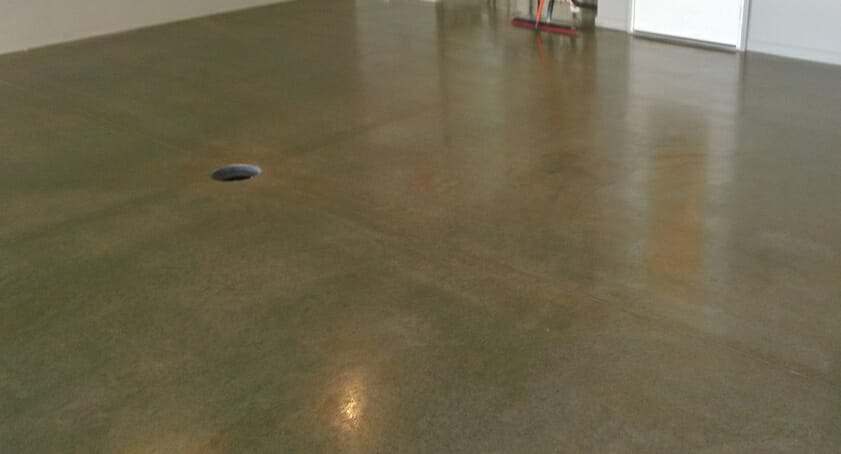
A garage floor sealer sounds simple enough to protect and seal the concrete in your garage or workshop. But what does a sealer do for the concrete, and which type should you use? Which sealer is best for your requirements and budget? Options include densifiers, siliconates, oil-repelling sealers, salt-repelling sealers, epoxy, polyurea, acrylics, and more. As you can see, it can become a bit overwhelming.
Don’t fret, it’s not as confusing as it may seem at first. Our goal is to explain the differences in sealers for a garage floor or workshop so that it’s much easier to understand. We will discuss how they work, how they are applied, and the benefits of each. This should help you determine what sealer will be best for your needs.
We include economical sealers that protect the bare concrete for a nice clean look, sealers for working garages and workshop floors, as well as decorative sealers and coatings. That’s right, garage floor coatings are sealers as well.
Penetrating Sealers VS Topical Sealers – What’s the Difference?
There are two distinct categories of garage floor sealers that determine performance, looks, and application requirements. They are penetrating sealers and topical sealers.
Though both types seal the concrete, they look and perform much differently from one another. With so many garage flooring options available, it’s important to get a basic understanding of each.
Penetrating Sealers
Penetrating sealers work by penetrating the concrete upon application. They react with the minerals in the concrete to form a hard, gel-like molecular barrier in the subsurface. Otherwise known as non-film-forming sealers, they are breathable and do not form a coating on the concrete surface.
As a result, penetrating sealers do not change the look of bare concrete. And because they are non-film forming, they cannot be scratched if you drag a sharp object across the concrete surface. In addition, they will retain the same wet slip resistance of the current concrete surface.
Furthermore, penetrating sealers typically are the most economical sealing solution for a garage floor or workshop and one of the easiest of all garage flooring options to apply.
An important fact about penetrating sealers is that they are not waterproof as some people assume. Nor are they stainproof. This is due to the non-film-forming properties of the sealer.
Though they do a good job of repelling water and resisting automotive fluids, all liquids will eventually penetrate the concrete surface if allowed to sit long enough. How long they sit before penetration is determined by the type of sealer and the porosity of the concrete.
Lastly, liquids such as oil, automotive fluids, and other contaminants can stain if allowed to sit. How much they stain and how easily an oil stain cleans up are determined by the type of penetrating sealer applied and how long the oil or other contaminant was allowed to sit.
When it comes to stain resistance, the goal of a penetrating sealer is to provide enough time for spills and leaks to be cleaned up first before they have a chance to stain. This includes some of the newer oil-repelling sealers the industry has introduced to provide better stain resistance.
Topical Garage Floor Sealers / Coatings
Topical sealers adhere to the concrete surface with only slight penetration. Also known as film-forming sealers, they are more widely known as floor coatings or garage floor coatings. They form a protective layer that is typically non-breathable and can be impermeable depending on the coating used.
Many are 2-part resinous coatings that require mixing before application, though there are exceptions. They chemically cure and create a hard coating that is extremely durable. The thickness, abrasive properties, and chemical resistance of these coating sealers can vary depending on the type and quality of the coating that is used.
Paint and 1-part epoxy paint are not sealers or coatings. Don’t make this mistake! We discuss why here.
Most coatings are also considered decorative. Clear coatings will enhance the look of the garage floor surface. They tend to darken bare concrete, add character, and provide a matte to a glossy finish.
In addition, clear coating sealers are used to protect and highlight the colors of stained or dyed concrete. They make the colors pop with vibrancy and add shine.
Colored coatings completely change the look of the garage floor. Epoxy and polyurea garage floor coatings are great examples. You can opt for a solid color or add multi-colored acrylic flakes with a clear coat to create your own unique color palette.
Unlike penetrating sealers, topical sealers and coatings prevent the bare concrete from being stained by oils, automotive fluids, and chemicals. This is because the coating acts as a sacrificial barrier.
Furthermore, one large advantage of topical sealers over penetrating sealers is that the surface is very easy to keep clean.
Higher-performing coatings can also be extremely stain resistant. Oil, chemicals, salty road brines, and other fluids can sit for much longer periods. All that is required in most cases is wiping up the mess with a rag. A shot of Windex can remove any leftover film residue.
Lastly, many topical sealers and coatings will prevent the penetration of water and liquids into the concrete. This doesn’t necessarily make the entire garage floor waterproof. Exposed cracks and concrete joints can still allow water to seep into the concrete.
Now that we better understand the difference between penetrating garage floor sealers and topical garage floor sealers, let us discuss the various types available and what we can recommend.
This post may contain affiliate links. If you use these links to make a purchase, we may earn a small commission. You can read our full disclaimer here.
Recommended Penetrating Sealers for Garage Floors
There is a wide range of penetrating sealers for concrete to choose from. Therefore, it can easily become overwhelming if you don’t know what to look for.
There are silane concrete sealers, silicone sealers, siloxane sealers, siliconate sealers, densifiers, oleophobic concrete sealers, and more. Many are hybrids of each. Some are water-based, while others or solvent-based. Many do not work very well for a garage floor.
As a result, we will only discuss those penetrating sealers that we recommend and know to work best for a garage or workshop floor. In addition, we will discuss concrete prep that may be required and sealer application.
Siliconate Sealers
Siliconate sealers are a great choice for homeowners who just want good general protection of their bare concrete at a minimal cost with ease of application. Often considered the “all-purpose” sealer for garage floors and workshops, they are a great value as well.
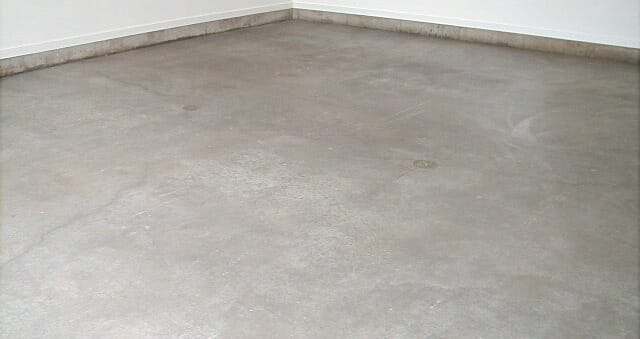
Compared to other penetrating sealers, their medium-sized molecular structure does not allow the sealant to penetrate too deeply. This provides for better coverage rates and, more importantly, better protection of the concrete surface.
As a result, they provide good water repellency including repellency against moisture, road salts, and dirt. Siliconate sealers also resist efflorescence and provide good protection against freeze-thaw, which is the leading cause of spalling of concrete.
Learn more: Why Penetrating Siliconate Sealers May Be All You Need
One thing to keep in mind is that siliconate sealers do not repel oil. Though they will buy you some time for cleanup by slowing down penetration into the concrete, a stain can occur if oil is allowed to sit for long. However, the resulting stain will not be nearly as bad as an oil stain on untreated concrete.
As with the majority of penetrating sealers, the application is very easy. For most concrete surfaces, the only preparation required is to clean and degrease. Once the concrete has thoroughly dried, one coat of the sealer is applied using a low-pressure pump-up garden sprayer with a conical spray nozzle.
Densifiers and Densifier Sealers
Densifiers are a type of silicate sealer. They had been used primarily in the process of polishing concrete and for adding strength to newly poured concrete floors. However, with the introduction of easier-to-apply lithium silicate densifiers, they have become more popular for garage, workshop, and warehouse floors.
Densifiers work by reacting with minerals in the concrete to form a very hard substance called calcium silicate hydrate or CSH. The CSH fills many of the empty voids and pores of the concrete at and near the surface. This increases the density, strength, and hardness of the concrete in these areas.
Check the Current Price on our Top Recommended Densifier
In addition, the filling of these voids with CSH reduces concrete dusting. Furthermore, it slows down moisture intrusion from below the slab to help prevent efflorescence and moisture vapor. However, silicate densifiers do not repel water or other liquids.
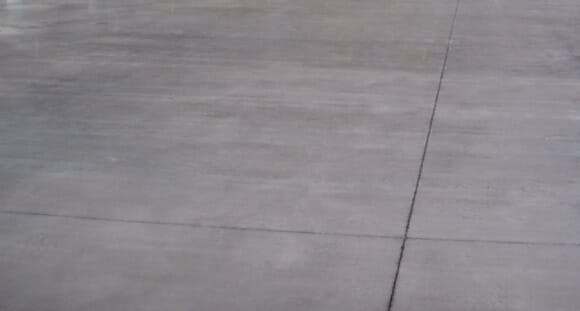
As a result of their increasing popularity, manufacturers began adding siliconate to densifiers to provide water and liquid-repelling characteristics. This new type of densifier with siliconate sealer added provides the characteristics of a densifier plus, the same protections as a siliconate sealer as well.
Learn more: Why Densifiers are the New Garage Floor Sealer
As with siliconate sealers, densifiers do not repel oil. However, testing has shown that densifiers with siliconate sealer added do a better job at resisting oil stains than a stand-alone siliconate sealer only.
The application is similar to that of a siliconate sealer. However, more importance is emphasized on not letting the densifier puddle. If it does, it’s important to use a paint roller to roll out the excess or use a broom to work it into the concrete.
If allowed to dry with excess sealer on the surface, a white powder will form and require heavy scrubbing to remove.
Oil Repelling Penetrating Sealers
Oil-repelling penetrating sealers are fairly new to the market. They’ve come about due to the constant demand for a better-performing sealer against staining from oil and other automotive fluids for garage floors and workshops.
A unique ingredient of these sealers is the use of fluorocarbons to create an oleophobic barrier. Oleophobic refers to the physical property of a molecule to seemingly repel oil.
Oil will lay flat or even run on a concrete surface treated with typical penetrating sealers. This characteristic does not resist the penetration of oil nearly as well as water which typically beads from being repelled.

However, oil tends to bead somewhat on a concrete surface treated with an oleophobic sealer. This repelling action allows the oil to sit for a longer period with less chance of penetration into the concrete.
This repelling action allows for an easier cleanup of oils and other automotive fluids and less chance of an oil stain. However, this does not mean the concrete can’t be stained. As with all penetrating sealers, oil and other offending contaminants will stain eventually if allowed to sit long enough.
What oil-repelling penetrating concrete sealers do is allow more time for the oil to sit before cleanup. In addition, it can also make the removal of any offending stains easier.
The raw materials used for these sealers are more expensive. As a result, they cost more than typical penetrating sealers. In addition, one popular oil-repelling sealer that is known to work well also requires the application of a densifier first.
Learn more: Our Top Recommended Single Application Oil Repelling Sealer
Oil-repelling sealers in most cases are the better choice to use on garage floors and workshops. However, the importance of these characteristics versus cost is something to consider if you are on a budget.
Learn more: Our Top Recommended Dual Application Oil Repelling Sealer
The application of these sealers is a bit more involved but still fairly easy. The concrete must be degreased, clean, and dry. Depending on the sealer used, the application can require a wet flood coat using a pump-up sprayer or application via a lambswool pad or microfiber pad.
Topical Garage Floor Sealers and Coatings
The number of options for garage floor coatings and topical sealers is large. There are acrylic coatings and sealers, epoxy, polyurethane, polyurea, and polyaspartics. In addition, there are single-part moisture-cured coatings and 2-part coatings. And most come in a choice of clear or colored.
Furthermore, the application process, performance characteristics, and durability vary greatly. This includes what chemicals, stains, and abuse they can withstand.
As a result, this is an area where research before a purchase is paramount. Marketing campaigns by large corporations such as Rust-Oleum, Behr, QuikRete, H&C, and others have only served to confuse the consumer. This has led to many unhappy or misinformed purchases.
In addition, do not rely on information from home improvement centers. They are not knowledgeable about concrete coatings, and they do not carry quality products in their inventory.
The following topical sealer options below are listed from low to high in approximate cost.
Acrylic concrete sealers
Acrylic concrete sealers form a thin protective layer on bare concrete. Most are clear, but some can be tinted for color. Expect 1 – 1.5 mils dry film thickness per coat on average.
They will enhance the look of the garage floor and make the concrete look slightly darker. The floor will attain a somewhat wet and glossy look, or you can opt for a less flashy matte finish. Glossy finishes tend to be more durable.
In terms of performance, acrylic sealers will protect the garage floor from water and chloride intrusion. In addition, they provide light to moderate protection against oil, vehicle fluids, hot tire pick-up, and road salts.
Most acrylic sealers are also U.V. stable. This means that they will not turn a yellow tint if exposed to direct sunlight.
Water-based acrylic sealers are the least durable of all concrete coating options and the easiest to scratch. Solvent-based acrylics increase durability, scratch resistance, and chemical resistance from automotive fluids.
For a more durable alternative, we recommend the performance of MMA acrylic sealers. These have longer endurance properties than standard acrylic sealers and can withstand harsher chemicals.
Acrylic sealers perform best with light to moderate traffic. Reapplication may be required once every 18 to 36 months depending on the sealer used.
One DIY advantage of acrylic sealers is that they are fairly easy to apply. The concrete needs to be degreased, cleaned, and completely dry. Etching of the concrete is typically not required unless the surface is extremely smooth.
You can use either a low-pressure pump-up sprayer or apply it with a paintbrush and rollers out of a tray. The key to a successful application is to apply the coating thin or problems will develop. Typically, two coats are applied for the best protection.
Modified Acrylic Polyurethane Sealers
If you like the look of a clear sealer on bare concrete, then one of the best-performing values is a modified acrylic polyurethane.
This is a somewhat new sealer for garage floors that we feel is going to explode in popularity once the word gets out. It combines high performance and ease of application at a budget price.
Technically, they are a thin, 2-part, water-based, high-performance acrylic-modified, aliphatic polyurethane coating and sealer. Aliphatic means that they are U.V. stable and will not amber. In addition, they are Eco-friendly, and no etching of the concrete is required.
Acrylic-modified polyurethane sealers provide better abrasion resistance, chemical resistance, and stain resistance than most epoxy. They are a true workhorse sealer for garage floors and workshops.
A minimum of two thin coats is required. This will result in a dry film thickness of just under 2 mils. Three coats are recommended for commercial applications. They are one of the few topical sealers that will adhere well to machine-troweled concrete.
Learn More: Our Top Recommended Acrylic Modified Polyurethane
These are best used on smooth concrete with few repairs. Due to their thin nature, they are not recommended on rough garage floor finishes or concrete with numerous repairs. They are not thick enough to provide self-leveling properties such as epoxy or polyurea.
Furthermore, they will only adhere to bare, unsealed concrete and are not compatible as a clear sealer over epoxy or other coatings.
The application requires that the concrete be clean and dry. No etching of the concrete is required. The sealer is best applied using a low-pressure pump-up sprayer with a conical spray nozzle in conjunction with a microfiber application pad or 1/4″ low nap roller.
Epoxy Concrete Sealers
Undisputedly, the most popular sealer is garage floor epoxy. Epoxy is a 2-part thermosetting resin that is applied as a coating. It chemically cures to create polymer structures that are closely cross-linked. This is what gives epoxy its superior strength and durability.
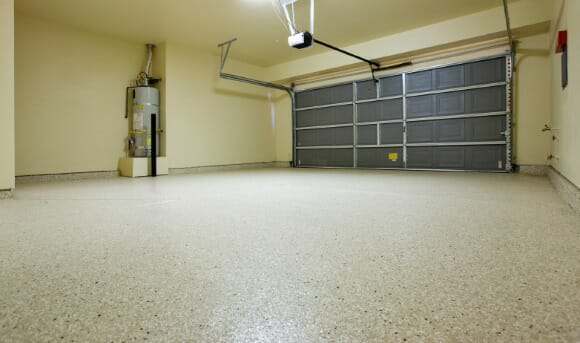
Epoxy is available as a clear coat to bare concrete but is more commonly applied in solid colors. Finishes range from satin for low-budget formulas to a high gloss for commercial-quality epoxy.
The most durable applications are epoxy systems that include a minimum of a color coat, optional decorative color flakes, and a clear coat. Professionally installed garage floor coatings consist of such systems.
Learn more: How to Choose the Best Garage Floor Epoxy System
In addition, epoxy coating sealers are much thicker than acrylics. They can be applied thicker than any other coating available. Depending on the solids content, one coat of epoxy can be applied at 2.5 – 12 mils dry film thickness and higher.
Epoxy sealers can withstand heavy traffic and are abrasion resistant. Furthermore, most are non-breathable and will prevent water and chemical intrusion at the surface. They are resistant to most chemicals, oil, vehicle fluids, road salts, and hot tire pickup.
One disadvantage is that epoxy is not U.V. resistant. If exposed to direct sunlight or strong indirect sunlight, it can turn a yellow tint (amber) over a period of time.
Single-coat DIY garage floor epoxy kits purchased from local home improvement centers are the least durable epoxy coatings. We explain more in detail here.
Epoxy sealer application is more involved and time-consuming compared to penetrating sealers. However, DIY application is very common. Application is done using paintbrushes and paint rollers.
Proper concrete preparation is essential or the coating will not adhere properly. Etching the concrete is required at the minimum. Grinding the concrete may be preferred for some applications, but it is not mandatory.
In addition, epoxy application is time sensitive. Once the two parts are mixed, you typically have 30 – 40 minutes to get the epoxy applied before it hardens up. Low-quality epoxy allows for more application time. This time limit is dependent on the solids content. The higher the solids content (thicker, higher-performing coatings), the less time you have to apply it.
Moisture-Cured Direct to Concrete Polyurethane Sealers
Polyurethane is a high-performance coating with increased benefits over epoxy. Depending on the quality, it is typically more abrasion and scratch-resistant than epoxy. It wears longer and is more chemical and stain resistant. And unlike epoxy, most polyurethanes are U.V. stable and will not amber.
Traditional polyurethane coatings are available in 2-part formulas or single-part moisture-cured formulas. Like acrylics, they are applied thinly with an average dry film thickness of 2-2.5 mils.
However, one issue with traditional polyurethane concrete coating sealers is that they do not bond well directly to concrete. Instead, they are used as a U.V. stable colored coating over epoxy or more commonly, as a clear coat over epoxy.
Fortunately, this bonding issue has recently changed with the introduction of newer moisture-cured polyurethanes designed specifically to bond directly to concrete. Moisture-cured coatings are single-part and do not require mixing in a second part to act as a catalyst to start the chemical curing process.
Instead, it uses moisture in the air as the catalyst. The coating is not activated until it is applied to the concrete and exposed to the moisture in the air. As a result, you have a much longer working time to apply the coating as compared to epoxy. This is a nice benefit for DIY installations.
Learn more: Our Top Recommended Moisture-Cured Polyurethane
Because these coatings are thin, they typically require a minimum of two color coats. One clear coat is sufficient if applied to bare concrete. However, two are recommended for more durability if it’s a busy working garage or workshop.
This type of coating sealer will not do a good job of hiding irregularities in the concrete due to its thin nature. High solids epoxy is better for that.
Application of direct to concrete moisture-cured polyurethane sealers is varied. The concrete must be clean, degreased, and completely dry throughout.
In addition, most require that the surface be acid etched. However, polyurethanes such as DuraGrade Concrete by Rust Bullet do not require etching in many cases. This can be a huge benefit to DIY installers who do not want to deal with additional concrete prep. Like most coatings, it is applied with paint rollers and brushes.
Polyurea and Polyaspartic floor sealers
Last on the list are the newer polyurea and polyaspartic floor coating sealers. These are a sub-group of polyurethane and have a similar finish to epoxy and polyurethane coated floors.
They are U.V. stable and can provide better protection than polyurethane. They also provide the best resistance against brown tire prints in the coating.
Unlike epoxy and polyurethane, many of these coatings can be applied in extreme temperatures, from below freezing to over 100 degrees, depending on the formula.
What makes these coatings popular is their extremely fast return-to-service times. They can be installed on your garage floor in one day and driven on the next. Most polyurea and polyaspartic coatings need to be applied by a professional due to their very short working time. Twenty minutes or less is typical.
There are newer polyurea coating sealers that have been introduced that are much more DIY-friendly. They can provide up to two hours to get the coating applied depending on the polyurea or polyaspartic formula.
Learn more: Why the best DIY Garage Flooring Kits are Single-Part Polyurea
These long application times reduce the common anxiety of getting the coating applied in enough time. As a result, they can be an excellent choice for a DIY application.
We highly recommend the newer single-part polyurea coatings. These are commercial-quality, moisture-cured coatings that will last 10-15 years or more on a garage floor.
Final thoughts
We have a few considerations for you to keep in mind when deciding which garage floor sealer is best for you.
If you have issues with moisture coming up through the concrete, a penetrating garage floor sealer is generally the better choice. Because they are breathable, they will not be affected by moisture vapor. As we discussed, they may also serve to block or reduce moisture coming up from underneath the concrete slab.
Acrylic sealers are breathable and will tolerate low levels of moisture. Resinous topical sealers and coatings such as epoxy, polyurethanes, and polyurea will not allow for moisture transfer. They can peel and even pull small chunks of concrete up with it if moisture gets trapped under the coating. Moisture testing should be conducted if you suspect it may be an issue before applying a topical sealer.
If you use your garage or workshop for metal fabrication and welding, a penetrating sealer may be the better option. Coatings will get damaged if sharp metal objects are dragged across the surface. They will also incur burn marks from welding slag or heavy metal grinding.
Lastly, take the time to evaluate your requirements. Be realistic in terms of what you want a concrete sealer to do for your garage floor or workshop. No penetrating or film-forming topical sealer and coating are perfect. Compromises may need to be made, particularly if budget is a concern.
We just finished painting our garage. The garage floor is 15 years old. We have some oil, polyurethane stains, and paint stains. I am looking to degrease and clean how you list above. The question I have is: I only want to reseal the concrete with a densifier. If I am forced to diamond grind the concrete, will I have swirl marks showing or will the grind marks not show?
Hi Craig. Densifiers do not change the look of the concrete at all. What ever it looks like when dry is exactly how it will look after the densifier is applied and has dried. If you have to remove the polyurethane and paint via mechanical means, I would suggest using the least aggressive method. Concrete hit with a concrete grinding wheel is going to appear much different with possible swirls marks and will be lighter in color. You may want to try using 60 grit sandpaper instead. Sandpaper can still remove some thin paint, but does not do much to the concrete. The concrete usually tears up the sandpaper with not as much effect to the surface of the concrete.
Hello, we have some pitting in our concrete due to age and salt (we’re in New England) – can we seal a pourous surface with epoxy? or is it required that we use another product? Thanks! – Pat
Hi Pat. If the concrete is clean and porous enough, then yes, you can seal the surface with an epoxy coating. It would need to be a quality high solids epoxy though and not the type of product you can purchase from a home improvement center. The coating is not going to level surface though if that is what you were thinking. You would need to use a special epoxy sand slurry to do that first.
I just painted my garage floors and placed chips like flakes. Which is the Best sealant to place on my floors.
Hi Agustin. Did you use a paint or an actual epoxy coating? This article here may help as well.
I am remodeling my enclosed garage into a playroom / bedroom and want to seal the concrete . I also will have to raise it up with plywood and flooring. I live in a very humid climate. Need advice on the best dyi concrete sealer. Thanks
Hi James. What are you trying to accomplish exactly when you say you want to seal the concrete? It sounds like the flooring is going to be raised above it. Do you have moisture issues?
Thanks Shea, just bought the house 5 months ago. I don’t think I have serious moisture issues but want to be proactive and be sure not to. I thought to put a sealer on the concrete then plastic cover and then plywood and then vinyl flooring. What are your thoughts and recommendations. Thanks for your help. James.
OK, then we would recommend applying a densifier with siliconate sealer added. The densifier works by filling capillaries near the concrete surface to help combat moisture intrusion from below. The added siliconate sealer helps to seal the surface from moisture on top of the surface. It’s easy to apply and relatively inexpensive. This article here discusses a product that we recommend.
I have read with interest many discussions here and all has been very helpful. I have a new garage floor I will likely use a densifier (L3000) + Ghost shield 8510 on. I expect the structure to be finished by mid September with lighting to go in shortly after. That will put the age of the concrete at about 60 days. My question is how long do I need to wait before treating a new concrete floor? Is 60 days enough?
Hi Vin. Yes, waiting 60 days is good. The typical minimum wait is 30 days for a standard 4″ concrete slab.
Ok, great. It is a typical 4 inch slab. Thanks for the quick reply.
Hi. I was wondering what the best sealer was for a cement garage floor that is not slippery. I am looking to seal my mom’s garage, but she is older and I don’t want her to fall. My dad use to do it but he has passed away and I am not sure what he used. Thanks for any advice!
Hello Beth. If you are just looking to seal the concrete without a decorative appearance, then we highly recommend a siliconate sealer (not silicone). You can read about this type of sealer here. We even have a product recommendation that works extremely well. These are easy to apply and not expensive.
Can I polish my garage floor, to 800 grit, and then use clear polyurea as my sealer? I like the look of the polished concrete but want improved functionality with the polyurea.
Hello CJ. No, that is far too fine a grit for coatings to penetrate and bond. ArmorPoxy has said that their SPGX polyurea will work with a 100-120 grit hone, but that is it. Others need 80 grit or less. You would need a stain guard sealer for something that fine. It’s technically not a coating, but it does leave a micro thin layer at the top that can be polished to a gloss. Stain guards are commonly used on polished concrete all the way up to 3000 grit.
Thank you very much. I will adjust .
Hello,
I have a car port, enclosed on three sides. I have PVA the floor to seal it.
I ve been told that this may not be suitable for long term use, especially when the car is driven in wet.
Is there something you can suggest to over this, that will dry clear. So not paint.
Many thanks
Hello Mrs. Courtney. A PVA sealer is not the best idea for a garage floor or car port, particularly if you are not going to paint over it. It’s used as a primer and is not intended as a wear surface and will leave the concrete a whitish hue. If you haven’t applied it yet, we would recommend using an acrylic sealer instead.
I need to seal and finish a busy hospital hallway vct tile and quick in and out I was thinking one coat of sealer and two coats of finish would this be ideal?
Hello Tim. That would work. We have an article about sealing VCT tile here.
I just had the concrete floor in an old house from the 1960’s ground, stained, epoxy applied, and a coat of polyurethane applied. It’s June, the weather is warm but humid and the polyurethane top coat didn’t dry for 2 1/2 days. The medium dark floor now has a white milk or chalky appearance on top. If the floor is wet, it returns to the dark color it’s intended to be. Once dry the coating is again milky white. What has caused this to happen and how can it be corrected?
Hi Shelby. You did you a polyurethane coating for concrete and not wood furniture or wood floors correct? If you used the correct product, then what you are most likely experiencing is a waxy substance called amine blush. This occurs if the humidity is too high or moisture settles on the surface while curing. Most of the time it can be removed with a warm soapy water solution and a soft scrub pad. Rinse well and then dry.
Hi I have a barn I’m converting to an artist studio which will be using acids for etching in one room it’s possible some moisture may come up through the floor but there’s not any sign of that in the last year
It would also be great to be a light colour to reflect the light possibly a light grey
Any suggestions would be helpful
Thanks Craig
Hi Craig. If you are looking for good light reflection, then you definitely want to use lighter toned colors. The clear coat is going to have the most impact though. The high gloss topical sealers will provide the most light reflection overall.
Hello!
We have an older detached non-heated garage with a concrete floor that has some cracking, pitting (a couple deep ones!) and moisture issues. What would you recommend as the best method to resurrect and seal/finish the floor, that will fix the damage and prevent future moisture issues, and provide a durable surface for our Canadian winters (extensive freezing/thawing, lots of salt and slush off the cars)? Thanks so much.
Hi Sarah. The moisture issue from water under the slab is going to rule out coatings unless you are willing to spend the money to aggressively grind the surface to apply an epoxy moisture vapor barrier primer first. We would recommend repairing the pitting with a polymer-modified concrete repair material. This type of repair material is much less susceptible to freeze thaw damage. We have an article here for that. In addition, you will want to fill cracks with the proper crack repair product. We have an article here for that. After the repairs are made, you will want to apply a densifier with siliconate sealer added. This will help to protect the concrete surface from further damage. Lastly, the best floor covering for this situation (if a coating is ruled out) would be interlocking garage floor tiles. These will allow air circulation under the tiles and moisture vapor from under the slab to circulate and evaporate. We have an article here about choosing tiles for winter weather.
I have a 30 year old concrete floor that I covered when new with an epoxy paint from Sears. As best I recall it was not a two-part paint. The surface is worn through in spots and is oil-stained. I want to refinish it. It’s a working garage that will see action from floor jacks, engine hoist, jack stands and a lift. And with two old Austin-Healeys stored there it’s going to see fluid leaks. Oh, it’s in New England with salt dripping off the daily driver. The choices in flooring are dizzying. It’s not a show garage, just needs to look decent and clean up well. I’m thinking a grind and seal might be best for my needs. What do you think? Recommendations for prep and product would be appreciated.
Hi Rick. Grinding is certainly the best way to remove the paint and prep the concrete surface for the correct profile. If you want something that is going to protect the concrete from oil stains, automotive fluids, road salts and etc, then a film forming sealer (coating) would be required. The first that comes to mind based on your requirements would be a product called HellFire. You can read about it here. This is a commercial quality product that would last many years. Another option would be one coat of a clear or colored single-part polyurea applied at a coverage rate of 200 square feet per gallon. We discuss single-part polyureas here. Garage Flooring LLC has a good single coat kit.
Hello-
I have a concrete garage floor from the 1950’s that does not have a moisture barrier in the concrete; consequently, it sweats. I want to build an office on it. How do I prepare the concrete? Please include the primer name and epoxy names. Do I need industrial strength moisture barriers. Can I build on this concrete?
Hi Jo Lynn. Concrete sweating is from relatively warmer and more humid air that comes in contact with a relatively cooler slab that is below the dew point. The result is condensation, AKA sweating. I suggest you read our article here about concrete sweating and our article here about moisture testing concrete. You need to first determine what condition you have before deciding on how to tackle your flooring solution. Is your goal to apply a garage floor coating system?
I need to mitigate the moisture issue in the concrete from not having a moisture barrier put in the concrete when it was poured in 1952. Is epoxy the answer or a penetration sealer, like Bone Dry? Or is zNone Dry a penetrating sealer? I plan to build an office in this garage space but I am getting nervous about all the research I have done. It is confusing to know which product will mitigate the problem.
I think you may be missing the point, Jo Lynn. Just because there is not a moisture barrier, it does not necessarily mean that you have a moisture issue below the slab. Very few garage floors are poured with a moisture barrier in place and a good majority do not have moisture issues. Moisture barriers are more common for basements. Have you actually determined that the wet concrete at the surface is due to moisture from below the slab and not from concrete sweating as you stated? That is why I left the links in the previous comments for you to read. It’s not uncommon for people to confuse the two. Once you properly know where the moisture is coming from (above from sweating or below from moisture), then you can make a determination about how to tackle the issue based on the flooring you plan to use. You didn’t answer that questions from the previous post.
A moisture blocking epoxy primer or other penetrating sealers are not required if the surface moisture is from concrete sweating. Sweating typically occurs in the spring and fall, but can happen any time of the year if the conditions are right. In addition, if it is indeed moisture from below the slab, you have to first determine what the moisture vapor emission rate is. This is expressed in lbs. per 24 hours per 1000 square feet. This number will determine if a moisture vapor blocking epoxy primer can be used and what kind. This requires proper testing with a couple of calcium chloride kits during the periods when moisture is present. Penetrating sealers such as Bone Dry and etc. are not very effective depending on the flooring you want. Also, the marketing information you read about products can make things confusing.
So to restate; you need to first determine exactly what type of moisture issue you have. Test for how much if it’s moisture from below the slab. Then let us know what was determined and what flooring you had in mind and we will be happy to help you figure things out.
Hi! We live in Oakland, CA (so 2/3 dry season, 1/3 wet season) and have a semi-below grade garage. According to the preexisting efflorescence and spalling patterns, the poured concrete walls get a decent amount of hydrostatic pressure, especially on the uphill wall (makes sense…). We recently had the walls and floor repaired/refinished – Sakrete high strength was used for repairs and patching, and everything was coated twice with Ardex cd fine. So…for the hydrostatic pressure reasons, I was leaning towards using a penetrating sealer… something like a RadonSeal or foundation armor sx5000 WB (waterbased), but am having a hard time getting a confident answer regarding using these products with a polymer-infused concrete product like Ardex cd fine (whose tech sheet states to use a “waterborne, breathable concrete sealer”). Should one or both of those sealers be fine with the Ardex? If not, what would be a better sealant option (barring exterior water mitigation…we got some quotes, and the cost/benefit ratio too high for such a tiny, minimally usable space). Thanks in advance for any guidance…
Hi Seth. Penetrating sealers do not work as they should when polymer-modified products are introduced. The reason is that these sealers have a reaction with the minerals in the concrete. This reaction is what produces a gel like material that performs the sealing. Regardless, they can only work so well when trying to mitigate moisture from the inside out. The best way to stop hydrostatic pressure is from the outside in. What we would recommend doing instead is to apply a moisture blocking paint by DryLoc. Something like this here would be an example. You can give their tech line a call to discuss. Something like this is going to have a better effect on the repaired areas since a penetrating sealer will not react as it should.
Hi there. We have a detached garage that is 6 years old. I recently decided to use half of it for a home gym and upon cleaning it, realized that we have a dust/efflorescence problem. Knowing our builders, and from my research on this, I assume it was not the ideal concrete mix. We live in Georgia and it does rain fairly often (depending on the time of year). I was planning on purchasing the PS104 Lithium Silicate Densifying WB Penetrating Sealer w/ Siliconate Repellent that you’ve previsouly recommended but I also saw another article where an MMA acrylic was recommended. 1) Which one is needed to solve the dust problem? and 2) Do I need to do a moisture test? If we have a lot of moisture does that mean that no sealant will help?
Thank you in advance for your help!
Hi Caitlin. If the garage slab is below grade or has shown signs of efflorescence or any wet spots, then you should do a moisture test first. Densifiers will do a good job with dusting concrete if it’s a light dusting problem. If the dusting is more than light, then an acrylic coating sealer such as an MMA like this one here would be a better choice.
Thank you. The garage is above grade and with no wet spots. I’d say the dusting is more than light, but I don’t have a comparison, it is just my opinion. Question about the moisture test… what exactly is the point of it? For example, if the test shows that there is a lot of moisture, then what? Thank you!
The moisture test is to determine if there is moisture under the slab that the concrete is wicking to the surface. Such moisture is not good for coating and can cause them to delaminate. If moisture is an issue, then special moisture vapor blocking epoxy primers must be used for coatings.
Hello,
I am debating between using an acrylic concrete sealer vs epoxy. I am cost concious and would like the cheapest option.
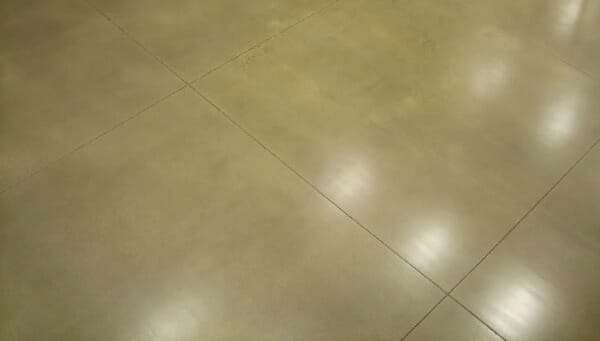
But the following is what I need to achieve: the garage is dusty and has oil marks from cars parked in here. We want the floor to look like the picture above of acrylic sealer. But it should be easy to clean off any oil spills etc and should be smooth to the feet and not be dusty (looks for legs to be clean even after waking on it all day).
Is acrylic sealer for me? Or should spend the money on epoxy coating?
Also, I am thinking we would grind the floor before putting the sealer or epoxy (so we can remove all the dirt etc). If we plan to use a acrylic sealer would not recommend we mechanically grind?
Hello Sri. Acrylic sealers do not compare to the performance of epoxy. The best acrylics are solvent-based and if I remember correctly, you were not keen to using a solvent-based product. This would mean that you would need to use a water-based acrylic which does not perform well in a garage environment, particularly with chemicals. Oil will usually come off, but if you ever spilled gas, brake fluid, or any other caustic chemical on it, it will soften and smear. If you like the look of the floor above, then we would recommend using a clear epoxy. Yes, you should definitely grind the concrete in your case. Dusting is caused by a fine layer of weak concrete. Etching will not remove this layer, but grinding in most cases will.
Thankyou Shea!
One final question: is the pain delta between the water based epoxy (say Shield Crete with ~ 50% solids) and solvent based (say shield Crete XL with ~ 100% solids) the solids %?
Does it mean that we get a somewhat similar quality of expoxy on the floor (wrt durability etc) with 2 coats of the diy water based as with 1 coat of solvent based?
Thanks!
You are comparing apples and oranges. Two coats of a residential quality, low solids water-based epoxy coating does not double its performance or make it somewhat comparable to one coat of a 98% solids (+/-2%) commercial quality coating. Shield Crete XL is a low VOC coating that has a very small amount of solvent added to the part-B hardener to make the coating easier to work with. One coat of Shield Crete XL applied at the minimum recommended coverage rate will be three times thicker than one coat of the water-based Shield Crete (no, three coats of water-based will not equal the performance). The high solids epoxy is a different formulation that has a much higher abrasion rating for longer wear, it’s much more glossy, it will not incur hot tire pickup when installed correctly, and it will withstand chemicals better.
Two coats of the water-based epoxy will help resist hot tire pickup a little better, but it will not improve the wear rate or resistance to chemicals. When it comes to coatings, you really do get what you pay for. Doubling up on inexpensive does not raise the quality of the coating.
Hi, I have a new garage that I am looking for the proper coating/sealing approach for. It wll be used for persoal vehicle repair/maintenance/restoration. I have experience with epoxy primer/urethane top coat systems via parking deck rehab. However, I am also aware of the high degree of difficulty and cost associated with these systems.
I am trying to determine a sealer/coating that will provide oil and other auto type fluid protection against penetrating but also good non-slip protection, and throw in cost savings as well if possible. Aesthetics are not high on my list of concern.
Thank you,
Geo
Hi Geo. You might be a good candidate for HellFire Coating. It would definitely meet your goals. You can read about it here. It is not as slippery when wet as other coatings, but you can add anti-slip media into the final coat if you like.
Just finished a new garage. Need to seal it and would like to have a bit of shine to make it easy to clean, but not overly slick when wet. Need something economical. What are my best options. Due to the size the of pour I need a choice that is less than $1/sq if possible.
Hi Rick. You may be a good candidate for a product called TS210 by Concrete Sealers USA. It will easily fit within your budget. You can read about it here. Two coats will provide a thin, but very tough and stain resistant finish that is a breeze to keep clean.
Hello, we just had our garage floor done by a “professional”. We wanted it red, white, and blue. He first prepared then painted the floor with white epoxy base and spread red and blue chips in a medium coverage. He then used a top coat. We were not happy with the uneven coverage and the floor felt very rough. He came back and spread another clear coat of epoxy and did a full coverage of red, white, and blue chips. The next day (yesterday) he spread another top coat. It looks much, much better. However, I can still feel the flakes and even see some edges curling up as I rub my hand over them. Can another top coat or even 2 be applied? Do I need to do anything in-between coats?
Hi Joyce. Full color flake coverage is rarely going to be real smooth. It can have a heavy texture to a light texture depending on a few factors. Did the installer scrape all the flakes real well before applying the clear coat? What type of clear coats have been applied? If you want to be able to coat over the flakes as much as possible to achieve a smoother finish, then it would require a 100% solids clear epoxy. A 100% solids epoxy applied at a low coverage rate goes on real thick and self-levels over the flakes and will not shrink in thickness as it cures. What you see when wet is what you get when it cures. Lower solids epoxy has solvents or water that evaporates once applied. This causes the coating thickness to shrink and expose irregularities. It you want a real smooth finish, we would recommend going over the entire surface with a floor maintainer and 100 grit sanding screen. Sweep / vacuum, wipe down with denatured alcohol, and then apply a 100% solids epoxy at a coverage rate of 125 – 150 square feet per gallon.
Thank you SO VERY MUCH for your reply! He used 8110–CrownSeal-CRU-Polyurethane
OK, that makes sense then, Joyce. Polyurethanes are excellent wearing clear coats, but they also are very thin. They are not the best coating to use if you want a much smoother finish over a full color flake surface. It would be a good choice to apply over the clear 100% solids epoxy if you like.
Shea, thanks for your site. Great info and thought throughout. Wondering if you can offer a suggestion here.
My goals are to generally protect the floor, including from oil, from the occasional oil change I perform on our cars.
I don’t believe we have a moisture issue. We don’t love the high-gloss look, nor the standard colors of the color coats.
We have a bare, previously unsealed concrete slab garage. There was a height difference between the slabs so CPM-Level-1 leveler was applied to make the two sides even. So now, roughly half the garage has old slab on the surface and half has CPM-Level-1 at the surface https://cmpsp.com/products-2-2/self-leveling-underlayments/level-1/
We like the bare concrete look but were thinking we might want to dye or stain the slabs to make the overall color more consistent between the old slab and new leveler but after reading your site, I understand dye or stain will just highlight the differences rather than mask them. That said, the leveler and slab are both pretty close to a concrete gray.
We want a matte to satin finish and don’t want color flake chips. I started this research thinking I would do some sort of epoxy treatment, then this site made me think polyurethane would be better, except it doesn’t apply well over bare concrete, so then I was thinking expoy primer topped with poly, then I saw the AWF one-step product, and now I’m thinking the GhostShield sealer that protects against oil may be best. 🙂 Any help unconfusing me would be much appreciated. Thanks .
FYR — Garage has two windows so there is some sun penetration all day / UV concern.
Thanks.
Hi James. Based on the description of your slab and your stated requirements, I believe a product like TS210 from Concrete Sealers USA may be what you are looking for. Assuming both slabs are smooth and not rough, it would work very well. You can learn about TS210 here.
I have around 1000 sq ft over size 3 car garage. Looking for a high light refraction coating. Would like to keep the natural concrete floor look. Will be used for auto parking and toy parking (slingshot) also some tinkering on slingshot and waxing of my autos. Very little heavy wrenching. Please tell me which products would be best to use. Also have a Tomcat floor sander/ buffer. It has the sanding screen and buffing pads. The perfect finish would wet look with some nonslip. My wife and I will do this and have kept waxed floors in our high traffic business. Don’t mind 2-3 coatings to get wet look.
Hello Bill. Because these comments are public, I removed your phone number so the world wouldn’t have it. From the description of your requirements, you would be a great candidate for a clear single-part polyurea coating. They are extremely durable, highly chemical resistant, and abrasion resistant. You can read about them here. Two coats should be sufficient for your needs. We list the top three vendors that we recommend and include links to their websites. The article also has an image of a glossy clear coated floor like the one you describe. All three vendors offer anti-slip media as well. It’s mixed into the final coat.
This type of coating requires that you either acid etch the concrete or grind. Sanding will not provide the proper profile. However, if you have a 17″ floor maintainer, a Diamabrush diamond grinding attachment will work.
I have a brand new garage/workshop metal building. It is 30×40. We want to seal the concrete and ensure hot tire doesn’t occur. I would like flakes of some sort and non slip. I’m going through all the options and it is quite over whelming as you note. Is there something economical we can DIY? I don’t want to redo every few years and the concrete is super slick right now.
Hello Laura. What do you consider economical in terms of $$ per square foot? What is your budget? You definitely get what you pay for with coatings. Also, will there be any welding or metal fabrication?
For a broom finished concrete floor (residential) that is then being lightly sandblasted to achieve a very uniform aesthetic, are you aware of any clear matte sealer(s) that can be applied to prevent staining and provide an easy level of maintenance? Obviously, the more porous nature of the surface post-sandblasting makes this a more difficult situation. Thank you.
Hi Michael. Is there a reason that you are sandblasting instead of grinding? Are you trying to achieve a particular look for the finish? How is this surface going to be used? This is important to know to help determine the type of clear coat that should be applied.
Thank you Shea. Floors are being sandblasted to match adjoining precast concrete walls. No color variation, no exposed aggregate per se and a very consistent but yet still organic surface.
Hi Michael. OK, that makes sense. One question I asked was how the surface or floor was going to be used. In other words, is it just foot traffic or is it a workspace? You don’t want to apply a clear sealer to a surface that works fine for a patio, but will wear out quickly or get damaged in a work environment, car traffic, etc.
Quality matte sealers are harder to find. One you may be interested in is TS210 by Concrete Sealers USA. We discuss it here. As long as the surface is fairly smooth and not too porous, it will work well.
Thank you again. This is the main level of a residence, so will have normal daily usage (and all four seasons with salt in the winter) but nothing like a workshop.
It will be rather porous due the sandblasting – thinking that we will use a larger than normal amount of densifier first and then a sealer?
Hi Michael. If you use the standard amount of a lithium silicate densifier (no sealers added) you should be fine. Applying more than what the concrete wants to take will create a white residue that is hard to remove and will impede adhesion. The testing we did with TS210 was on concrete that had been hit with a 25 grit diamond disc wheel and lithium silicate densifier added.
So you like the idea of a standard amount of lithium silicate densifier with the TS210 on top of this?
If it’s extremely porous, then yes. You will need to wait 5-7 days for the densifier to react with the concrete before you apply the TS210. However, if it’s not too porous, the densifier is not needed.
Thank you so much, Shea. It will be very porous, so will need that much time in between. Is there a densifier that you suggest knowing the parameters here?
The same company that sells the TS210 (Concrete Sealers USA) also sells a good lithium silicate densifier called PS103.